What does Leviticus 2:1 mean?
"And when any will offer a meat offering unto the LORD, his offering shall be of fine flour; and he shall pour oil upon it, and put frankincense thereon:" - Leviticus 2:1
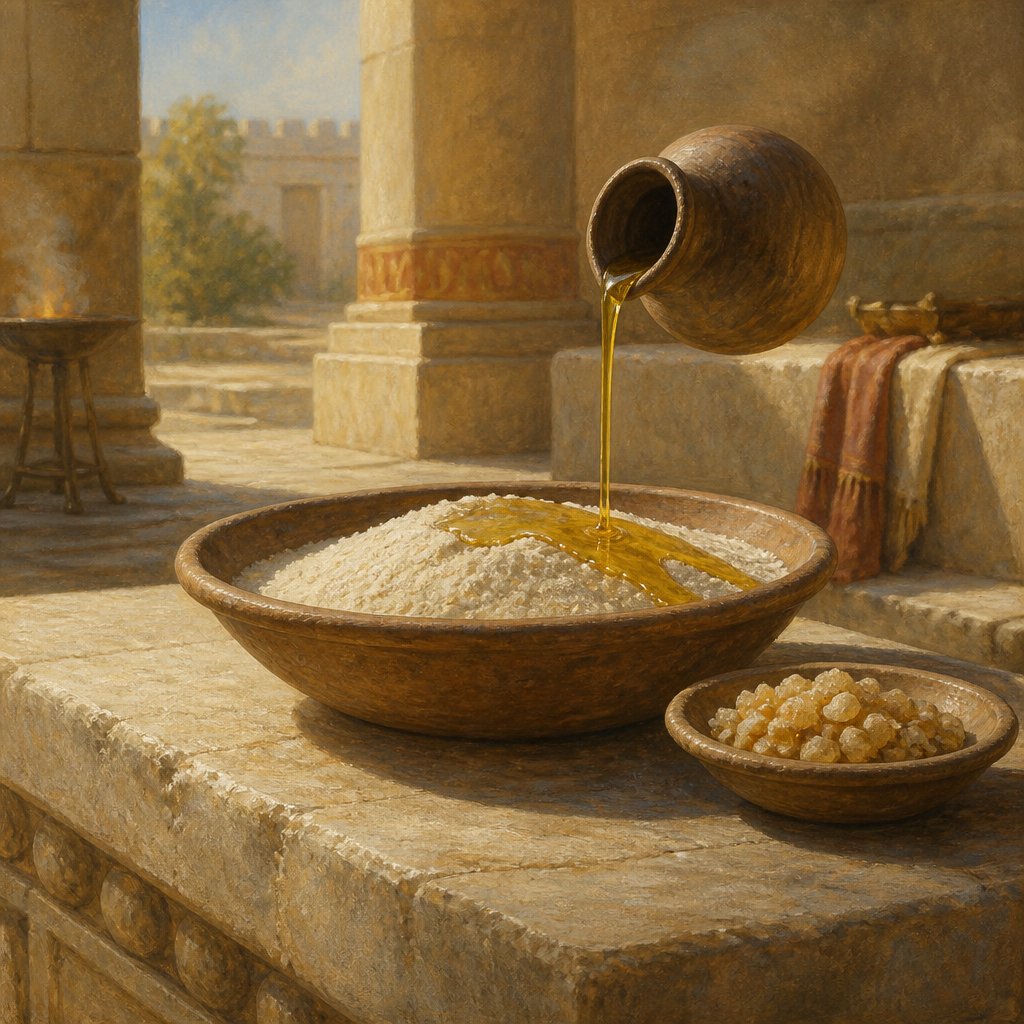
Leviticus 2:1 in the King James Version states, "And when any will offer a meat offering unto the Lord, his offering shall be of fine flour; and he shall pour oil upon it, and put frankincense thereon."
This verse is part of the Old Testament book of Leviticus, which is the third of the five books of the Torah, also known as the Pentateuch. The book of Leviticus primarily deals with the laws and regulations for the priests and the people of Israel. It focuses on the sacrifices, offerings, and rituals that were to be observed in the tabernacle and later in the temple.
In Leviticus 2:1, the passage refers to the offering of a "meat offering" (or grain offering) to the Lord. This type of offering was a voluntary act of worship, expressing gratitude, devotion, and dependence on God. The grain offering was not a sin offering, but rather a way for the worshipper to bring a gift to the Lord and seek His favor. It was an act of thanksgiving and acknowledgment of God's provision.
The verse specifies that the offering should be made of fine flour, which signifies the quality and purity of the offering. It was to be mixed with oil, representing richness, and anointed with frankincense, a sweet-smelling aromatic resin. The oil and frankincense added flavor and fragrance to the offering, making it more pleasing to God.
Symbolically, the fine flour represents the basic necessities of life, while the oil and frankincense represent abundance and delight. Just as bread is a staple of sustenance, the grain offering acknowledges God as the ultimate provider of all that is needed for life and sustenance. It also symbolizes the believer's desire to give the best to God, offering not just the bare minimum, but something of value and significance.
The act of pouring oil and adding frankincense to the grain offering demonstrates an attitude of generosity and reverence. The worshipper is not just giving a token offering, but is intentionally adding elements of value and honor to the gift, reflecting a heart of devotion and worship. This reflects the idea that our offerings to God should not be half-hearted or perfunctory, but should be presented with sincerity and thoughtfulness.
This passage also points to the importance of symbolism and ritual in worship. The use of specific elements – such as fine flour, oil, and frankincense – served as a way to engage the senses and communicate reverence and devotion. These tangible symbols were a way for the worshipper to express their inward devotion and love for God in an outward, tangible form.
In a broader context, Leviticus 2:1 highlights the principle of offering our best to God. It challenges believers to not only give to God what is convenient or surplus, but to offer something of substance and value. Just as the grain offering was to be of fine flour, symbolizing the best quality, we are called to give our best to God in every aspect of our lives – our time, talents, resources, and worship.
Additionally, this verse underscores the importance of gratitude and thanksgiving in our relationship with God. The grain offering was an expression of thanksgiving, acknowledging God as the ultimate provider and sustainer. It reminds us to be mindful of God's faithfulness and generosity in our lives, and to respond with a heart of gratitude and worship.
In conclusion, Leviticus 2:1 is a powerful reminder of the principles of generosity, reverence, and gratitude in worship. It challenges believers to offer the best of what we have to God, both in our material offerings and in our attitudes and hearts. It also emphasizes the significance of symbolism and ritual in expressing our devotion to God. This verse continues to inspire believers to approach God with sincerity, reverence, and gratitude, offering our best to Him in every aspect of our lives.
Have questions about Leviticus 2:1?
Dive deeper into this scripture with Bible Chat — an AI-powered tool for exploring God's Word through conversation. Ask questions, get context, and grow in your understanding of the Bible.
Get Our Apps


Leviticus 2:1 Artwork

Leviticus 2:1 - "And when any will offer a meat offering unto the LORD, his offering shall be of fine flour; and he shall pour oil upon it, and put frankincense thereon:"
"And when any will offer a meat offering unto the LORD, his offering shall be of fine flour; and he shall pour oil upon it, and put frankincense thereon:" - Leviticus 2:1

Leviticus 1:2 - "Speak unto the children of Israel, and say unto them, If any man of you bring an offering unto the LORD, ye shall bring your offering of the cattle, even of the herd, and of the flock."

Leviticus 23:21

Leviticus 14:51

Leviticus 23:21

Leviticus 23:20

Leviticus 23:21

Leviticus 23:21

Leviticus 23:21

Leviticus 23:21
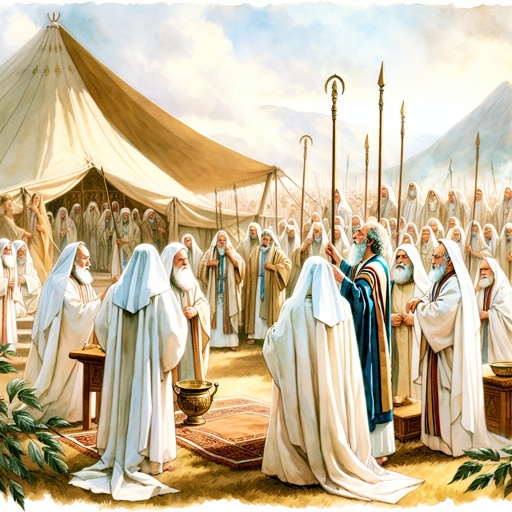
Leviticus 8:1-12

Leviticus 23:15-22

Leviticus 23:17-22

Leviticus 14:1 - "And the LORD spake unto Moses, saying,"

Leviticus 23:1 - "And the LORD spake unto Moses, saying,"

Leviticus 20:1 - "And the LORD spake unto Moses, saying,"

Leviticus 4:1 - "And the LORD spake unto Moses, saying,"

Leviticus 1:1 - "And the LORD called unto Moses, and spake unto him out of the tabernacle of the congregation, saying,"

Leviticus 8:1 - "And the LORD spake unto Moses, saying,"

Leviticus 17:1 - "And the LORD spake unto Moses, saying,"

Leviticus 24:1 - "And the LORD spake unto Moses, saying,"

Leviticus 22:1 - "And the LORD spake unto Moses, saying,"

Leviticus 18:1 - "And the LORD spake unto Moses, saying,"

Leviticus 6:1 - "And the LORD spake unto Moses, saying,"

Leviticus 27:1 - "And the LORD spake unto Moses, saying,"

Leviticus 19:1 - "And the LORD spake unto Moses, saying,"

Leviticus 12:1 - "And the LORD spake unto Moses, saying,"

Leviticus 15:1 - "And the LORD spake unto Moses and to Aaron, saying,"

Leviticus 13:1 - "And the LORD spake unto Moses and Aaron, saying,"