What does Leviticus 2:9 mean?
"And the priest shall take from the meat offering a memorial thereof, and shall burn it upon the altar: it is an offering made by fire, of a sweet savour unto the LORD." - Leviticus 2:9
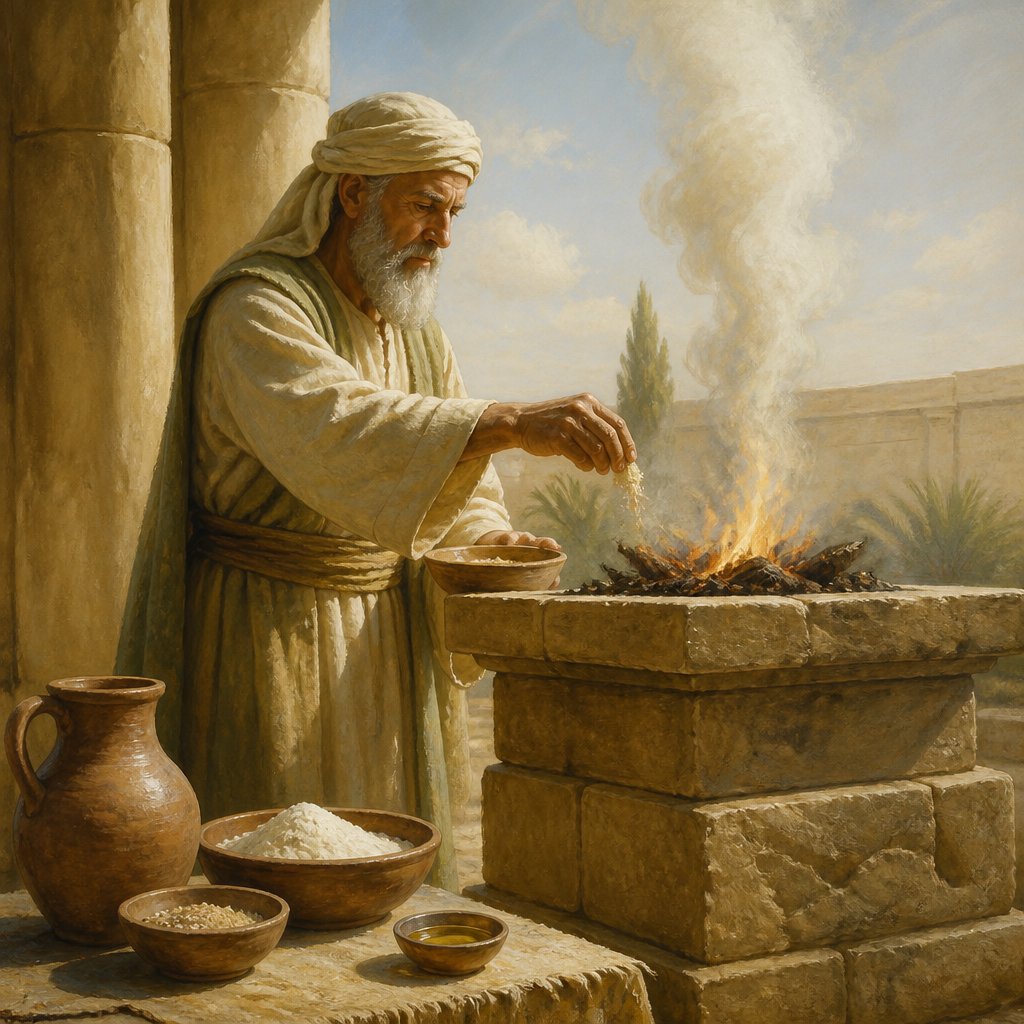
Leviticus 2:9 (KJV) states, "And the priest shall take from the meal offering a memorial thereof, and shall burn it upon the altar: it is an offering made by fire, of a sweet savour unto the Lord."
The book of Leviticus is the third book of the Hebrew Bible and provides a detailed guide for the rituals and sacrifices of the Israelites. Leviticus 2:9 specifically focuses on the meal offering, also known as the grain offering, an important part of the sacrificial system in ancient Israel. This verse outlines the procedures to be followed by the priest when presenting the meal offering to the Lord.
The meal offering was a gift to God from the people of Israel, expressing their gratitude, dependence, and dedication to the Lord. The offering was comprised of fine flour, oil, and frankincense, without leaven or honey, and it was to be baked into unleavened cakes. The act of offering the meal to God was a symbolic way for the Israelites to recognize and honor His provision and sustenance in their lives. This verse serves as a reminder that every aspect of life is to be brought under God’s authority and given back to Him as an act of worship and thanksgiving.
The verse emphasizes the role of the priest in mediating the offering between the people and God. The priest was responsible for taking a portion of the meal offering and burning it on the altar as a sweet-smelling aroma to the Lord. This act represented the acceptance of the offering by God and the communion between the people and their Creator. The fragrance of the burning incense and the offering was a symbol of the people's devotion and obedience, ascending to the heavens as a pleasing aroma to God. This reflects the idea of the offering being "of a sweet savour unto the Lord", signifying that it was pleasing and acceptable to Him.
The symbolism of fire in the context of the sacrifice is significant. Fire has often been associated with purification and the presence of God throughout the Bible. In this verse, the fire represents the transforming power of God. The burning of the offering symbolizes the purification of the people’s hearts and their desire to be in right relationship with God. It also signifies the sanctification of the offering, setting it apart as holy and acceptable to God. The imagery of fire conveys the idea of spiritual refinement, as the offering is consumed by the flames, it reflects the surrender and dedication of the people’s lives to God.
The significance of Leviticus 2:9 extends beyond its literal meaning. It serves as a foreshadowing of the ultimate sacrifice of Jesus Christ, who would become the perfect and final offering for the sins of humanity. Just as the meal offering was presented to God in a ritualistic manner, Jesus was presented as the atoning sacrifice for the sins of the world. The sweet savour of the sacrifice in Leviticus is a prefiguration of the perfect obedience and sacrifice of Christ that was pleasing to God.
In a broader context, Leviticus 2:9 emphasizes the importance of giving our best to God, not just in offerings, but in all aspects of life. It teaches us about the spirit of generosity, gratitude, and dedication to God. It also serves as a reminder of the need for mediation between God and humanity, as reflected in the role of the priest. This verse reminds us of the essential role of Christ as our high priest, who intercedes on our behalf before the Father.
In conclusion, Leviticus 2:9 holds deep spiritual and theological significance. It underscores the principles of surrender, dedication, and communion with God. Its imagery and symbolism serve as a foundation for understanding the sacrificial system of the Old Testament and the ultimate sacrifice of Jesus Christ. It challenges believers to offer their best to God in all areas of their lives and to approach Him with a heart of gratitude and obedience.
Have questions about Leviticus 2:9?
Dive deeper into this scripture with Bible Chat — an AI-powered tool for exploring God's Word through conversation. Ask questions, get context, and grow in your understanding of the Bible.
Get Our Apps


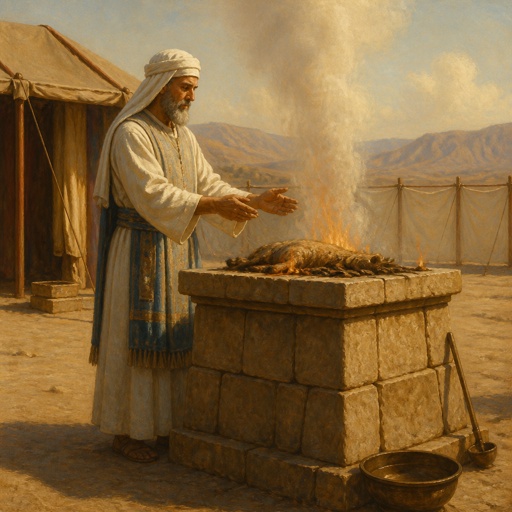
Leviticus 2:9 Artwork

Leviticus 2:9 - "And the priest shall take from the meat offering a memorial thereof, and shall burn it upon the altar: it is an offering made by fire, of a sweet savour unto the LORD."
"And the priest shall take from the meat offering a memorial thereof, and shall burn it upon the altar: it is an offering made by fire, of a sweet savour unto the LORD." - Leviticus 2:9

Leviticus 9:2 - "And he said unto Aaron, Take thee a young calf for a sin offering, and a ram for a burnt offering, without blemish, and offer them before the LORD."
Leviticus 23:9 - "¶ And the LORD spake unto Moses, saying,"

Leviticus 9:16 - "And he brought the burnt offering, and offered it according to the manner."

Leviticus 9:11 - "And the flesh and the hide he burnt with fire without the camp."

Leviticus 13:9 - "¶ When the plague of leprosy is in a man, then he shall be brought unto the priest;"

Leviticus 9:20 - "And they put the fat upon the breasts, and he burnt the fat upon the altar:"

Leviticus 9:9 - "And the sons of Aaron brought the blood unto him: and he dipped his finger in the blood, and put it upon the horns of the altar, and poured out the blood at the bottom of the altar:"

Leviticus 15:9 - "And what saddle soever he rideth upon that hath the issue shall be unclean."

Leviticus 9:14 - "And he did wash the inwards and the legs, and burnt them upon the burnt offering on the altar."

Leviticus 9:8 - "¶ Aaron therefore went unto the altar, and slew the calf of the sin offering, which was for himself."

Leviticus 9:1 - "And it came to pass on the eighth day, that Moses called Aaron and his sons, and the elders of Israel;"

Leviticus 9:19 - "And the fat of the bullock and of the ram, the rump, and that which covereth the inwards, and the kidneys, and the caul above the liver:"

Leviticus 9:21 - "And the breasts and the right shoulder Aaron waved for a wave offering before the LORD; as Moses commanded."

Leviticus 7:9 - "And all the meat offering that is baken in the oven, and all that is dressed in the fryingpan, and in the pan, shall be the priest's that offereth it."

"¶ And the LORD spake unto Moses, saying," - Leviticus 23:9

Leviticus 16:9 - "And Aaron shall bring the goat upon which the LORD'S lot fell, and offer him for a sin offering."

Leviticus 9:13 - "And they presented the burnt offering unto him, with the pieces thereof, and the head: and he burnt them upon the altar."

Leviticus 9:5 - "¶ And they brought that which Moses commanded before the tabernacle of the congregation: and all the congregation drew near and stood before the LORD."

Leviticus 9:17 - "And he brought the meat offering, and took an handful thereof, and burnt it upon the altar, beside the burnt sacrifice of the morning."

Leviticus 26:9 - "For I will have respect unto you, and make you fruitful, and multiply you, and establish my covenant with you."

Leviticus 9:15 - "¶ And he brought the people's offering, and took the goat, which was the sin offering for the people, and slew it, and offered it for sin, as the first."

Leviticus 9:10 - "But the fat, and the kidneys, and the caul above the liver of the sin offering, he burnt upon the altar; as the LORD commanded Moses."

Leviticus 9:23 - "And Moses and Aaron went into the tabernacle of the congregation, and came out, and blessed the people: and the glory of the LORD appeared unto all the people."

Leviticus 4:9 - "And the two kidneys, and the fat that is upon them, which is by the flanks, and the caul above the liver, with the kidneys, it shall he take away,"
Leviticus 9:6 - "And Moses said, This is the thing which the LORD commanded that ye should do: and the glory of the LORD shall appear unto you."

Leviticus 27:9 - "And if it be a beast, whereof men bring an offering unto the LORD, all that any man giveth of such unto the LORD shall be holy."

Leviticus 11:9 - "¶ These shall ye eat of all that are in the waters: whatsoever hath fins and scales in the waters, in the seas, and in the rivers, them shall ye eat."
"And he brought the burnt offering, and offered it according to the manner." - Leviticus 9:16