What does Leviticus 4:7 mean?
“And the priest shall put some of the blood upon the horns of the altar of sweet incense before the LORD, which is in the tabernacle of the congregation; and shall pour all the blood of the bullock at the bottom of the altar of the burnt offering, which is at the door of the tabernacle of the congregation.” — Leviticus 4:7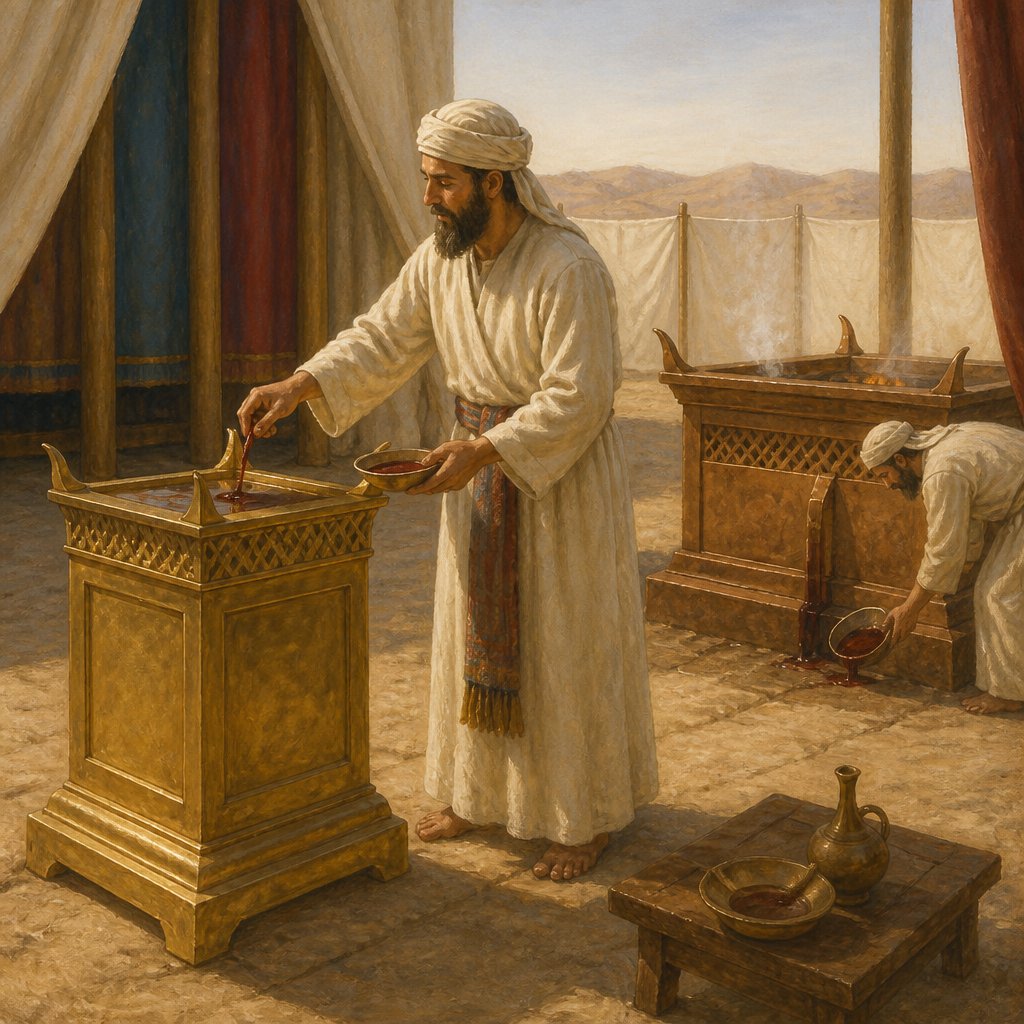
Leviticus 4:7 in the King James Version reads, "And the priest shall put some of the blood upon the horns of the altar of sweet incense before the Lord, which is in the tabernacle of the congregation; and shall pour all the blood of the bullock at the bottom of the altar of the burnt offering, which is at the door of the tabernacle of the congregation."
The book of Leviticus is a part of the Torah, the first five books of the Bible, specifically the Old Testament. Leviticus is the third book of the Bible and it is often regarded as a book of laws and regulations. It deals with the laws of the Israelite community, including moral and ethical conduct, religious rituals and ceremonies, and other matters of daily life. Leviticus 4:7 specifically deals with the sin offering, a sacrifice made to atone for sins committed unintentionally by individuals or the entire congregation.
The context of Leviticus 4:7 falls within a larger section of the book that details the specific procedures for making atonement for unintentional sins. The verse provides instructions for the priest on how to handle the blood of the sacrificial animal to bring about atonement. In this verse, the blood of the bullock is placed on the horns of the altar of sweet incense before the Lord, and the remaining blood is poured at the base of the altar of the burnt offering. These actions are part of a larger ritual meant to cleanse the people of their sins and restore their relationship with God.
The themes present in Leviticus 4:7 are atonement, purification, and the role of the priest as a mediator between the people and God. The verse underscores the seriousness of sin and the requirements for reconciliation with God. It also emphasizes the importance of blood in the process of atonement, as the blood of the sacrificial animal is used as a symbol of cleansing and forgiveness.
Symbolism is a significant element in Leviticus 4:7. The blood of the bullock represents the life of the animal, which is given as a substitute for the life of the sinner. The placement of the blood on the horns of the altar of sweet incense and pouring the remainder at the base of the burnt offering altar symbolizes the cleansing and purifying power of the blood to atone for sin and restore the relationship between the people and God.
Furthermore, the act of the priest carrying out these specific rituals symbolizes the role of the mediator between God and the people. The priest acts on behalf of the people, offering the sacrifice and performing the necessary rituals to seek forgiveness and reconciliation with God. This symbolism underscores the need for a mediator between a holy God and sinful humanity, pointing to the ultimate role of Jesus Christ as the ultimate mediator and atoning sacrifice.
Leviticus 4:7 plays a crucial role in the larger biblical narrative, foreshadowing the ultimate atonement and reconciliation found in Jesus Christ. The sacrificial system outlined in Leviticus points to the need for a perfect and final atonement for sin, which is ultimately fulfilled in the person and work of Jesus. The blood of Christ, shed on the cross, serves as the ultimate sacrifice for the sins of humanity, providing complete forgiveness and restoration of relationship with God.
In conclusion, Leviticus 4:7 holds significant meaning and symbolism within the broader context of the book of Leviticus and the biblical narrative as a whole. It highlights the seriousness of sin, the need for atonement, and the role of a mediator in reconciling humanity with God. Ultimately, it points to the ultimate atonement found in Jesus Christ, who offers complete forgiveness and reconciliation to all who believe in him.
Get our apps


Artwork for Leviticus 4:7
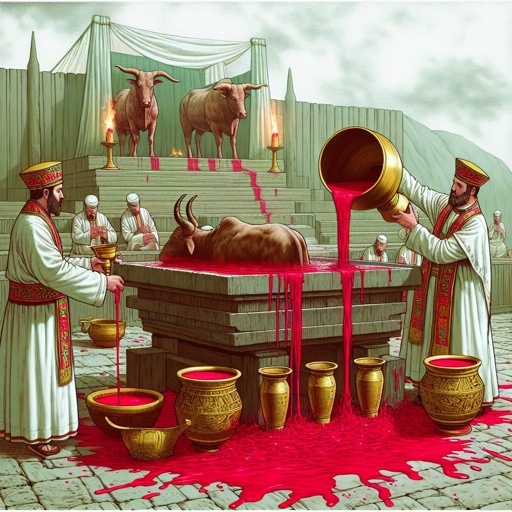
Leviticus 4:7 - "And the priest shall put some of the blood upon the horns of the altar of sweet incense before the LORD, which is in the tabernacle of the congregation; and shall pour all the blood of the bullock at the bottom of the altar of the burnt offering, which is at the door of the tabernacle of the congregation."
"And the priest shall put some of the blood upon the horns of the altar of sweet incense before the LORD, which is in the tabernacle of the congregation; and shall pour all the blood of the bullock at the bottom of the altar of the burnt offering, which is at the door of the tabernacle of the congregation." - Leviticus 4:7

Leviticus 7:4 - "And the two kidneys, and the fat that is on them, which is by the flanks, and the caul that is above the liver, with the kidneys, it shall he take away:"

Leviticus 17:7

leviticus 16:7-10
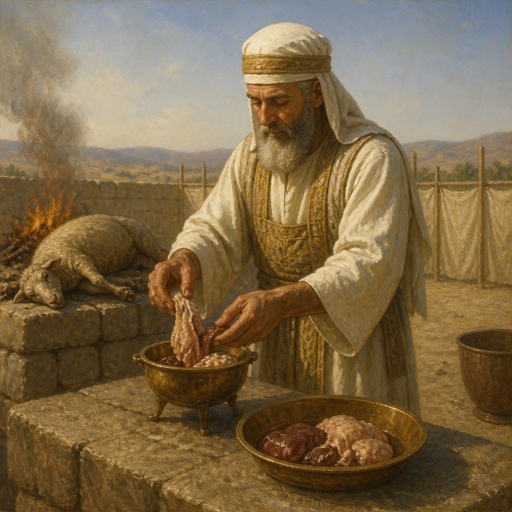
"And the two kidneys, and the fat that is on them, which is by the flanks, and the caul that is above the liver, with the kidneys, it shall he take away:" - Leviticus 7:4

Leviticus 26: 4-6

Leviticus 7:22 - "¶ And the LORD spake unto Moses, saying,"

Leviticus 7:28 - "¶ And the LORD spake unto Moses, saying,"
Leviticus 26: 4-6

Leviticus 26: 4-6

Leviticus 7:1 - "Likewise this is the law of the trespass offering: it is most holy."

Leviticus 7:7 - "As the sin offering is, so is the trespass offering: there is one law for them: the priest that maketh atonement therewith shall have it."

Leviticus 4:1 - "And the LORD spake unto Moses, saying,"

Leviticus 19:7 - "And if it be eaten at all on the third day, it is abominable; it shall not be accepted."

Leviticus 7:17 - "But the remainder of the flesh of the sacrifice on the third day shall be burnt with fire."

Leviticus 27:4 - "And if it be a female, then thy estimation shall be thirty shekels."

Leviticus 3:7 - "If he offer a lamb for his offering, then shall he offer it before the LORD."

Leviticus 7:3 - "And he shall offer of it all the fat thereof; the rump, and the fat that covereth the inwards,"

Leviticus 26:7 - "And ye shall chase your enemies, and they shall fall before you by the sword."
Leviticus 25:7 - "And for thy cattle, and for the beast that are in thy land, shall all the increase thereof be meat."

Leviticus 7:11 - "And this is the law of the sacrifice of peace offerings, which he shall offer unto the LORD."

Leviticus 4:16 - "And the priest that is anointed shall bring of the bullock's blood to the tabernacle of the congregation:"

Leviticus 20:7 - "¶ Sanctify yourselves therefore, and be ye holy: for I am the LORD your God."
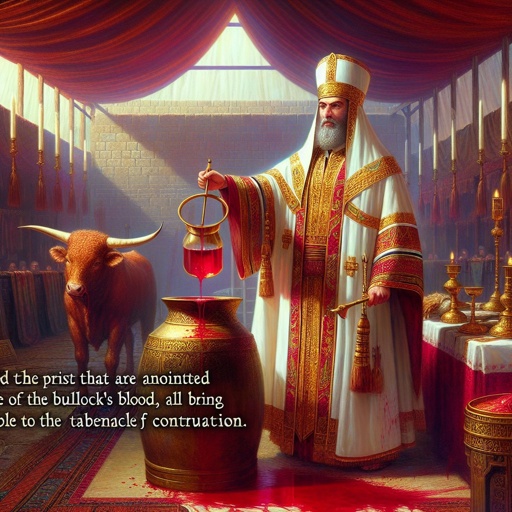
Leviticus 4:5 - "And the priest that is anointed shall take of the bullock's blood, and bring it to the tabernacle of the congregation:"

Leviticus 2:7 - "¶ And if thy oblation be a meat offering baken in the fryingpan, it shall be made of fine flour with oil."

Leviticus 7:31 - "And the priest shall burn the fat upon the altar: but the breast shall be Aaron's and his sons'."

Leviticus 7:9 - "And all the meat offering that is baken in the oven, and all that is dressed in the fryingpan, and in the pan, shall be the priest's that offereth it."

Cycle of sabbath rest year. Leviticus 25:1-7

"¶ And the LORD spake unto Moses, saying," - Leviticus 7:22