What does Leviticus 6:13 mean?
“The fire shall ever be burning upon the altar; it shall never go out.” — Leviticus 6:13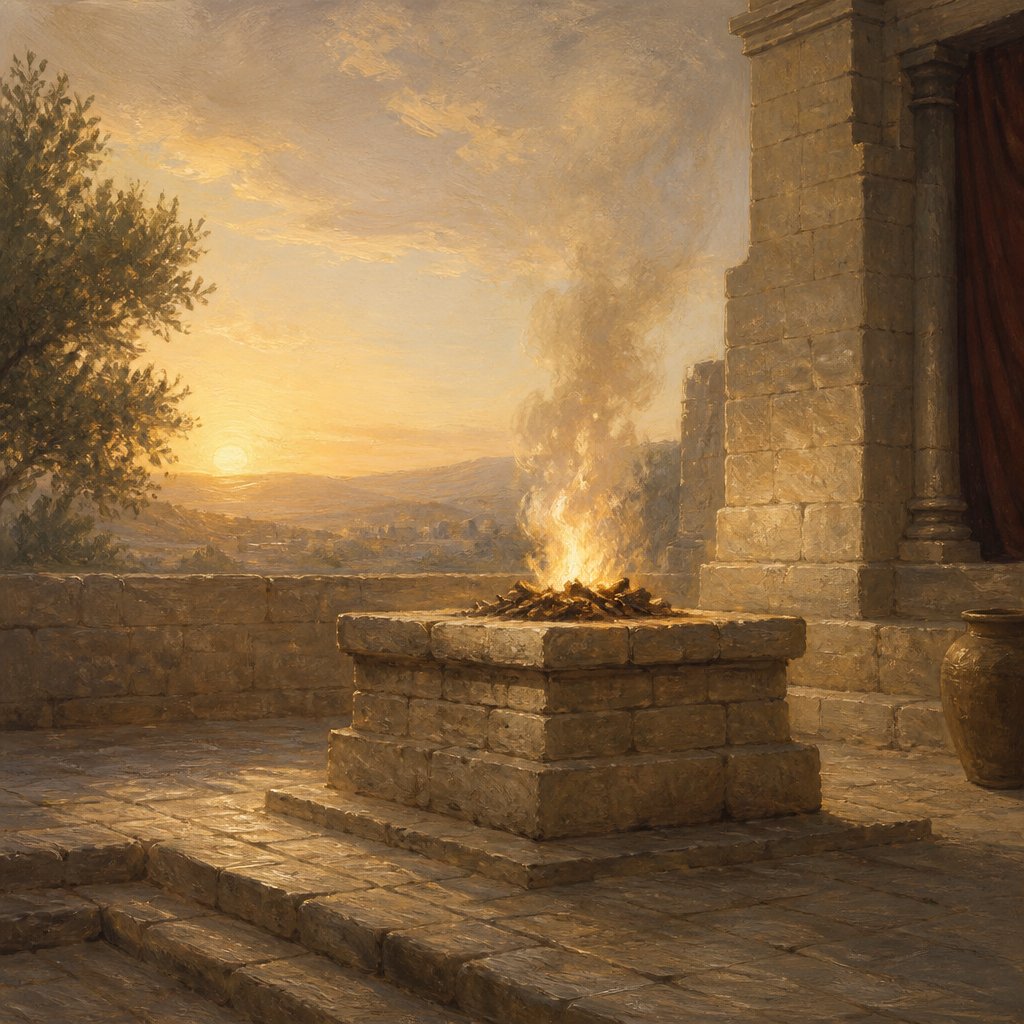
Leviticus 6:13 (KJV) states, "The fire shall ever be burning upon the altar; it shall never go out."
This verse is part of a larger passage that details the instructions for the priests to maintain the altar, specifically the burnt offering. The burnt offering was a symbolic act of worship in which the entire animal was burned on the altar, representing the complete devotion and surrender of the worshipper to God. In this verse, the ongoing nature of the fire signifies the continual nature of the worship and sacrifice that was required from the people of Israel.
One of the key themes in this verse is the concept of perpetual worship and devotion. The fire on the altar was to be kept burning at all times, signifying that the worship of God and the offering of sacrifices should be an ongoing, constant practice. This reflects the idea of the Israelites being in a covenant relationship with God, in which they were called to wholeheartedly devote themselves to Him and continuously acknowledge His presence in their lives. This theme of ongoing worship is also reflected in the New Testament, where Christians are encouraged to "pray without ceasing" (1 Thessalonians 5:17) and to "continually offer a sacrifice of praise to God" (Hebrews 13:15).
Furthermore, the perpetuity of the fire on the altar also symbolizes the eternal nature of God's holiness and presence. The unceasing nature of the fire serves as a reminder that God is unchanging and ever-present, and that His holiness is to be continually acknowledged and revered. This idea of God's eternal nature is found throughout the Bible, such as in Psalm 90:2, which states, "Before the mountains were brought forth, or ever thou hadst formed the earth and the world, even from everlasting to everlasting, thou art God."
In addition to the theme of perpetual worship and the eternal nature of God, the context of Leviticus 6:13 is also significant. The book of Leviticus is part of the Torah, the first five books of the Old Testament that form the foundation of the Jewish faith. In particular, Leviticus contains extensive instructions for the Israelites regarding their worship, rituals, and moral conduct. These instructions were given to the Israelites as a means of setting them apart as a holy and distinct people, and were intended to foster a deep reverence for God and a clear understanding of His expectations for His people. Thus, Leviticus 6:13 can be seen as part of the larger framework of God's desire for His people to maintain a constant and reverent attitude toward Him in their daily lives.
Overall, Leviticus 6:13 conveys the important themes of perpetual worship, the eternal nature of God's holiness, and the need for the Israelites to maintain a deep reverence for God in their daily lives. It serves as a reminder for believers of all ages to continually devote themselves to God and to acknowledge His unchanging and eternal nature. While the specific ritual of burning offerings on an altar may not be practiced in the same way today, the underlying principles of ongoing worship, reverence for God, and an acknowledgment of His eternal nature remain relevant for Christians in their faith and devotion.
Get our apps


Artwork for Leviticus 6:13

Leviticus 6:13 - "The fire shall ever be burning upon the altar; it shall never go out."
"The fire shall ever be burning upon the altar; it shall never go out." - Leviticus 6:13

Leviticus 13:6 - "And the priest shall look on him again the seventh day: and, behold, if the plague be somewhat dark, and the plague spread not in the skin, the priest shall pronounce him clean: it is but a scab: and he shall wash his clothes, and be clean."

Leviticus 24:13 - "And the LORD spake unto Moses, saying,"

Leviticus 26: 4-6
Leviticus 26: 4-6

Leviticus 26: 4-6

Leviticus 21:13 - "And he shall take a wife in her virginity."

Leviticus 13:1 - "And the LORD spake unto Moses and Aaron, saying,"

Leviticus 6:24 - "¶ And the LORD spake unto Moses, saying,"

Leviticus 6:8 - "¶ And the LORD spake unto Moses, saying,"

Leviticus 13:35 - "But if the scall spread much in the skin after his cleansing;"

Leviticus 13:29 - "¶ If a man or woman have a plague upon the head or the beard;"

Leviticus 6:19 - "¶ And the LORD spake unto Moses, saying,"

Leviticus 6:1 - "And the LORD spake unto Moses, saying,"

Leviticus 13:18 - "¶ The flesh also, in which, even in the skin thereof, was a boil, and is healed,"

Leviticus 13:14 - "But when raw flesh appeareth in him, he shall be unclean."

Leviticus 13:47 - "¶ The garment also that the plague of leprosy is in, whether it be a woollen garment, or a linen garment;"

Leviticus 13:9 - "¶ When the plague of leprosy is in a man, then he shall be brought unto the priest;"

Leviticus 1:6 - "And he shall flay the burnt offering, and cut it into his pieces."

Leviticus 13:22 - "And if it spread much abroad in the skin, then the priest shall pronounce him unclean: it is a plague."

Leviticus 25:13 - "In the year of this jubile ye shall return every man unto his possession."

Leviticus 8:6 - "And Moses brought Aaron and his sons, and washed them with water."

Leviticus 13:19 - "And in the place of the boil there be a white rising, or a bright spot, white, and somewhat reddish, and it be shewed to the priest;"

Leviticus 2:6 - "Thou shalt part it in pieces, and pour oil thereon: it is a meat offering."

Leviticus 13:48 - "Whether it be in the warp, or woof; of linen, or of woollen; whether in a skin, or in any thing made of skin;"

Leviticus 13:50 - "And the priest shall look upon the plague, and shut up it that hath the plague seven days:"

Leviticus 6:23 - "For every meat offering for the priest shall be wholly burnt: it shall not be eaten."

Leviticus 6:29 - "All the males among the priests shall eat thereof: it is most holy."

Leviticus 27:13 - "But if he will at all redeem it, then he shall add a fifth part thereof unto thy estimation."