What does Leviticus 9:2 mean?
"And he said unto Aaron, Take thee a young calf for a sin offering, and a ram for a burnt offering, without blemish, and offer them before the LORD." - Leviticus 9:2
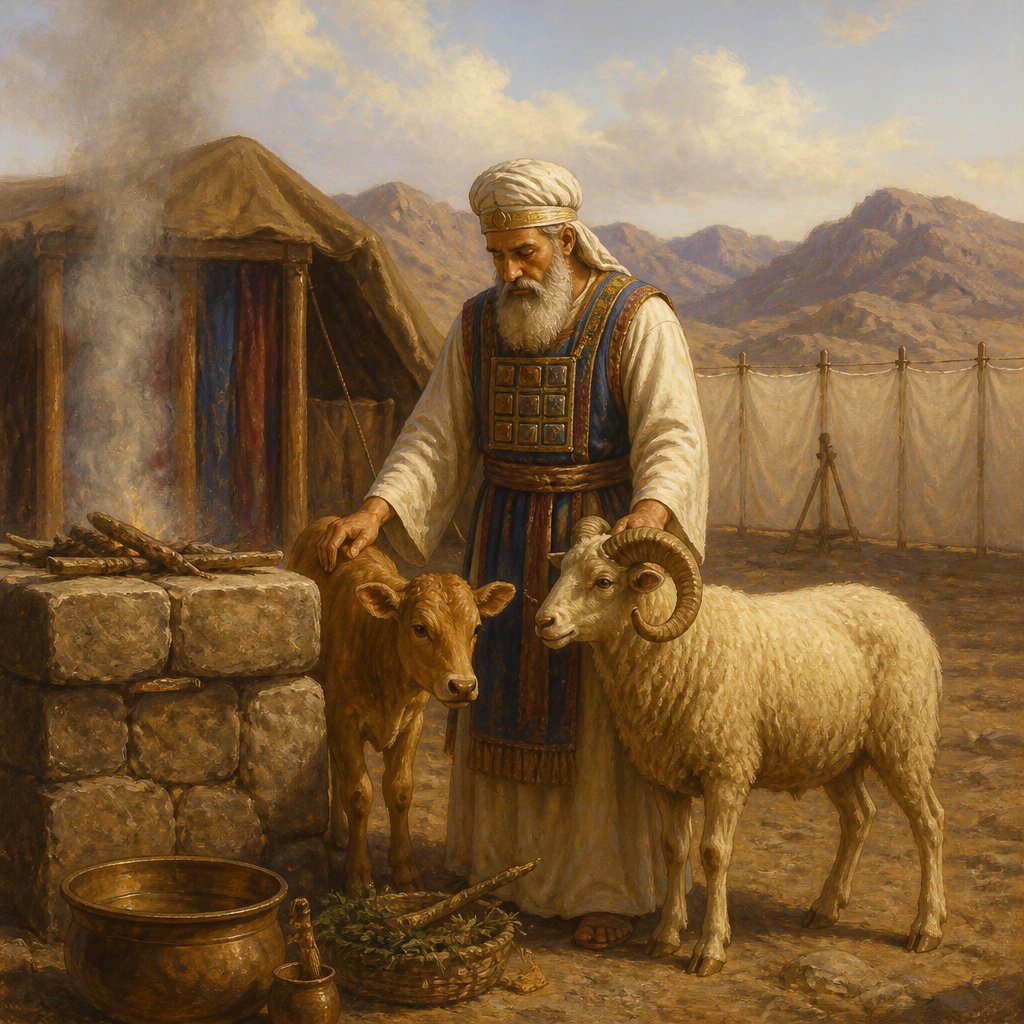
Leviticus 9:2 (KJV) "And he said unto Aaron, Take thee a young calf for a sin offering, and a ram for a burnt offering, without blemish, and offer them before the Lord."
The book of Leviticus is the third book in the Old Testament of the Bible and is often thought of as a handbook for the priests, detailing the laws and rituals that were to be upheld by the Israelites. It is here that we find the verse in question, which can be broken down and analyzed in several ways.
First and foremost, the verse is a direct instruction from God to Aaron, the brother of Moses and the high priest of Israel. At this point in the narrative, the tabernacle has just been completed and the priesthood has been established. This verse marks the beginning of the formal worship system that was to be observed by the Israelites. The sin offering and the burnt offering mentioned in the verse were key components of the sacrificial system, which was central to the Israelite religious practices.
The sin offering was meant to atone for the sins of the people, and it involved sacrificing an animal without blemish as a means of seeking forgiveness for their transgressions. The burnt offering, on the other hand, was a voluntary act of worship, symbolizing the worshipper's dedication and commitment to God. The fact that both of these offerings were to be "without blemish" is significant, as it highlights the importance of offering God the best that one has to offer, rather than something imperfect or flawed.
Symbolically, the sin offering can be seen as a foreshadowing of the ultimate sacrifice that would come to pass in the New Testament, with the crucifixion of Jesus Christ. It serves as a reminder of the seriousness of sin and the need for atonement in order to be reconciled with God. The burnt offering, on the other hand, represents the worshipper's desire to draw near to God and offer themselves in service to Him.
In a broader sense, this verse reflects the themes of obedience and reverence. The Israelites were expected to obey the commands of God and carry out the rituals and sacrifices as prescribed. The offering of the sin and burnt offerings was an act of obedience to God's will, demonstrating the Israelites' commitment to following His commands. It also demonstrated their reverence for God, acknowledging His holiness and their need for His forgiveness and favor.
In terms of the historical and cultural context, it's important to note that the sacrificial system outlined in Leviticus was a central aspect of the Israelite religion. The entire system was designed to foster a sense of holiness and purity among the people, while also providing a means of seeking forgiveness for their sins. The specific details of the offerings and rituals were of utmost importance, as they were seen as a way to maintain the covenant relationship between God and His people.
In conclusion, Leviticus 9:2 serves as a reminder of the importance of obedience, reverence, and the need for atonement in the context of the Israelite religious practices. It also carries symbolic weight, pointing towards the ultimate sacrifice of Jesus Christ and the themes of sacrifice and worship that are central to the Christian faith. The verse provides valuable insight into the religious and cultural practices of the ancient Israelites, while also offering timeless lessons about the nature of sin, forgiveness, and devotion to God.
Have questions about Leviticus 9:2?
Dive deeper into this scripture with Bible Chat — an AI-powered tool for exploring God's Word through conversation. Ask questions, get context, and grow in your understanding of the Bible.
Get Our Apps


Leviticus 9:2 Artwork

Leviticus 9:2 - "And he said unto Aaron, Take thee a young calf for a sin offering, and a ram for a burnt offering, without blemish, and offer them before the LORD."
"And he said unto Aaron, Take thee a young calf for a sin offering, and a ram for a burnt offering, without blemish, and offer them before the LORD." - Leviticus 9:2

Leviticus 2:9 - "And the priest shall take from the meat offering a memorial thereof, and shall burn it upon the altar: it is an offering made by fire, of a sweet savour unto the LORD."

Leviticus 23:9 - "¶ And the LORD spake unto Moses, saying,"

Leviticus 9:16 - "And he brought the burnt offering, and offered it according to the manner."

Leviticus 9:11 - "And the flesh and the hide he burnt with fire without the camp."

Leviticus 13:9 - "¶ When the plague of leprosy is in a man, then he shall be brought unto the priest;"

Leviticus 9:20 - "And they put the fat upon the breasts, and he burnt the fat upon the altar:"

Leviticus 9:9 - "And the sons of Aaron brought the blood unto him: and he dipped his finger in the blood, and put it upon the horns of the altar, and poured out the blood at the bottom of the altar:"

Leviticus 15:9 - "And what saddle soever he rideth upon that hath the issue shall be unclean."

Leviticus 9:14 - "And he did wash the inwards and the legs, and burnt them upon the burnt offering on the altar."

Leviticus 9:8 - "¶ Aaron therefore went unto the altar, and slew the calf of the sin offering, which was for himself."

Leviticus 9:1 - "And it came to pass on the eighth day, that Moses called Aaron and his sons, and the elders of Israel;"

Leviticus 9:19 - "And the fat of the bullock and of the ram, the rump, and that which covereth the inwards, and the kidneys, and the caul above the liver:"

Leviticus 9:21 - "And the breasts and the right shoulder Aaron waved for a wave offering before the LORD; as Moses commanded."

Leviticus 7:9 - "And all the meat offering that is baken in the oven, and all that is dressed in the fryingpan, and in the pan, shall be the priest's that offereth it."

"¶ And the LORD spake unto Moses, saying," - Leviticus 23:9

Leviticus 16:9 - "And Aaron shall bring the goat upon which the LORD'S lot fell, and offer him for a sin offering."

Leviticus 9:13 - "And they presented the burnt offering unto him, with the pieces thereof, and the head: and he burnt them upon the altar."

Leviticus 9:5 - "¶ And they brought that which Moses commanded before the tabernacle of the congregation: and all the congregation drew near and stood before the LORD."

Leviticus 9:17 - "And he brought the meat offering, and took an handful thereof, and burnt it upon the altar, beside the burnt sacrifice of the morning."

Leviticus 26:9 - "For I will have respect unto you, and make you fruitful, and multiply you, and establish my covenant with you."

Leviticus 9:15 - "¶ And he brought the people's offering, and took the goat, which was the sin offering for the people, and slew it, and offered it for sin, as the first."

Leviticus 9:10 - "But the fat, and the kidneys, and the caul above the liver of the sin offering, he burnt upon the altar; as the LORD commanded Moses."

Leviticus 9:23 - "And Moses and Aaron went into the tabernacle of the congregation, and came out, and blessed the people: and the glory of the LORD appeared unto all the people."

Leviticus 4:9 - "And the two kidneys, and the fat that is upon them, which is by the flanks, and the caul above the liver, with the kidneys, it shall he take away,"
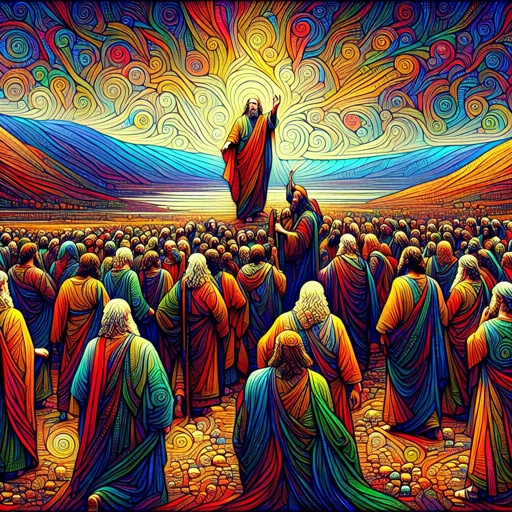
Leviticus 9:6 - "And Moses said, This is the thing which the LORD commanded that ye should do: and the glory of the LORD shall appear unto you."

Leviticus 27:9 - "And if it be a beast, whereof men bring an offering unto the LORD, all that any man giveth of such unto the LORD shall be holy."

Leviticus 11:9 - "¶ These shall ye eat of all that are in the waters: whatsoever hath fins and scales in the waters, in the seas, and in the rivers, them shall ye eat."
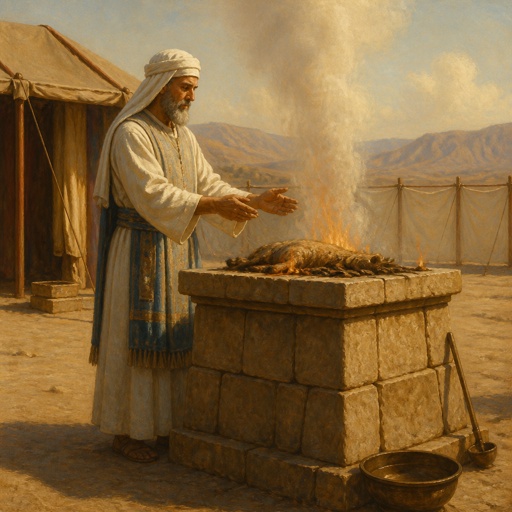
"And he brought the burnt offering, and offered it according to the manner." - Leviticus 9:16