What does Leviticus 9:8 mean?
“Aaron therefore went unto the altar, and slew the calf of the sin offering, which was for himself.” — Leviticus 9:8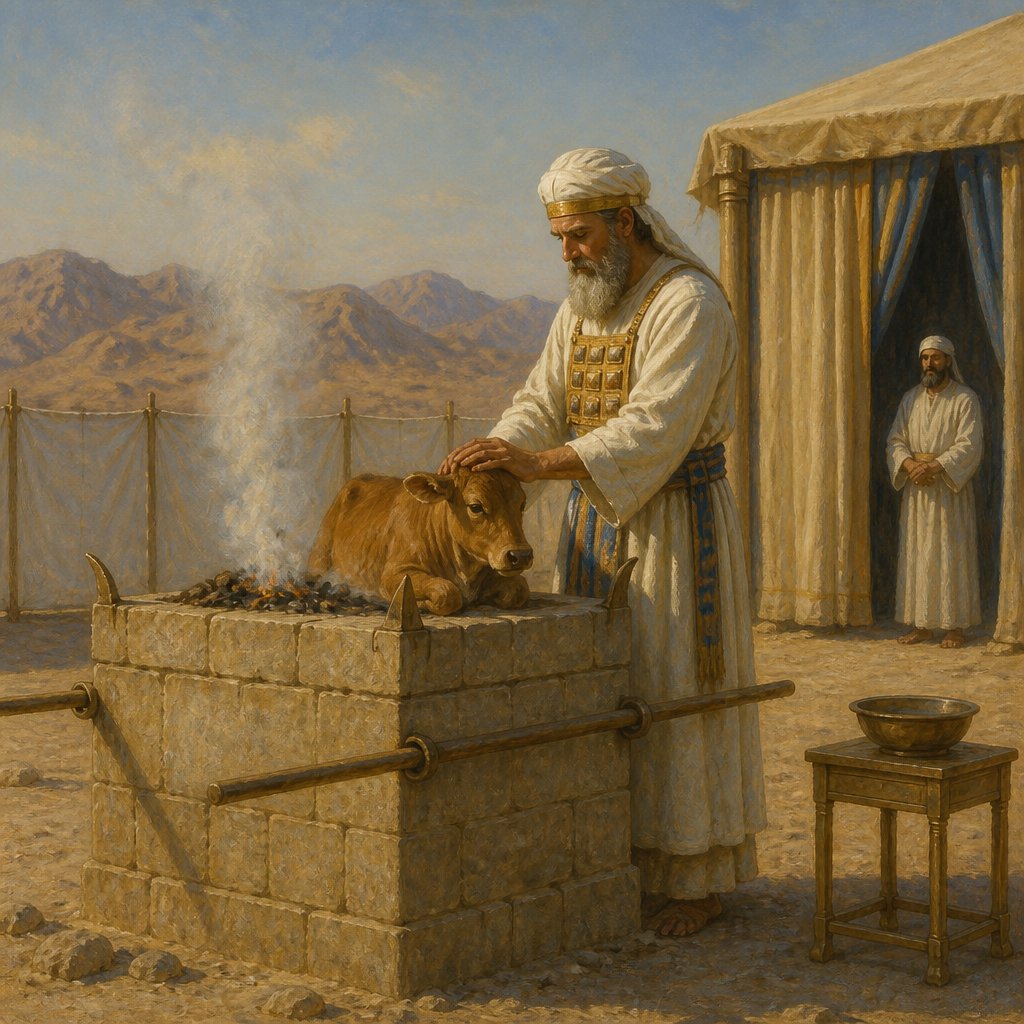
Leviticus 9:8 in the King James Version of the Bible reads: "Aaron therefore went unto the altar, and slew the calf of the sin offering, which was for himself."
This verse is part of the Old Testament, specifically the book of Leviticus, which is the third book of the Bible. The book of Leviticus is primarily concerned with the religious and ethical laws of the Israelites, particularly the laws of sacrifice and ritual purity. It is thought to have been written by Moses and is set against the backdrop of the Israelites' journey through the wilderness after their escape from slavery in Egypt.
The verse in question forms a part of the narrative in which Aaron, the high priest and brother of Moses, is tasked with making offerings and sacrifices on behalf of the Israelites. In this particular instance, Aaron is making a sin offering for himself, as instructed by God.
The themes present in this verse are sacrifice, atonement, and ritual purity. The act of sacrificing the calf for the sin offering represents a form of atonement for the sins of Aaron, as well as the sins of the people of Israel. This ritual act was considered necessary for maintaining the purity and holiness of the Israelites in the eyes of God.
It is important to understand the historical and cultural context in which this verse is situated. In ancient Israelite society, and in many other ancient cultures, sacrifices and offerings were a central aspect of religious practice. The act of sacrificing an animal, such as a calf, was believed to be a way of cleansing impurities and seeking forgiveness from God.
Symbolically, the act of sacrificing the calf carries deep spiritual significance. The shedding of blood and the offering of a valuable animal demonstrated the seriousness of sin and the need for atonement. The act of sacrifice was not simply a ritualistic tradition, but a symbolic representation of the Israelites' desire to be reconciled with God.
Furthermore, the role of Aaron as the high priest in making this sacrifice highlights the importance of intercession and mediation in the Israelite religion. Aaron served as a mediator between the people and God, offering sacrifices and prayers on their behalf. This role prefigures the later Christian belief in Jesus Christ as the ultimate mediator and high priest who offered himself as a sin offering for the salvation of humanity.
In the broader context of the Bible, the sacrificial system of the Old Testament is seen as a precursor to the ultimate sacrifice of Jesus Christ on the cross. The New Testament presents Jesus as the perfect and final atoning sacrifice, whose blood cleanses believers from sin once and for all.
In conclusion, Leviticus 9:8 is a verse that speaks to the ancient Israelite practice of sacrifice for atonement and ritual purity. It serves as a reminder of the seriousness of sin and the need for reconciliation with God. While the ritualistic practices described in Leviticus may seem unfamiliar or even archaic to modern readers, they offer valuable insights into the religious beliefs and practices of ancient Israel, as well as the theological foundations of the Christian faith.
Get our apps


Artwork for Leviticus 9:8

Leviticus 9:8 - "¶ Aaron therefore went unto the altar, and slew the calf of the sin offering, which was for himself."
"¶ Aaron therefore went unto the altar, and slew the calf of the sin offering, which was for himself." - Leviticus 9:8

Leviticus 8:9 - "And he put the mitre upon his head; also upon the mitre, even upon his forefront, did he put the golden plate, the holy crown; as the LORD commanded Moses."

Leviticus 16:8

Leviticus 8:30
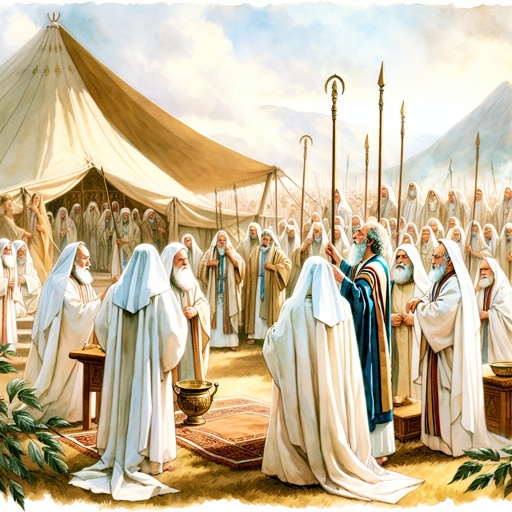
Leviticus 8:1-12

Leviticus 8:8 - "And he put the breastplate upon him: also he put in the breastplate the Urim and the Thummim."

Leviticus 6:8 - "¶ And the LORD spake unto Moses, saying,"
Leviticus 10:8 - "¶ And the LORD spake unto Aaron, saying,"

Leviticus 23:9 - "¶ And the LORD spake unto Moses, saying,"

Leviticus 8:1 - "And the LORD spake unto Moses, saying,"

Leviticus 9:16 - "And he brought the burnt offering, and offered it according to the manner."

Leviticus 9:11 - "And the flesh and the hide he burnt with fire without the camp."

Leviticus 8:32 - "And that which remaineth of the flesh and of the bread shall ye burn with fire."

Leviticus 8:6 - "And Moses brought Aaron and his sons, and washed them with water."

Leviticus 8:19 - "And he killed it; and Moses sprinkled the blood upon the altar round about."

Leviticus 8:3 - "And gather thou all the congregation together unto the door of the tabernacle of the congregation."

Leviticus 8:5 - "And Moses said unto the congregation, This is the thing which the LORD commanded to be done."

Leviticus 13:9 - "¶ When the plague of leprosy is in a man, then he shall be brought unto the priest;"

Leviticus 9:20 - "And they put the fat upon the breasts, and he burnt the fat upon the altar:"

Leviticus 8:20 - "And he cut the ram into pieces; and Moses burnt the head, and the pieces, and the fat."

Leviticus 18:8 - "The nakedness of thy father's wife shalt thou not uncover: it is thy father's nakedness."

Leviticus 9:9 - "And the sons of Aaron brought the blood unto him: and he dipped his finger in the blood, and put it upon the horns of the altar, and poured out the blood at the bottom of the altar:"

Leviticus 15:9 - "And what saddle soever he rideth upon that hath the issue shall be unclean."

Leviticus 9:14 - "And he did wash the inwards and the legs, and burnt them upon the burnt offering on the altar."

Leviticus 9:1 - "And it came to pass on the eighth day, that Moses called Aaron and his sons, and the elders of Israel;"
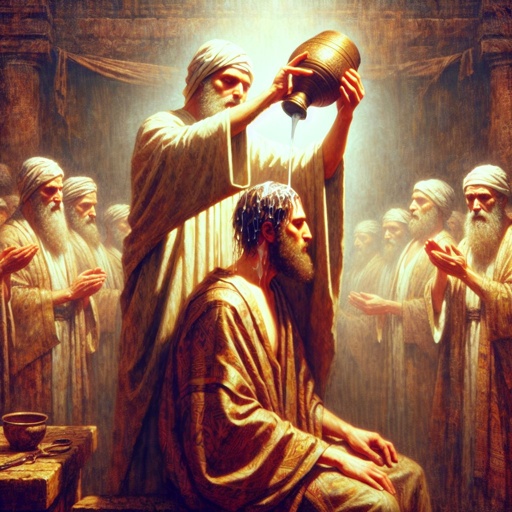
Leviticus 8:12 - "And he poured of the anointing oil upon Aaron's head, and anointed him, to sanctify him."

Leviticus 8:10 - "And Moses took the anointing oil, and anointed the tabernacle and all that was therein, and sanctified them."

Leviticus 11:8 - "Of their flesh shall ye not eat, and their carcase shall ye not touch; they are unclean to you."

Leviticus 9:19 - "And the fat of the bullock and of the ram, the rump, and that which covereth the inwards, and the kidneys, and the caul above the liver:"