What does Luke 10:25-37 mean?
"On one occasion an expert in the law stood up to test Jesus. "Teacher," he asked, "what must I do to inherit eternal life?" "What is written in the Law?" he replied. "How do you read it?" He answered, "‘Love the Lord your God with all your heart and with all your soul and with all your strength and with all your mind’; and, ‘Love your neighbor as yourself.’” "You have answered correctly," Jesus replied. "Do this and you will live." But he wanted to justify himself, so he asked Jesus, "And who is my neighbor?" In reply Jesus said: "A man was going down from Jerusalem to Jericho, when he was attacked by robbers. They stripped him of his clothes, beat him and went away, leaving him half dead. A priest happened to be going down the same road, and when he saw the man, he passed by on the other side. So too, a Levite, when he came to the place and saw him, passed by on the other side. But a certain Samaritan, as he journeyed, came where he was: and when he saw him, he had compassion on him, And went to him, and bound up his wounds, pouring in oil and wine, and set him on his own beast, and brought him to an inn, and took care of him. And on the morrow when he departed, he took out two pence, and gave them to the host, and said unto him, Take care of him; and whatsoever thou spendest more, when I come again, I will repay thee. Which now of these three, thinkest thou, was neighbour unto him that fell among the thieves?" And he said, He that shewed mercy on him. Then said Jesus unto him, Go, and do thou likewise." - Luke 10:25-37
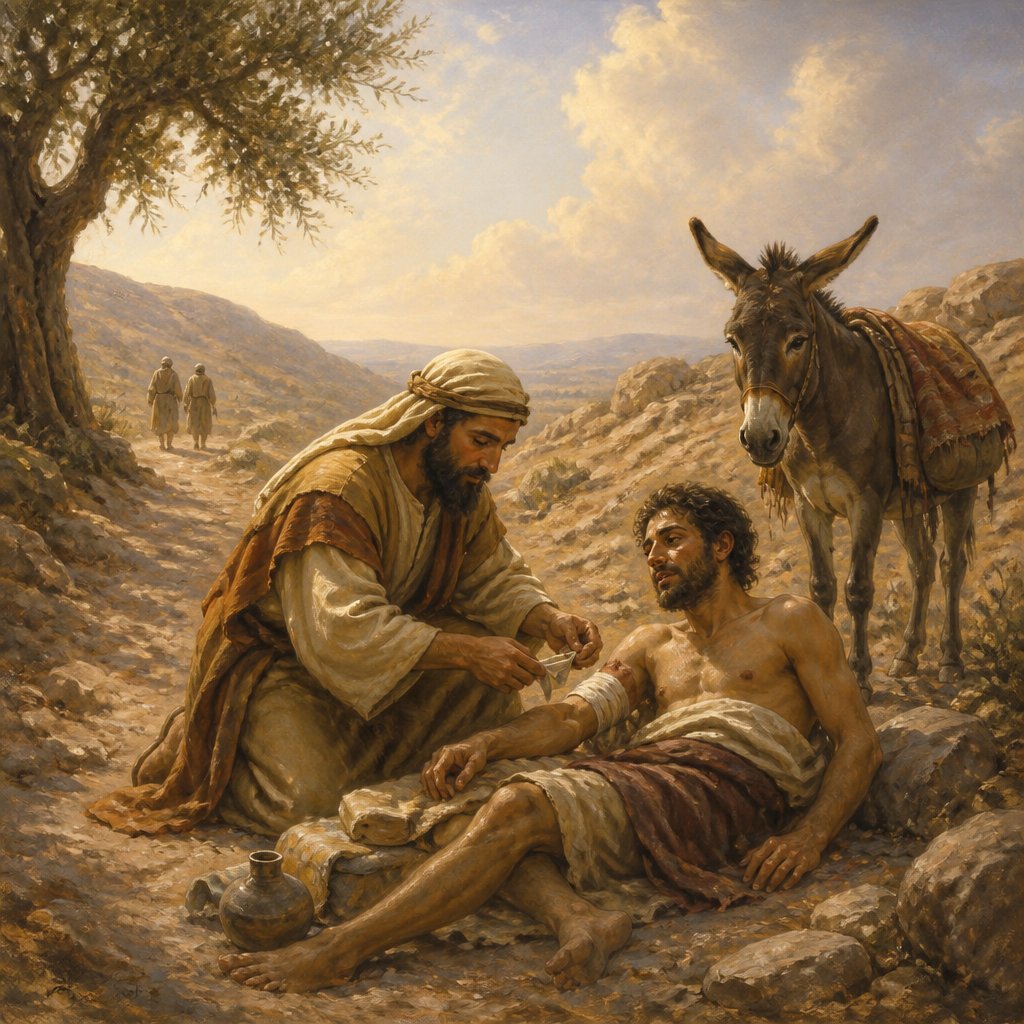
The Bible verse Luke 10:25-37 from the King James Version (KJV) is a well-known and beloved passage often referred to as the Parable of the Good Samaritan. In this passage, Jesus tells a story to illustrate the meaning of the commandment to love one's neighbor as oneself.
The passage begins with a man, described as a lawyer, testing Jesus by asking him, "Master, what shall I do to inherit eternal life?" This question sets the stage for the parable that follows. Jesus responds by asking the lawyer what is written in the law, to which the lawyer quotes the commandment to love the Lord with all your heart, soul, strength, and mind, and to love your neighbor as yourself. Jesus affirms the lawyer's response and tells him that by doing this, he will inherit eternal life.
However, the lawyer, seeking to justify himself, asks Jesus, "And who is my neighbor?" It is in response to this question that Jesus tells the Parable of the Good Samaritan. He describes a man who is stripped, beaten, and left for dead on the side of the road. Both a priest and a Levite pass by the man without offering assistance, but a Samaritan, a member of a group despised by the Jews, stops to help. The Samaritan tends to the man's wounds, takes him to an inn, and pays for his care. Jesus then asks the lawyer, "Which now of these three, thinkest thou, was neighbor unto him that fell among the thieves?" and the lawyer responds, "He that shewed mercy on him." Jesus then instructs the lawyer to go and do likewise.
This parable is rich in meaning and symbolism. It speaks to the themes of compassion, mercy, and the expansiveness of God's love. The characters in the story represent different aspects of human nature and behavior. The man who was left for dead represents all of humanity in need of salvation. The priest and the Levite, both religious figures, symbolize the failure of religious institutions to embody the love and compassion that God requires. The Samaritan, despised by the Jewish community, represents unexpected and unconventional sources of kindness and generosity.
The parable also addresses the question of who one's neighbor is. In Jesus' time, there was animosity between the Jews and Samaritans, yet it is the Samaritan who acts as the true neighbor in the story. This challenges the traditional understanding of neighborliness and emphasizes that all people, regardless of social status, nationality, or religion, are to be treated as neighbors.
The context of this passage is important for understanding its significance. Jesus tells this parable in response to the lawyer's question about inheriting eternal life. By framing the discussion in this context, Jesus conveys that loving one's neighbor is fundamental to obtaining eternal life. This underscores the centrality of love and compassion in the Christian faith.
Overall, the Parable of the Good Samaritan is a powerful reminder of the importance of loving and caring for others. It challenges us to examine our own attitudes and actions towards those in need and encourages us to show compassion to everyone, especially those whom society may reject or overlook. It serves as a call to embody the selfless love of the Samaritan and to extend mercy and care to all people, regardless of their background or circumstances. In doing so, we fulfill the commandment to love our neighbors as ourselves and inherit eternal life.
Have questions about Luke 10:25-37?
Dive deeper into this scripture with Bible Chat — an AI-powered tool for exploring God's Word through conversation. Ask questions, get context, and grow in your understanding of the Bible.
Get Our Apps


Luke 10:25-37 Artwork

Luke 10:25-37 - "On one occasion an expert in the law stood up to test Jesus. "Teacher," he asked, "what must I do to inherit eternal life?" "What is written in the Law?" he replied. "How do you read it?" He answered, "‘Love the Lord your God with all your heart and with all your soul and with all your strength and with all your mind’; and, ‘Love your neighbor as yourself.’" "You have answered correctly," Jesus replied. "Do this and you will live." But he wanted to justify himself, so he asked Jesus, "And who is my neighbor?" In reply Jesus said: "A man was going down from Jerusalem to Jericho, when he was attacked by robbers. They stripped him of his clothes, beat him and went away, leaving him half dead. A priest happened to be going down the same road, and when he saw the man, he passed by on the other side. So too, a Levite, when he came to the place and saw him, passed by on the other side. But a Samaritan, as he traveled, came where the man was; and when he saw him, he took pity on him. He went to him and bandaged his wounds, pouring on oil and wine. Then he put the man on his own donkey, brought him to an inn and took care of him. The next day he took out two denarii and gave them to the innkeeper. 'Look after him,' he said, 'and when I return, I will reimburse you for any extra expense you may have.' "Which of these three do you think was a neighbor to the man who fell into the hands of robbers?" The expert in the law replied, "The one who had mercy on him." Jesus told him, "Go and do likewise.""
"On one occasion an expert in the law stood up to test Jesus. "Teacher," he asked, "what must I do to inherit eternal life?" "What is written in the Law?" he replied. "How do you read it?" He answered, "‘Love the Lord your God with all your heart and with all your soul and with all your strength and with all your mind’; and, ‘Love your neighbor as yourself.’" "You have answered correctly," Jesus replied. "Do this and you will live." But he wanted to justify himself, so he asked Jesus, "And who is my neighbor?" In reply Jesus said: "A man was going down from Jerusalem to Jericho, when he was attacked by robbers. They stripped him of his clothes, beat him and went away, leaving him half dead. A priest happened to be going down the same road, and when he saw the man, he passed by on the other side. So too, a Levite, when he came to the place and saw him, passed by on the other side. But a Samaritan, as he traveled, came where the man was; and when he saw him, he took pity on him. He went to him and bandaged his wounds, pouring on oil and wine. Then he put the man on his own donkey, brought him to an inn and took care of him. The next day he took out two denarii and gave them to the innkeeper. 'Look after him,' he said, 'and when I return, I will reimburse you for any extra expense you may have.' "Which of these three do you think was a neighbor to the man who fell into the hands of robbers?" The expert in the law replied, "The one who had mercy on him." Jesus told him, "Go and do likewise."" - Luke 10:25-37

Luke 10:37 - "And he said, He that shewed mercy on him. Then said Jesus unto him, Go, and do thou likewise."

Luke 10:25 - "¶ And, behold, a certain lawyer stood up, and tempted him, saying, Master, what shall I do to inherit eternal life?"

Luke 2:37

Luke 2:37

Luke 2:37

Luke 2:37

Luke 2:37

Luke (1:37) For nothing will be impossible with God.”

Luke (1:37) For nothing will be impossible with God.”

Luke (1:37) For nothing will be impossible with God.”

Luke (1:37) For nothing will be impossible with God.”

Luke (1:37) For nothing will be impossible with God.”

Luke (1:37) For nothing will be impossible with God.”

Luke (1:37) For nothing will be impossible with God.”

Luke (1:37) For nothing will be impossible with God.”

Luke (1:37) For nothing will be impossible with God.”

Luke (1:37) For nothing will be impossible with God.”

Luke (1:37) For nothing will be impossible with God.”

Luke (1:37) For nothing will be impossible with God.”

Luke (1:37) For nothing will be impossible with God.”

Luke (1:37) For nothing will be impossible with God.”

Luke (1:37) For nothing will be impossible with God.”

Luke (1:37) For nothing will be impossible with God.”

Luke (1:37) For nothing will be impossible with God.”

Luke (1:37) For nothing will be impossible with God.”
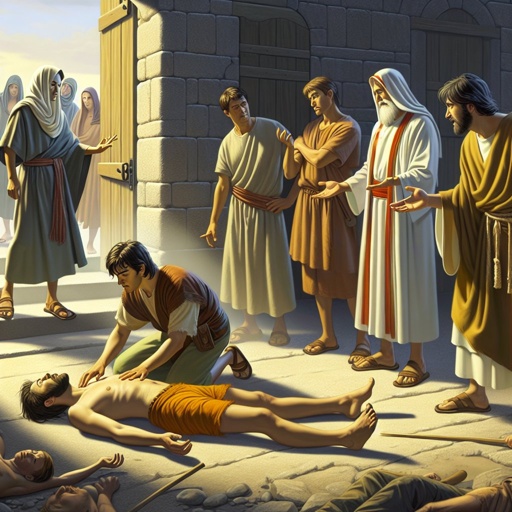
Luke 10:36-37 - "Which of these three, do you think, proved to be a neighbor to the man who fell among the robbers? He said, The one who showed him mercy. And Jesus said to him, You go, and do likewise."

Luke (1:37) For nothing will be impossible with God.”

Luke (1:37) For nothing will be impossible with God.”