What does Luke 10:28 mean?
“And he said unto him, Thou hast answered right: this do, and thou shalt live.” — Luke 10:28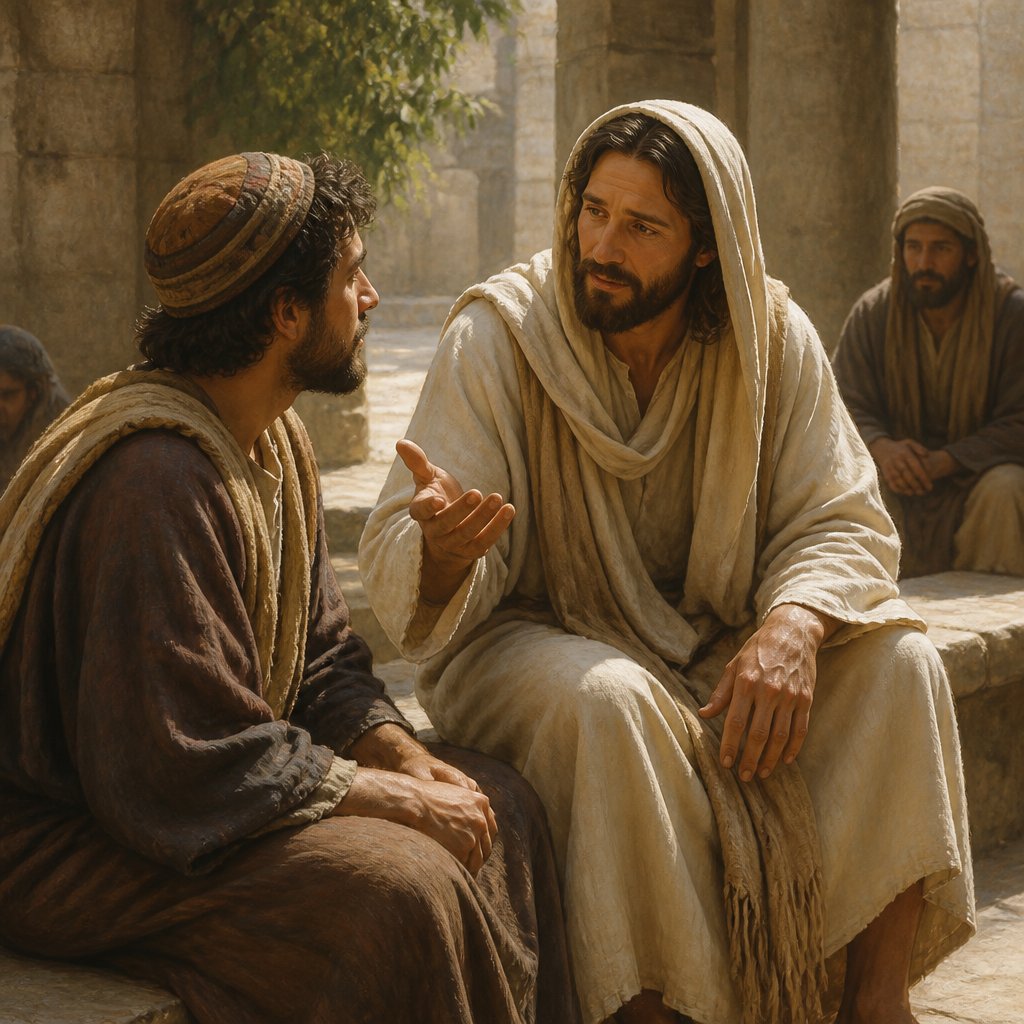
Luke 10:28 from the King James Version (KJV) of the Bible reads, "And he said unto him, Thou hast answered right: this do, and thou shalt live." This verse is a response from Jesus to a lawyer who asked him, "Master, what shall I do to inherit eternal life?" In order to fully understand the meaning and commentary of this verse, it is helpful to examine the context in which it occurs, as well as the themes and symbolism present.
The context of Luke 10:28 is found in the larger narrative of Jesus' ministry. In the preceding verses, Jesus tells the Parable of the Good Samaritan in response to the lawyer's question. In the parable, Jesus illustrates the concept of loving one's neighbor as oneself, regardless of differences in social status or ethnicity. The lawyer correctly identifies the moral of the parable, prompting Jesus to commend him in verse 28.
The themes present in Luke 10:28 include the concepts of righteousness, obedience, and eternal life. The lawyer's question reflects a desire to understand how to attain eternal life, which is a central theme throughout the New Testament. Jesus' response emphasizes that the key to obtaining eternal life is to "do" as the lawyer has correctly identified. This highlights the importance of righteous actions and obedience to God's commandments as a means of attaining salvation.
One of the central teachings of Christianity is the belief that faith in Jesus Christ is the means by which one obtains eternal life. However, this verse reminds believers that faith is not simply an abstract concept, but it should be evidenced in one's actions. The apostle James emphasizes this point in his letter when he writes, "faith by itself, if it is not accompanied by action, is dead" (James 2:17, NIV). In this sense, Luke 10:28 underscores the idea that genuine faith leads to a life of obedience and righteous action.
The symbolism in Luke 10:28 lies in the broader themes of the kingdom of God and the nature of salvation. Throughout the Gospels, Jesus frequently uses parables and symbolic language to convey spiritual truths. In this verse, the idea of "living" is symbolic of the fullness of life that is found in a relationship with God. Eternal life is not merely a future hope for believers, but it is a present reality that is experienced through a life of obedience and faithfulness.
Furthermore, the interaction between Jesus and the lawyer serves as a symbol of the universal human need for salvation and the means by which it is obtained. The lawyer's question reflects the fundamental question of the human condition: how can we find meaning, purpose, and eternal life? Jesus' response points to the universal truth that eternal life is found through a living faith that is expressed through loving God and loving others.
In conclusion, Luke 10:28 conveys a powerful message about the nature of salvation and the role of righteous action in the life of faith. The verse emphasizes the importance of living out one's faith through obedience and love for God and others. As believers, we are called to embody the teachings of Jesus in our daily lives, knowing that eternal life is not merely a future hope, but a present reality that is experienced through a life of faithfulness.
Get our apps


Artwork for Luke 10:28

Luke 10:28 - "And he said unto him, Thou hast answered right: this do, and thou shalt live."
"And he said unto him, Thou hast answered right: this do, and thou shalt live." - Luke 10:28

Luke 20:28

Luke 19:28

luke 13:28-37

Luke 13:28-27

Luke 13:28-27

Luke 9:28-45

Luke 13:28-27

luke 13:28-37

Luke 5:28 - "And he left all, rose up, and followed him."

Luke 22:28 - "Ye are they which have continued with me in my temptations."

Genesis 28:10

Luke 4:28 - "And all they in the synagogue, when they heard these things, were filled with wrath,"

Luke 10:5

Luke 10:5

Luke 10:5

Genesis 10:28 - "And Obal, and Abimael, and Sheba,"

Luke 2:28 - "Then took he him up in his arms, and blessed God, and said,"

Luke 18:28 - "Then Peter said, Lo, we have left all, and followed thee."

Luke 11:28 - "But he said, Yea rather, blessed are they that hear the word of God, and keep it."

Luke 10:18-19

Luke 10:18-19

Luke 10:18-19

Luke 10:17-19

Luke 10:18-19

Luke 10:18-19

Luke 10:18-19

Luke 10:17-19

Luke 6:28 - "Bless them that curse you, and pray for them which despitefully use you."