What does Luke 12:27 mean?
"Consider the lilies how they grow: they toil not, they spin not; and yet I say unto you, that Solomon in all his glory was not arrayed like one of these." - Luke 12:27
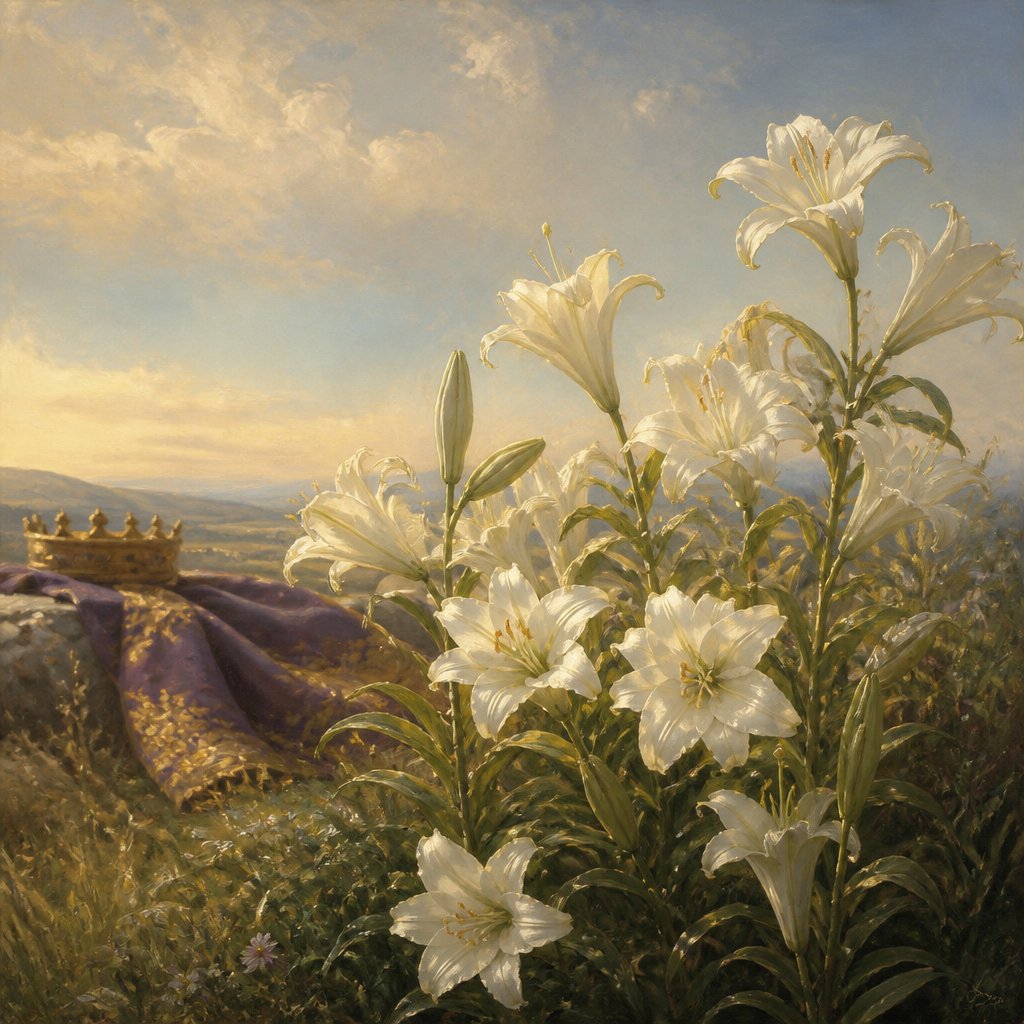
Luke 12:27 (KJV) reads: "Consider the lilies how they grow: they toil not, they spin not; and yet I say unto you, that Solomon in all his glory was not arrayed like one of these."
This verse is part of Jesus' teaching on anxiety and trust in God. In the preceding verses, Jesus tells his disciples not to worry about their basic needs such as food and clothing, because God will provide for them just as he does for the birds of the air (Luke 12:22-26). In Luke 12:27, Jesus continues to illustrate this point by using the example of lilies and the splendor of Solomon.
The verse is rich in symbolism and meaning, providing several layers of insight and application. The imagery of lilies serves as a powerful visual aid, drawing on the natural world to convey a spiritual truth. Lilies were common in the region and would have been familiar to Jesus' audience. They symbolize purity, beauty, and perfection. Lilies were also associated with royalty and wealth, making them a fitting illustration for Jesus' comparison to Solomon.
The phrase "they toil not, they spin not" emphasizes the lilies' tranquil existence, devoid of anxiety or effort to provide for themselves. This stands in stark contrast to the concerns and labors of human life. By contrasting the lilies' carefree existence with the opulent splendor of Solomon, Jesus underscores the point that God's provision is far superior to any human accomplishment or wealth.
The mention of Solomon further enriches the symbolism of the verse. Solomon was known for his wealth, wisdom, and splendor. He was the epitome of greatness in the eyes of his contemporaries. The fact that even Solomon, with all his grandeur, could not match the glory of a simple lily drives home Jesus' point that God's provision far surpasses any human effort or achievement.
The theme of trust and reliance on God is central to this verse. Jesus is instructing his disciples to shift their focus from worrying about their material needs to trusting in God's faithfulness and provision. The lilies serve as a tangible reminder that God takes care of even the smallest details of creation, and if he cares for lilies, how much more will he care for his beloved children?
This verse also carries a message of humility and contentment. The lilies, without striving or laboring, display a natural beauty and majesty that surpasses human accomplishments. By drawing attention to the lilies' effortless beauty, Jesus challenges his listeners to adopt a similarly simple and trusting posture before God. It urges them to find contentment in God's provision rather than striving for worldly success or material wealth.
In a broader context, this verse is part of Jesus' larger teachings on the kingdom of God. Throughout the Gospels, Jesus uses natural imagery to teach spiritual truths. In this case, the lilies serve as a parable, illustrating God's care and provision in a tangible, relatable way. This verse reminds the audience that the kingdom of God operates by a different set of values and priorities than the world, and invites them to reorient their perspective accordingly.
In conclusion, Luke 12:27 is a profound and multilayered verse that conveys a message of trust, humility, and contentment. Its rich symbolism and timeless wisdom continue to resonate with believers today, challenging them to trust in God's provision and find contentment in his care.
Have questions about Luke 12:27?
Dive deeper into this scripture with Bible Chat — an AI-powered tool for exploring God's Word through conversation. Ask questions, get context, and grow in your understanding of the Bible.
Get Our Apps


Luke 12:27 Artwork

Luke 12:27 - "Consider the lilies how they grow: they toil not, they spin not; and yet I say unto you, that Solomon in all his glory was not arrayed like one of these."
"Consider the lilies how they grow: they toil not, they spin not; and yet I say unto you, that Solomon in all his glory was not arrayed like one of these." - Luke 12:27

luke 1:27

luke 6: 27

Luke 10:27

Luke 6: 27-38

Luke 6:27-38

Luke 13:28-27

Luke 13:28-27

Luke 13:28-27

Luke 18:27 - "And he said, The things which are impossible with men are possible with God."

1 Corinthians 12:27

Luke 21:27 - "And then shall they see the Son of man coming in a cloud with power and great glory."

Luke 12:25

Luke 12:25

Luke 12: 49

Luke 12:34

Luke 12:10

Luke 12:50

Luke 20:27 - "¶ Then came to him certain of the Sadducees, which deny that there is any resurrection; and they asked him,"

Luke 20:27-38. All people of color.

Luke 23:27 - "¶ And there followed him a great company of people, and of women, which also bewailed and lamented him."

Luke 14:27 - "And whosoever doth not bear his cross, and come after me, cannot be my disciple."

Luke 1:27 - "To a virgin espoused to a man whose name was Joseph, of the house of David; and the virgin's name was Mary."

Luke 12:12 - "For the Holy Ghost shall teach you in the same hour what ye ought to say."

Luke 1:11-12

Luke 12:25-26

Luke 12:25-26

Luke 12:25-26

Luke 12:25-26