What does Luke 12:46 mean?
“The lord of that servant will come in a day when he looketh not for him, and at an hour when he is not aware, and will cut him in sunder, and will appoint him his portion with the unbelievers.” — Luke 12:46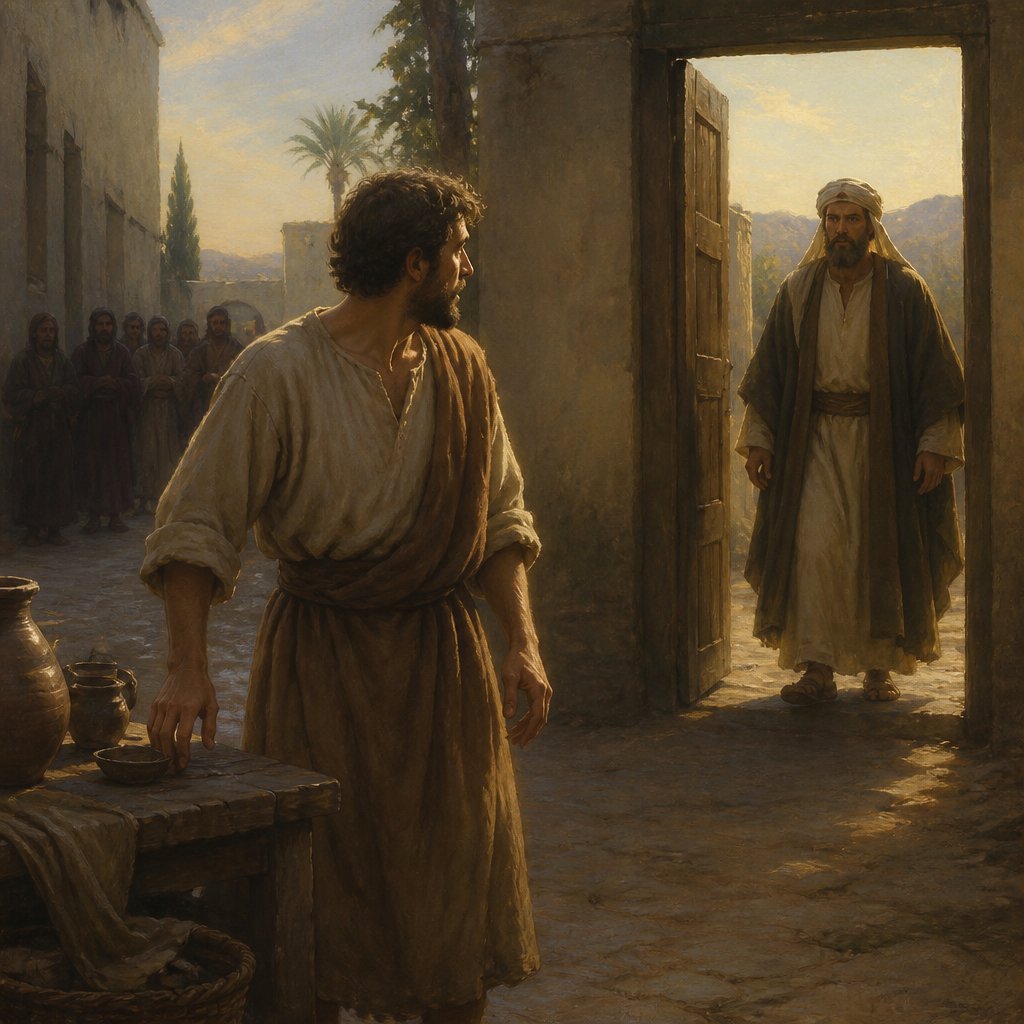
Luke 12:46 from the King James Version (KJV) of the Bible reads, "The lord of that servant will come in a day when he looketh not for him, and at an hour when he is not aware, and will cut him in sunder, and will appoint him his portion with the unbelievers." This verse is part of a larger passage in which Jesus is teaching his disciples about being prepared for the second coming of the Messiah and the importance of faithfulness in their stewardship.
The broader context of this verse can be found in Luke 12:35-48, where Jesus tells a parable about a master who goes away and leaves his servants in charge of his household. The master's return is unexpected, and he rewards the faithful servants who were prepared and watching for his return, but he punishes the unfaithful servant who was not ready. This portion of the teaching is about the importance of being diligent and faithful in our responsibilities while waiting for the return of Jesus.
The verse in question, Luke 12:46, specifically addresses the consequences of the unfaithful servant's actions. The use of imagery such as "cut him in sunder" and "appoint him his portion with the unbelievers" emphasizes the severity of the punishment for the servant's unfaithfulness. The servant is to be cut into pieces and given a portion among the unbelievers, indicating a complete severance from the master and a punishment equivalent to that of an unbeliever.
One of the key themes in this passage is the importance of faithfulness and readiness. The master's unexpected return serves as a metaphor for the second coming of Jesus Christ, and the faithful servant represents those who are prepared for this event. Jesus is urging his disciples to be vigilant and faithful in their stewardship, knowing that they will be held accountable for their actions when the master returns.
The imagery in this verse is striking and serves as a powerful warning to those who may become complacent or negligent in their duties. The idea of being "cut in sunder" is a graphic depiction of the severe consequences of unfaithfulness. Similarly, the notion of being "appointed his portion with the unbelievers" conveys the idea of being separated from the master and placed among those who do not have faith.
Symbolically, the unfaithful servant represents those who have been entrusted with responsibilities in the kingdom of God but have failed to fulfill them. The master represents Jesus Christ, who will return to judge the living and the dead. The punishment of being "cut in sunder" and being placed with the unbelievers serves as a warning to all believers to remain faithful and vigilant in their service to God.
Ultimately, the message of Luke 12:46 is a call to faithful stewardship and readiness for the return of Jesus Christ. It serves as a sobering reminder of the importance of being faithful and obedient in our responsibilities as followers of Christ. The imagery and language used in this verse emphasize the severity of the consequences for unfaithfulness, and it underscores the need for believers to remain vigilant and prepared for the return of their master.
Get our apps


Artwork for Luke 12:46

Luke 12:46 - "The lord of that servant will come in a day when he looketh not for him, and at an hour when he is not aware, and will cut him in sunder, and will appoint him his portion with the unbelievers."
"The lord of that servant will come in a day when he looketh not for him, and at an hour when he is not aware, and will cut him in sunder, and will appoint him his portion with the unbelievers." - Luke 12:46

Luke 9:46 - "¶ Then there arose a reasoning among them, which of them should be greatest."

Luke 1:46 - "And Mary said, My soul doth magnify the Lord,"

Luke 8:46 - "And Jesus said, Somebody hath touched me: for I perceive that virtue is gone out of me."

Luke 6:46 - "¶ And why call ye me, Lord, Lord, and do not the things which I say?"

Luke 22:46 - "And said unto them, Why sleep ye? rise and pray, lest ye enter into temptation."

Luke 7:46 - "My head with oil thou didst not anoint: but this woman hath anointed my feet with ointment."

Isaiah 46:12 - "¶ Hearken unto me, ye stouthearted, that are far from righteousness:"

Luke 19:46 - "Saying unto them, It is written, My house is the house of prayer: but ye have made it a den of thieves."

Luke 1:46-47 - "And Mary said: “My soul glorifies the Lord and my spirit rejoices in God my Savior."

"And Mary said, My soul doth magnify the Lord," - Luke 1:46

Luke 20:46 - "Beware of the scribes, which desire to walk in long robes, and love greetings in the markets, and the highest seats in the synagogues, and the chief rooms at feasts;"

Luke 24:46 - "And said unto them, Thus it is written, and thus it behoved Christ to suffer, and to rise from the dead the third day:"

Luke 2:46 - "And it came to pass, that after three days they found him in the temple, sitting in the midst of the doctors, both hearing them, and asking them questions."

"¶ Then there arose a reasoning among them, which of them should be greatest." - Luke 9:46

John 12:46 - "I am come a light into the world, that whosoever believeth on me should not abide in darkness."

Nehemiah 12:46 - "For in the days of David and Asaph of old there were chief of the singers, and songs of praise and thanksgiving unto God."

Matthew 12:46 - "¶ While he yet talked to the people, behold, his mother and his brethren stood without, desiring to speak with him."

Luke 8:46 - "And Jesus said, Somebody hath touched me: for I perceive that virtue is gone out of me."

Luke 8:46 - "And Jesus said, Somebody hath touched me: for I perceive that virtue is gone out of me."

Luke 23:46 - "¶ And when Jesus had cried with a loud voice, he said, Father, into thy hands I commend my spirit: and having said thus, he gave up the ghost."

Luke 11:46 - "And he said, Woe unto you also, ye lawyers! for ye lade men with burdens grievous to be borne, and ye yourselves touch not the burdens with one of your fingers."

Exodus 12:46 - "In one house shall it be eaten; thou shalt not carry forth ought of the flesh abroad out of the house; neither shall ye break a bone thereof."

Genesis 46:12 - "¶ And the sons of Judah; Er, and Onan, and Shelah, and Pharez, and Zerah: but Er and Onan died in the land of Canaan. And the sons of Pharez were Hezron and Hamul."

"¶ Hearken unto me, ye stouthearted, that are far from righteousness:" - Isaiah 46:12

"My head with oil thou didst not anoint: but this woman hath anointed my feet with ointment." - Luke 7:46

Jeremiah 46:12 - "The nations have heard of thy shame, and thy cry hath filled the land: for the mighty man hath stumbled against the mighty, and they are fallen both together."

"¶ And why call ye me, Lord, Lord, and do not the things which I say?" - Luke 6:46

Luke 12:25