What does Luke 12:7 mean?
“But even the very hairs of your head are all numbered. Fear not therefore: ye are of more value than many sparrows.” — Luke 12:7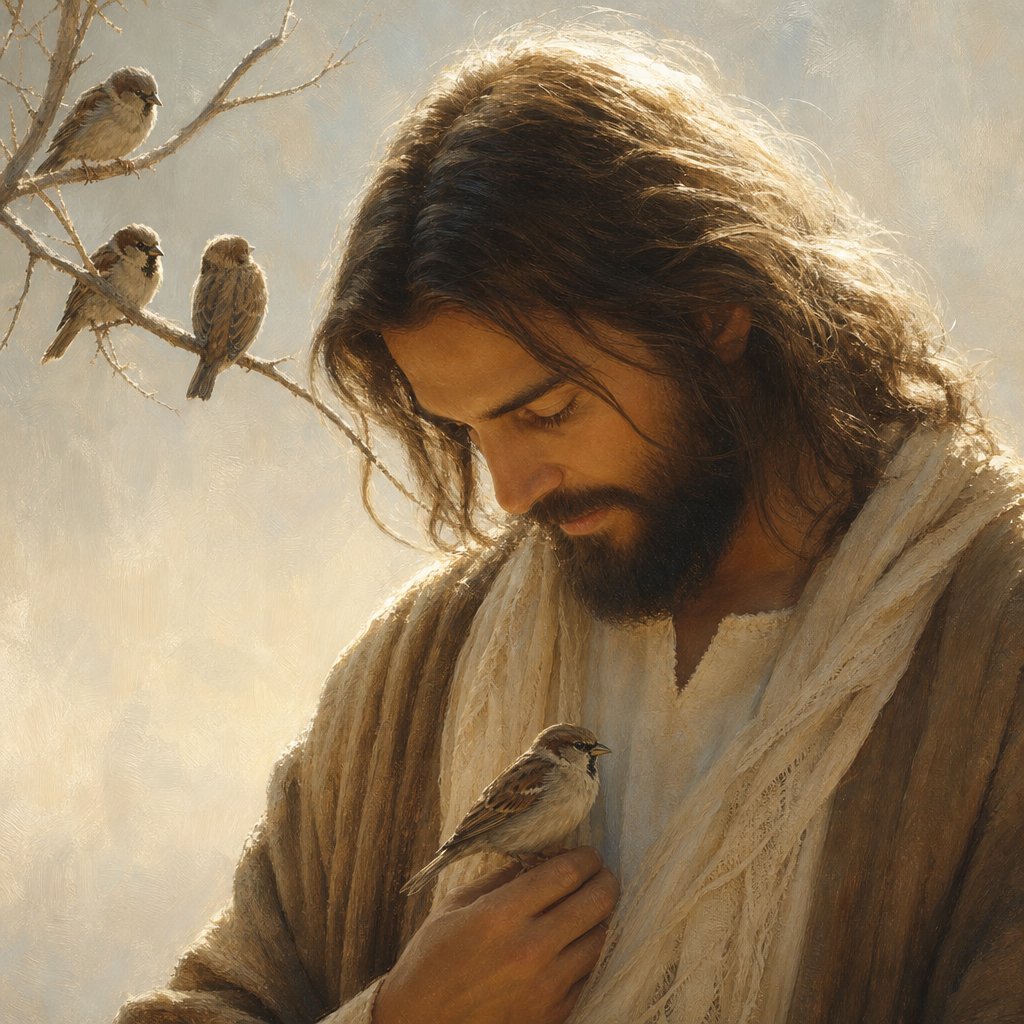
Luke 12:7 in the KJV reads, “But even the very hairs of your head are all numbered. Fear not therefore: ye are of more value than many sparrows.” Its meaning unfolds most clearly when it is heard inside its immediate setting and in the flow of Jesus’ teaching in Luke 12, where He is addressing disciples who are about to live under pressure, misunderstanding, and persecution. The verse is not offered as a sentimental saying but as a deliberate grounding of courage. Jesus is teaching that the believer’s safety is not ultimately in public approval or personal strength, but in the meticulous knowledge and sovereign care of God.
The context begins with Jesus warning against hypocrisy, “the leaven of the Pharisees,” and reminding His hearers that what is hidden will be revealed. That warning could produce fear: fear of exposure, fear of people’s judgments, fear of what authorities might do. Jesus then redirects the object of fear. He says they should not be afraid of them that kill the body and after that have no more that they can do, but rather fear Him who, after He hath killed, hath power to cast into hell. In other words, Jesus places temporal threats in their proper size compared with eternal realities. Immediately after this, He turns to comfort: God’s providence is not cold or distant. The God who must be reverenced is also the God who sees, values, and keeps account. Luke 12:7 is the climactic reassurance in that movement from misplaced fear to faithful fear, and from faithful fear to confident trust.
The symbolism of “the very hairs of your head” is a way of speaking about exhaustive, intimate knowledge. Hair is abundant, small, and ordinarily insignificant; it is also something that changes and falls without notice. By saying the hairs “are all numbered,” Jesus portrays God’s awareness as exact, not general. This is not merely that God knows “about” you, but that He knows you in detail, down to what you do not count and could not keep track of yourself. The verb “numbered” signals intentionality and possession: what is numbered is not overlooked. The point is not that hair is precious in itself, but that if God’s knowledge reaches that far, then nothing about your life escapes Him—not your circumstances, not your losses, not your dangers, not your tears, not even the small events you might dismiss as meaningless.
That image is joined to the comparison with sparrows. In the verses just before, Jesus says, “Are not five sparrows sold for two farthings, and not one of them is forgotten before God?” Sparrows were common and cheap, the kind of creature people might treat as expendable. Yet Jesus declares that even such a small life is not forgotten “before God,” meaning in God’s sight and presence. Luke 12:7 draws the conclusion: “Fear not therefore.” The “therefore” matters. It links God’s unfailing remembrance of the lowliest creature with God’s even greater care for those who belong to Him. The argument is from lesser to greater: if God’s providence reaches to sparrows, it reaches all the more to you.
The central theme, then, is God’s providential care and the believer’s value to God. “Ye are of more value than many sparrows” does not teach that human life is valuable in an abstract, merely philosophical way, but that to God, the disciple is precious in a personal, relational sense. In Luke’s setting, the disciple is someone confessing Christ in a world that might punish that confession. Jesus is saying that their worth is not determined by their social standing, their safety, or their ability to control outcomes. Their value rests in God’s regard, and God’s regard is demonstrated by His detailed knowledge and unforgetting attention.
The command “Fear not therefore” is not a denial that danger exists; it is a prohibition against letting danger become master. In Luke 12, fear is a spiritual battleground. If fear is fixed on men, the disciple may be driven into silence or denial. If fear is fixed on God in the sense Jesus has been teaching—reverence for the One who holds eternal judgment—then the disciple is freed from the tyranny of human threats. Luke 12:7 strengthens that freedom by adding that God’s sovereign authority is paired with God’s fatherly care. The disciple can speak, endure, and remain faithful because the One to be feared is also the One who counts hairs and forgets no sparrow.
There is also a theme of identity and assurance. Numbered hairs suggests that a believer is not anonymous in the crowd. Jesus had just described a multitude so great that they “trode one upon another,” yet in that press of people He speaks as if each individual life is distinctly known. The verse implies that the disciple’s life has meaning even when it looks small, and that the disciple’s suffering is not invisible even when it is private. It offers assurance without promising a painless life. Jesus does not say sparrows never fall, or that disciples will never be harmed. Rather, He says they are not forgotten, and they are valued. The comfort is not that nothing hard will happen, but that nothing that happens is outside God’s knowledge, care, and final accounting.
In prose, Luke 12:7 is Jesus’ gentle but firm answer to an anxious heart: you are not left to chance, not measured by the world’s prices, and not ultimately at the mercy of human power. God’s attention reaches to what you cannot measure, and His remembrance extends even to what the world dismisses. Therefore you need not live in the grip of fear. You may live and speak as one known, kept, and valued “before God,” confident that the One who holds eternal authority also holds your life in precise, personal care.
Get our apps


Artwork for Luke 12:7

Luke 12:7 - "But even the very hairs of your head are all numbered. Fear not therefore: ye are of more value than many sparrows."
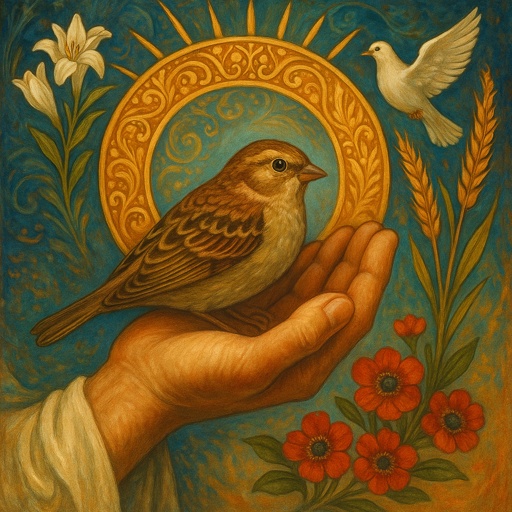
"But even the very hairs of your head are all numbered. Fear not therefore: ye are of more value than many sparrows." - Luke 12:7
"But even the very hairs of your head are all numbered. Fear not therefore: ye are of more value than many sparrows." - Luke 12:7

"But even the very hairs of your head are all numbered. Fear not therefore: ye are of more value than many sparrows." - Luke 12:7

Luke 7:12 - "Now when he came nigh to the gate of the city, behold, there was a dead man carried out, the only son of his mother, and she was a widow: and much people of the city was with her."
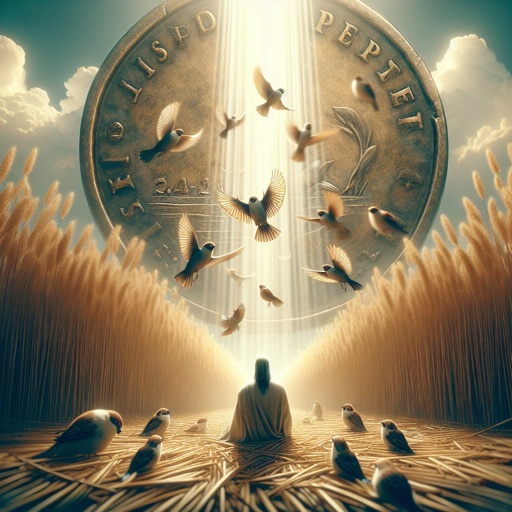
Luke 12:6-7 - "Are not five sparrows sold for two pennies? Yet not one of them is forgotten by God. Indeed, the very hairs of your head are all numbered. Don’t be afraid; you are worth more than many sparrows."

Luke 12:25
Luke 12:25
Luke 12: 49

Luke 12:34

Luke 12:10

Luke 12:50

Luke 7:33

Luke 7:50

Luke 7:50

Luke 12:12 - "For the Holy Ghost shall teach you in the same hour what ye ought to say."

Luke 1:11-12

Luke 12:25-26

Luke 12:25-26

Luke 12:25-26

Luke 12:25-26

Luke 12:25-26
Luke 12:25-26

Luke 1:11-12

Luke 12:25-26

Luke 1:11-12

Luke 1:11-12

Luke 7:36-50

Luke 7:41-47

Luke 15: 4-7