
The passage Luke 13:11-13 from the King James Version of the Bible reads: "And, behold, there was a woman which had a spirit of infirmity eighteen years, and was bowed together, and could in no wise lift up herself. And when Jesus saw her, he called her to him, and said unto her, Woman, thou art loosed from thine infirmity. And he laid his hands on her: and immediately she was made straight, and glorified God."
This passage is a significant moment in the life and ministry of Jesus Christ, as it demonstrates his compassion, healing power, and divine authority. The story of the woman with a spirit of infirmity is a powerful example of Jesus' ability to bring hope and transformation to those who are suffering.
The story begins by introducing a woman who has been afflicted by a spirit of infirmity for eighteen years. This woman is described as being "bowed together" and unable to lift herself up. Her condition is not only physical but also spiritual, as it is described as being caused by a spirit. This emphasizes the spiritual warfare that is often at play in cases of illness and suffering.
When Jesus sees the woman, he is moved with compassion and calls her to him. This act of calling her to him demonstrates Jesus' personal concern for the woman and his desire to bring healing and restoration to her. His words to her, "Woman, thou art loosed from thine infirmity," are a declaration of authority and power over her condition. Jesus speaks with certainty and confidence, knowing that his words will bring about a miraculous change in her life.
The physical act of Jesus laying his hands on the woman is a common gesture in the Bible that symbolizes the transfer of power, blessing, and healing. In this case, it represents the divine exchange that takes place as Jesus transfers his healing power to the woman, resulting in her immediate transformation. The woman is made straight, and she responds by glorifying God, recognizing that her healing is a result of God's work through Jesus.
This passage carries several significant themes that are central to the message of Christianity. One of the primary themes is the compassion and mercy of Jesus Christ. Throughout the Gospels, Jesus is portrayed as having deep compassion for those who are suffering, and this story is a powerful example of his willingness to reach out to those in need and bring healing to their lives.
Another important theme is the divine authority of Jesus. In calling the woman to him, speaking healing over her, and laying his hands on her, Jesus demonstrates his authority over sickness, disease, and spiritual oppression. This emphasizes the belief in Jesus as the Son of God and the source of all power and healing.
The story also highlights the transformative power of faith. The woman's response to Jesus' words and touch illustrates her faith in his ability to heal her. Her immediate physical transformation is a result of her belief in Jesus' authority and power. This serves as a reminder of the importance of faith in experiencing God's miraculous work in our lives.
The context of this passage is important in understanding its significance within the larger narrative of Jesus' ministry. Throughout the Gospels, Jesus is consistently portrayed as a healer, and stories like this one serve to demonstrate his identity as the long-awaited Messiah who brings wholeness and restoration to humanity.
In conclusion, the story of the woman with a spirit of infirmity in Luke 13:11-13 is a powerful testament to the compassion, authority, and healing power of Jesus Christ. It offers a message of hope and encouragement to those who are suffering, reminding them of the transformative power of faith and the willingness of Jesus to bring healing and restoration to their lives. This passage serves as a reminder of Jesus' identity as the Son of God and his desire to bring wholeness to all who come to him in faith.
Get our apps


Artwork for Luke 13:11-13

"And behold, there was a woman who had a spirit of infirmity eighteen years, and was bent over and could in no way raise herself up. But when Jesus saw her, He called her to Him and said to her, "Woman, you are loosed from your infirmity." And He laid His hands on her, and immediately she was made straight, and glorified God." - Luke 13:11-13
Psalm 1:1-3
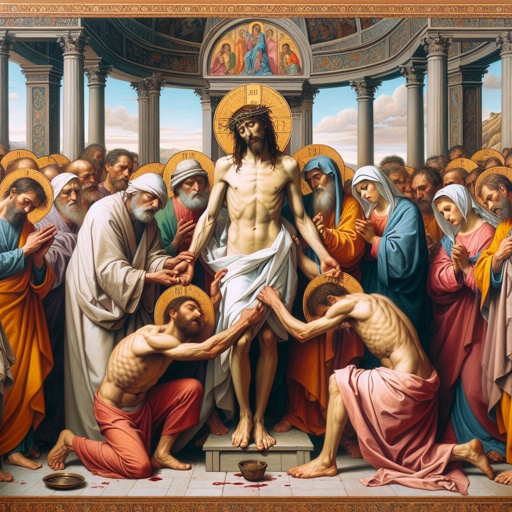
Pain 1:1-3

Luke 13:11 - "¶ And, behold, there was a woman which had a spirit of infirmity eighteen years, and was bowed together, and could in no wise lift up herself."

Ephesians 1:3

Ezekiel 38:1-3

Habakkuk 2:1-3

Daniel 4:1-3

1 John 3:1-3

Luke 13:18-19

Luke 13:20-21

Luke 13:18-19

Luke 13:20-21
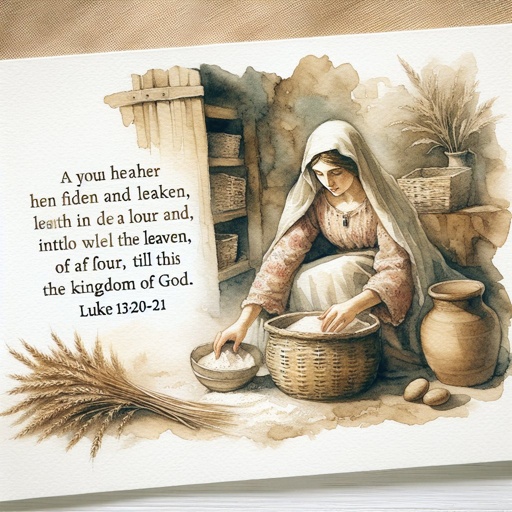
Luke 13:20-21

Luke 13:20-21

Luke 13:20-21

Luke 13:13 - "And he laid his hands on her: and immediately she was made straight, and glorified God."

Create a picture of Genesis 1:3

Luke 8:13

Luke 1:13

Luke 1:13

Luke 8:13

Luke 13:24

Luke 1:13

Luke 8:13

Luke 1:13

Luke 1:13

Luke 2:13

Luke 1:13

Luke 11:13 - "If ye then, being evil, know how to give good gifts unto your children: how much more shall your heavenly Father give the Holy Spirit to them that ask him?"