What does Luke 13:21 mean?
“It is like leaven, which a woman took and hid in three measures of meal, till the whole was leavened.” — Luke 13:21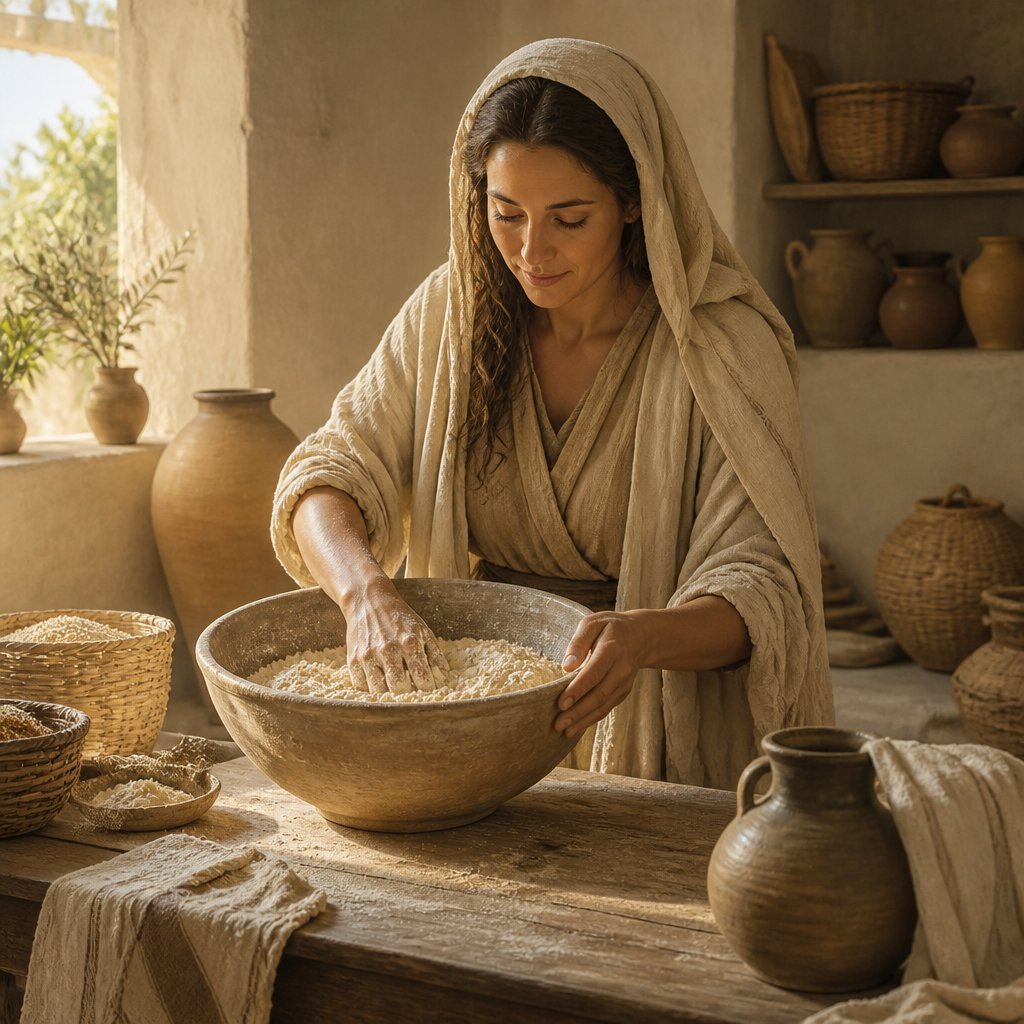
Luke 13:21 (KJV) states, "It is like leaven, which a woman took and hid in three measures of meal, till the whole was leavened." This parable is found in the context of Jesus' teaching about the Kingdom of God. In this verse, Jesus compares the Kingdom of God to leaven, which is a substance used to make bread rise.
The imagery in this parable is rich with symbolism and carries deep spiritual meaning. First, leaven was typically seen as a symbol of corruption and impurity in Jewish culture. It was often used in the Bible to represent sin and false teaching. However, in this context, Jesus uses leaven as a positive symbol to illustrate how the Kingdom of God works in the world.
The woman who hides the leaven in the meal represents the unseen, gradual, and transformative work of the Kingdom. The three measures of meal represent the entire world, and Jesus is saying that the influence of the Kingdom of God will eventually permeate and transform the whole world. This speaks to the expansive and inclusive nature of the Kingdom, which is not limited to a certain group of people or geographical location, but is meant for all of humanity.
The process of the leaven spreading throughout the meal is a metaphor for the transformative power of the Kingdom of God. It starts small and hidden, but as it works through the meal, it affects every part of it. Similarly, the Kingdom works in the hearts of individuals, transforming them from within and eventually affecting the world around them.
Furthermore, the idea of the leaven causing the whole lump to rise speaks to the idea of growth and expansion. The Kingdom of God is not static, but it is constantly growing and advancing. It has the power to change individuals, communities, and societies, ultimately bringing about the renewal of all creation.
In a broader theological context, this parable also speaks to the nature of God's redemptive work in the world. It shows that God's Kingdom does not come through force or coercion, but through the quiet and persistent work of the Holy Spirit. Just as leaven transforms dough into bread, the Kingdom of God transforms human hearts and society as a whole.
The theme of transformation and renewal is central to this parable. It emphasizes the power of the Kingdom of God to bring about change and the restoration of all things. It speaks to the hope of a world where justice, peace, and righteousness prevail, and where God's reign is fully realized.
This parable also challenges our understanding of how the Kingdom of God operates. It shows that God's ways are different from human ways, and that true power is found in the gentle and transformative work of the Spirit.
Overall, Luke 13:21 (KJV) offers a profound message about the nature and expansion of the Kingdom of God. It speaks to the transformative power of God's reign, the inclusivity of the Kingdom, and the gradual but sure growth of God's redemptive work in the world. It is a reminder that God is at work in the world, and that His Kingdom will ultimately triumph over all powers and principalities.
Get our apps


Artwork for Luke 13:21
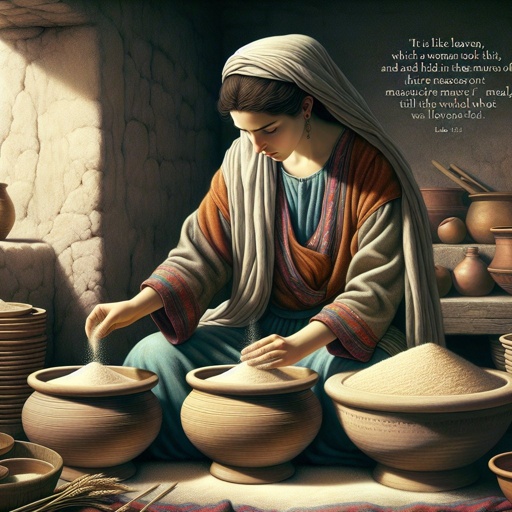
Luke 13:21 - "It is like leaven, which a woman took and hid in three measures of meal, till the whole was leavened."
"It is like leaven, which a woman took and hid in three measures of meal, till the whole was leavened." - Luke 13:21

Luke 13:20-21

Luke 13:20-21
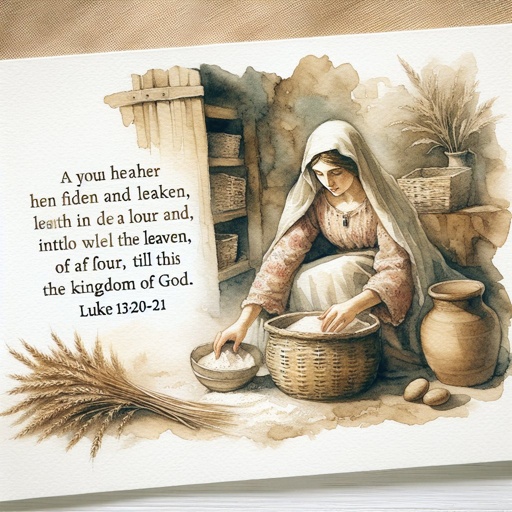
Luke 13:20-21

Luke 13:20-21

Luke 13:20-21

Luke 21:13 - "And it shall turn to you for a testimony."
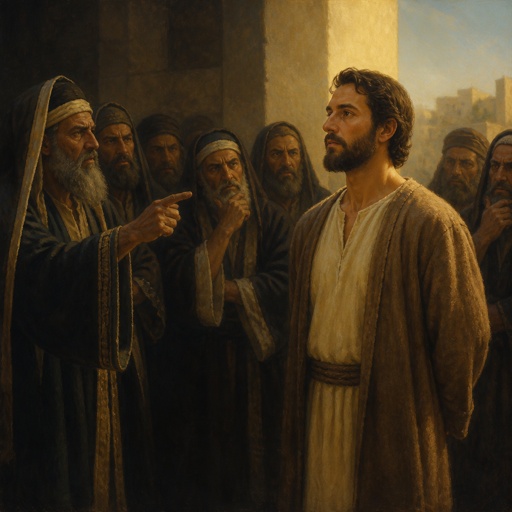
"And it shall turn to you for a testimony." - Luke 21:13

Habakkuk 2:1-3

Luke 15:21

Luke 21:24

Luke 15:21

Luke 6:21-26

luke 21:5-19

Luke 13:18-19

Luke 13:18-19

Luke 6:21-26

Luke 21:15-19

Luke 2:16 - 21

Luke 1:13

Luke 1:13

Luke 8:13

Luke 13:24

Luke 8:13

Luke 1:13

Luke 1:13

Luke 8:13

Luke 1:13

Luke 2:13