What does Luke 13:4 mean?
“Or those eighteen, upon whom the tower in Siloam fell, and slew them, think ye that they were sinners above all men that dwelt in Jerusalem?” — Luke 13:4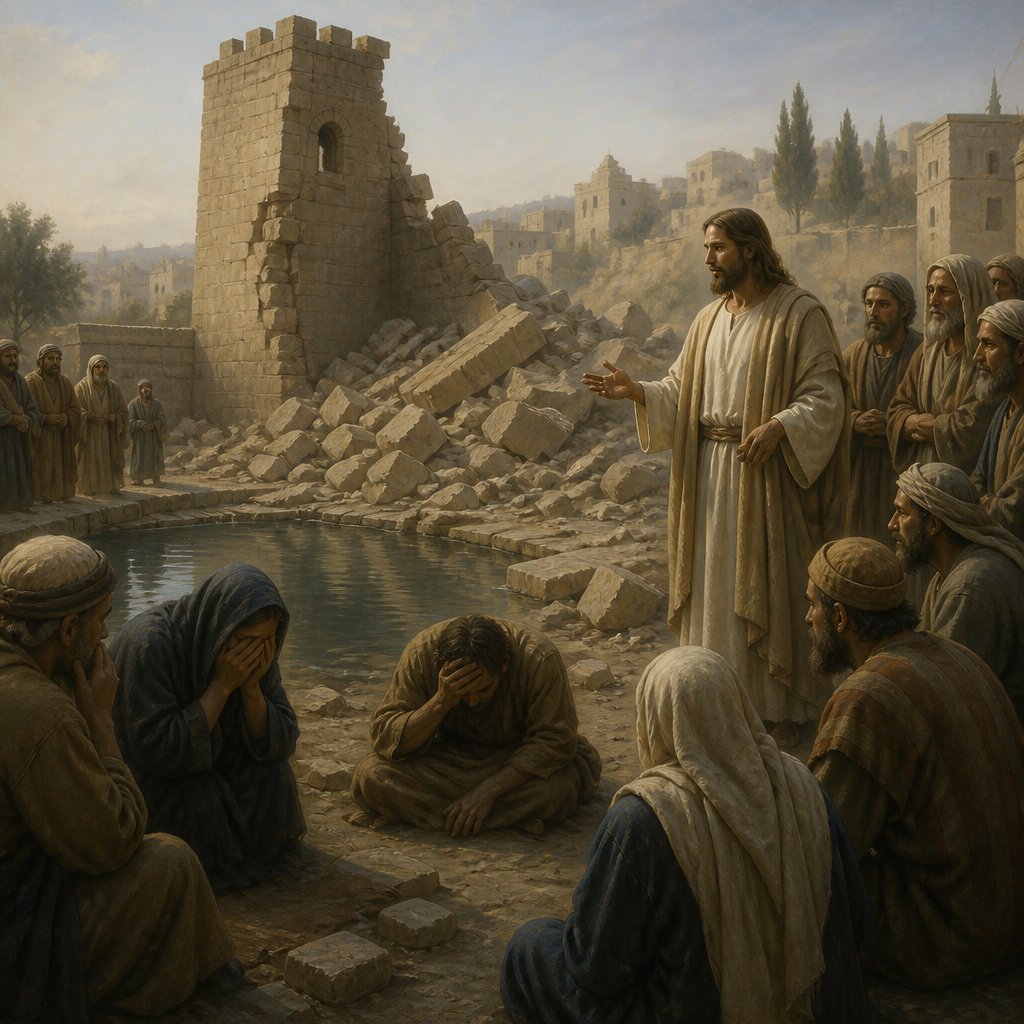
Luke 13:4 from the King James Version (KJV) states, "Or those eighteen, upon whom the tower in Siloam fell, and slew them, think ye that they were sinners above all men that dwelt in Jerusalem?" This verse comes from a passage in which Jesus addressed the crowd, discussing the importance of repentance and the consequences of not turning away from sin.
The context of this verse is crucial to understanding its meaning. Jesus had been preaching about the need for repentance, using examples such as those who died in a tragic accident in Siloam. The people of that time believed that suffering and death were punishments for sin, and Jesus wanted to correct this misconception. He wants to address the idea that those who suffer and die are somehow worse sinners than others. Jesus reminded the people that tragedy can strike anyone, regardless of their level of sin.
The theme of this verse is the unpredictability of life and the concept of divine justice. It challenges the common belief at the time that suffering or misfortune were direct consequences of one's sin. It also emphasizes the necessity of repentance and the need to be prepared for the uncertainty of life.
The tower in Siloam was a real historical event that is mentioned in the Bible. It is thought to have been a part of Jerusalem's infrastructure and was likely well known to the people Jesus was speaking to. The collapse of the tower would have been a significant news event, and it is likely that the people listening to Jesus' words would have been familiar with it.
The symbolism of the tower falling in Siloam can be interpreted in a number of ways. It serves as a powerful reminder of the unpredictable nature of life and the inevitability of death. It also symbolizes the fragile nature of human existence and the need for spiritual preparedness. Additionally, it represents the idea that tragic events are not necessarily related to a person's sin, thus challenging the prevailing beliefs of the time.
In this verse, Jesus is urging the people to focus on their own repentance and spiritual well-being rather than speculating about the sinfulness of others. He is emphasizing the need for humility and self-reflection, as well as the importance of living a righteous and repentant life.
Overall, Luke 13:4 is a powerful reminder of the fragility of life and the importance of spiritual readiness. It challenges the common beliefs of the time and provides a new perspective on suffering and sin. It encourages self-reflection and repentance, emphasizing the significance of living a righteous and humble life. Its message remains relevant today, serving as a reminder to focus on our own spiritual well-being rather than passing judgment on others.
Get our apps


Artwork for Luke 13:4

Luke 13:4 - "Or those eighteen, upon whom the tower in Siloam fell, and slew them, think ye that they were sinners above all men that dwelt in Jerusalem?"
"Or those eighteen, upon whom the tower in Siloam fell, and slew them, think ye that they were sinners above all men that dwelt in Jerusalem?" - Luke 13:4

Luke 4:13 - "And when the devil had ended all the temptation, he departed from him for a season."

"And when the devil had ended all the temptation, he departed from him for a season." - Luke 4:13

Luke 13:18-19

Luke 13:20-21

Luke 13:20-21

Luke 13:18-19

Luke 13:20-21

Luke 13:20-21

Luke 13:20-21

Luke 1:13

Luke 1:13

Luke 8:13

Luke 13:24

Luke 8:13

Luke 1:13

Luke 1:13

Luke 8:13

Luke 1:13

Luke 2:13

Luke 1:13

Luke 13:13 - "And he laid his hands on her: and immediately she was made straight, and glorified God."

Luke 2:13-14

Luke 13:6-9

Luke 16:1-13

Luke 2:13-14

Luke 24:13-35

luke 13:28-37

Luke 13:28-27