What does Luke 15:2 mean?
“And the Pharisees and scribes murmured, saying, This man receiveth sinners, and eateth with them.” — Luke 15:2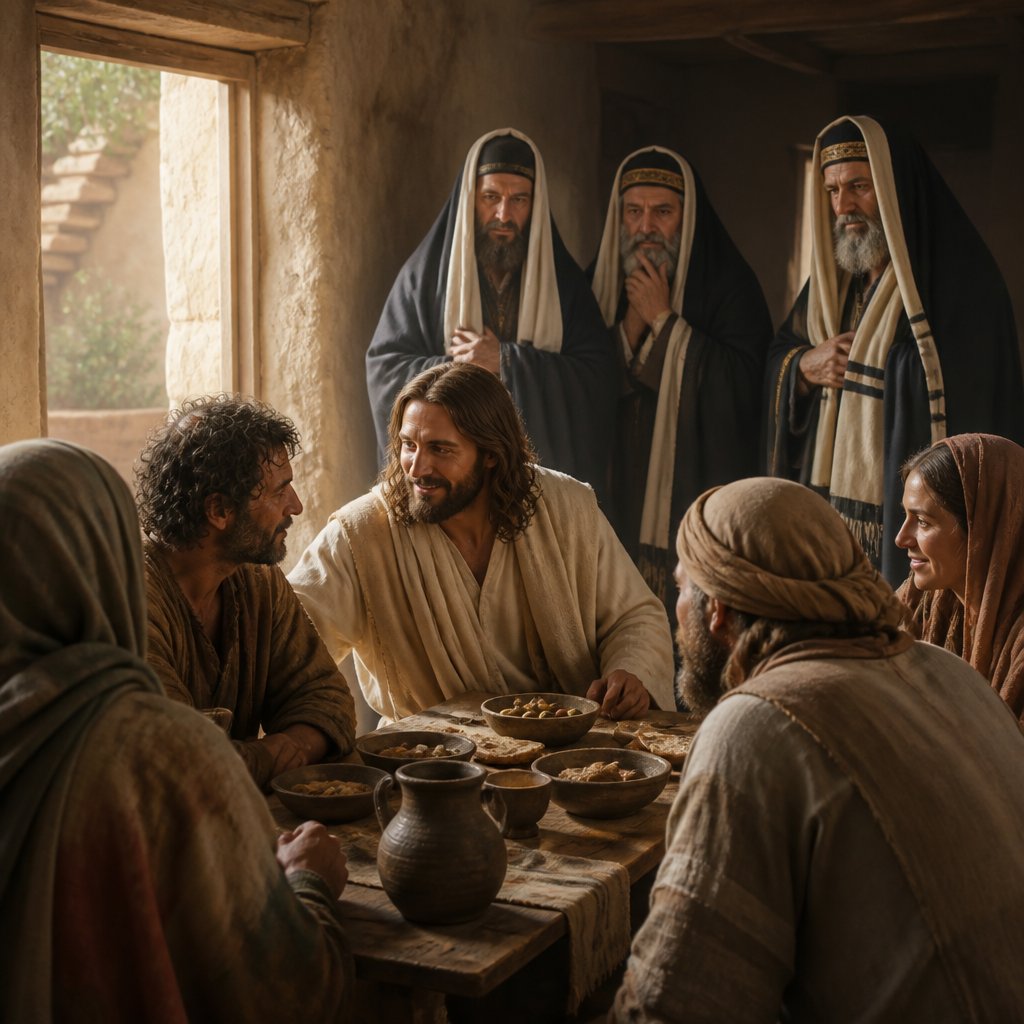
Luke 15:2 from the King James Version of the Bible reads: "And the Pharisees and scribes murmured, saying, This man receiveth sinners, and eateth with them." This verse is a part of the larger parable of the lost sheep, the lost coin, and the prodigal son, which Jesus told to illustrate the love and forgiveness of God.
Context:
This verse takes place during a gathering where Jesus is spending time with tax collectors and sinners. The Pharisees and scribes, who were religious leaders and scholars, were critical of Jesus for associating with such individuals. In their minds, someone who claimed to be a teacher sent by God should not be mingling with those who were known sinners.
Themes:
1. Love and Forgiveness: The overarching theme of the entire chapter of Luke 15 is the love and forgiveness of God. The parables of the lost sheep, the lost coin, and the prodigal son all demonstrate God's relentless pursuit of those who have strayed. These stories show that God's love knows no bounds and that he is willing to go to great lengths to bring back those who have gone astray.
2. Hypocrisy: Another theme present in this verse is the hypocrisy of the Pharisees and scribes. While they outwardly portrayed themselves as righteous and holy, their hearts were filled with judgment and condemnation towards those whom they deemed as sinners. Jesus consistently rebuked the Pharisees and scribes for their hypocrisy throughout the Gospels.
3. Inclusivity: Jesus' willingness to associate with sinners and outcasts sends a powerful message of inclusivity. He did not discriminate or shun those who were considered undesirable by society. Instead, he welcomed them and showed them love and compassion, demonstrating that God's grace is available to all, regardless of their past.
Symbolism:
The act of eating with sinners symbolizes Jesus' desire to have a relationship with those who are lost and in need of a savior. In Jewish culture, sharing a meal with someone was a sign of acceptance and fellowship. By eating with sinners, Jesus was showing that he was not afraid to associate with those who were considered unclean or unworthy.
The murmuring of the Pharisees and scribes symbolizes their self-righteousness and lack of understanding of God's true nature. Instead of rejoicing at the fact that sinners were being reached and saved, they chose to murmur and complain, exposing the hardness of their hearts.
Overall, Luke 15:2 is a powerful verse that highlights the unconditional love and inclusivity of God. Jesus' actions and teachings in this verse challenge us to examine our own attitudes towards those who are different from us and to strive to embody the same love and grace that Jesus demonstrated. We are reminded that God's love knows no boundaries and that he eagerly welcomes all who are willing to come to him in repentance.
Get our apps


Artwork for Luke 15:2

Luke 15:2 - "And the Pharisees and scribes murmured, saying, This man receiveth sinners, and eateth with them."
"And the Pharisees and scribes murmured, saying, This man receiveth sinners, and eateth with them." - Luke 15:2

Luc 15:1-2

Luc 15:1-2

Luc 15:1-2

Luc 15:1-2
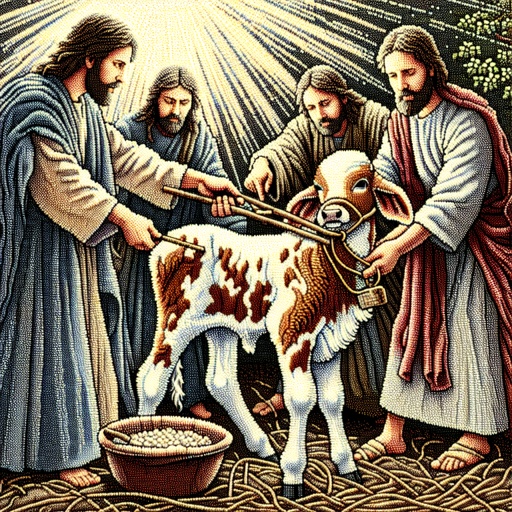
Luke 15:23

Luke 15:10

Luke 15:21

Luke 15:21

Luke 15: 4-7

Luke 11:14-15

Luke 21:15-19

Luke 15:11-32

Luke 15:15 - "And he went and joined himself to a citizen of that country; and he sent him into his fields to feed swine."

Luke 4:15 - "And he taught in their synagogues, being glorified of all."

Luke 15:3 - "¶ And he spake this parable unto them, saying,"

Luke 15:11 - "¶ And he said, A certain man had two sons:"

Luke 9:15 - "And they did so, and made them all sit down."

Luke 6:15 - "Matthew and Thomas, James the son of Alphaeus, and Simon called Zelotes,"

Luke 15:26 - "And he called one of the servants, and asked what these things meant."

Luke 15:23 - "And bring hither the fatted calf, and kill it; and let us eat, and be merry:"

Luke 2:15 - "And it came to pass, as the angels were gone away from them into heaven, the shepherds said one to another, Let us now go even unto Bethlehem, and see this thing which is come to pass, which the Lord hath made known unto us."

Luke 15:5 - "And when he hath found it, he layeth it on his shoulders, rejoicing."

Luke 15:1 - "Then drew near unto him all the publicans and sinners for to hear him."

Luke 2:2

Luke 10:15 - "And thou, Capernaum, which art exalted to heaven, shalt be thrust down to hell."

Luke 15:24 - "For this my son was dead, and is alive again; he was lost, and is found. And they began to be merry."

Luke 11:15 - "But some of them said, He casteth out devils through Beelzebub the chief of the devils."

Luke 7:15 - "And he that was dead sat up, and began to speak. And he delivered him to his mother."