What does Luke 15:24 mean?
“For this my son was dead, and is alive again; he was lost, and is found. And they began to be merry.” — Luke 15:24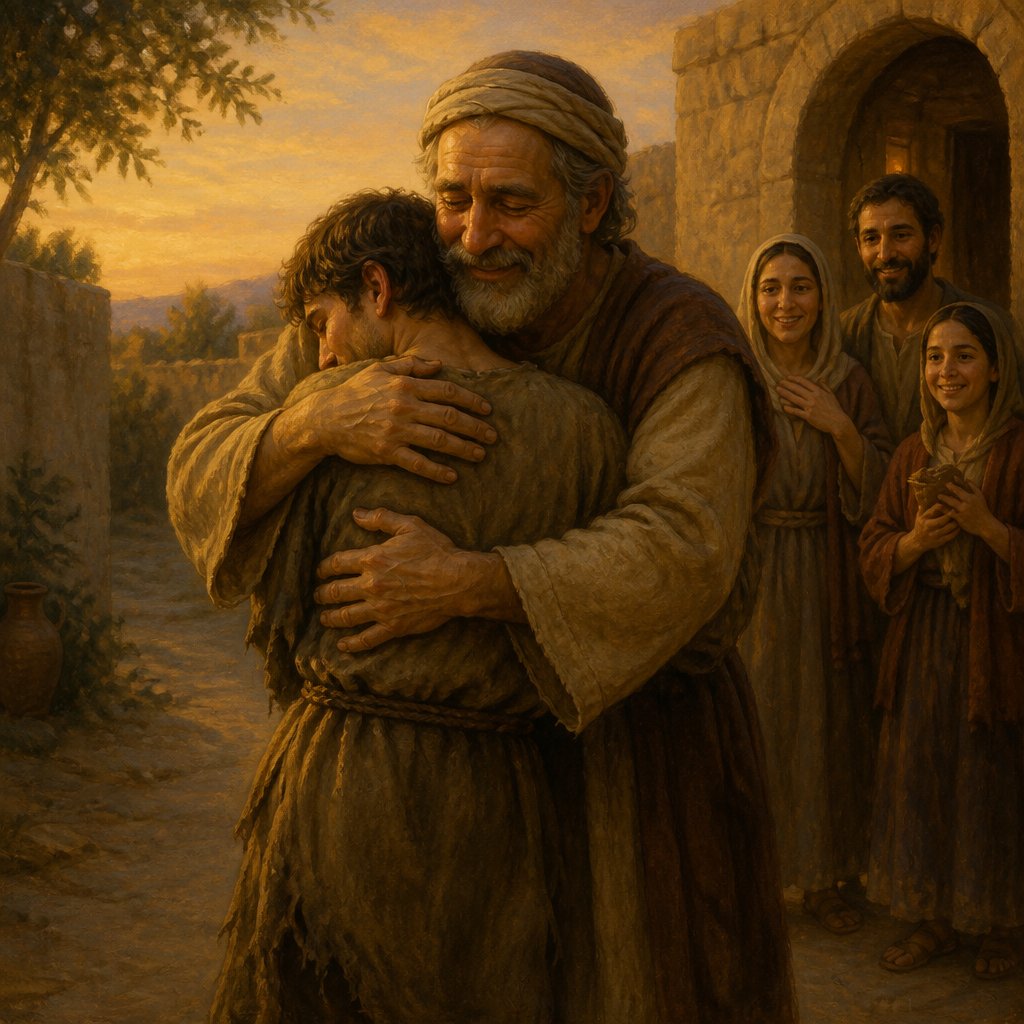
The Bible verse Luke 15:24 in the King James Version (KJV) reads: "For this my son was dead, and is alive again; he was lost, and is found. And they began to be merry." This verse is found in the parable of the Prodigal Son, which is one of the most well-known and celebrated stories in the New Testament.
To fully understand the significance of this verse, it is important to first provide the context of the parable. In Luke 15:11-32, Jesus tells the story of a man who had two sons. The younger son asks for his inheritance early and leaves his father's house to squander his wealth on extravagant living. However, when a famine strikes, the son finds himself in a desperate situation and decides to return to his father's house and beg for forgiveness. The father, filled with compassion, runs to greet his son and welcomes him back with open arms. This act of forgiveness and reconciliation between the father and the prodigal son is the focus of Luke 15:24.
The themes of forgiveness, redemption, and unwavering love are prominent in this verse. In the story, the father's response to the return of his lost son exemplifies the boundless mercy and forgiveness of God. Despite the son's betrayal and reckless behavior, the father embraces him without hesitation, demonstrating the unconditional love that God has for his children. This reflects the message of hope and the possibility of repentance and being restored to a right relationship with God.
The theme of repentance is also central to this verse. The son's decision to return to his father and confess his wrongdoings symbolizes a turning away from sin and a genuine desire to make amends. The father's joy and celebration at his son's return signify the joy in heaven over a sinner who repents, as mentioned in Luke 15:7.
Furthermore, the imagery used in the verse carries significant symbolism. The phrases "dead" and "alive again" reflect the spiritual death and resurrection experienced by the prodigal son. When the son chose to leave his father's house, he was spiritually dead and lost in sin. However, his return symbolizes a spiritual rebirth and restoration. This reflects the transformative power of God's forgiveness and the hope of new life in Christ.
The celebration that follows the son's return also emphasizes the theme of reconciliation and restoration. Despite the son's past transgressions, the father's joy and the festive atmosphere convey the message of reconciliation and renewed fellowship within the family. This mirrors the reconciliation that takes place between God and humanity through the sacrificial death and resurrection of Jesus Christ.
It is important to note that the parable of the Prodigal Son is not just a story of individual repentance but also a reminder of God's grace and the inclusive nature of His kingdom. The elder brother's reaction to the father's forgiveness highlights the tendency to hold onto resentment and judgment rather than embracing the opportunity for reconciliation. This serves as a cautionary reminder for believers to cultivate a spirit of forgiveness and compassion towards others.
In conclusion, Luke 15:24 in the King James Version encapsulates the profound message of forgiveness, redemption, and joyous celebration found in the parable of the Prodigal Son. It serves as a powerful reminder of God's unending love and mercy, as well as the transformative power of repentance and reconciliation. This verse continues to inspire and encourage believers to embrace the hope of restoration and the boundless grace of God.
Get our apps


Artwork for Luke 15:24

Luke 15:24 - "For this my son was dead, and is alive again; he was lost, and is found. And they began to be merry."

"For this my son was dead, and is alive again; he was lost, and is found. And they began to be merry." - Luke 15:24

Luke 24:15 - "And it came to pass, that, while they communed together and reasoned, Jesus himself drew near, and went with them."

"And it came to pass, that, while they communed together and reasoned, Jesus himself drew near, and went with them." - Luke 24:15

Luke 24:1

Luke 24:35

Luke 24:42

Luke 21:24

Luke 13:24

luke 24:17

Luke 24:8 - "And they remembered his words,"

Luke 24:13-35

LUKE 24:41-43

Luke 24:48 - "And ye are witnesses of these things."

Genesis 24-15

Joshua 24:15

Luke 24:24 - "And certain of them which were with us went to the sepulchre, and found it even so as the women had said: but him they saw not."

Genesis 24:15

Joshua 24:15

Joshua 24:15

Matthew 24:15

Luke 24:3 - "And they entered in, and found not the body of the Lord Jesus."

Luke 23:24 - "And Pilate gave sentence that it should be as they required."
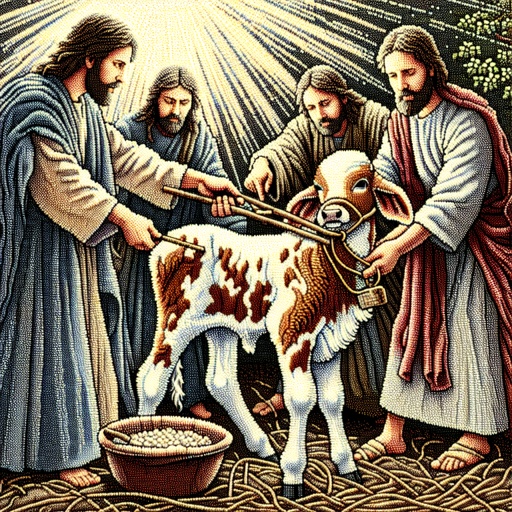
Luke 15:23

Luke 15:10

Luke 15:21

Luke 15:21

Luke 24:45 - "Then opened he their understanding, that they might understand the scriptures,"

Luke 24:52 - "And they worshipped him, and returned to Jerusalem with great joy:"

Luke 24:16 - "But their eyes were holden that they should not know him."