What does Luke 15:30 mean?
“But as soon as this thy son was come, which hath devoured thy living with harlots, thou hast killed for him the fatted calf.” — Luke 15:30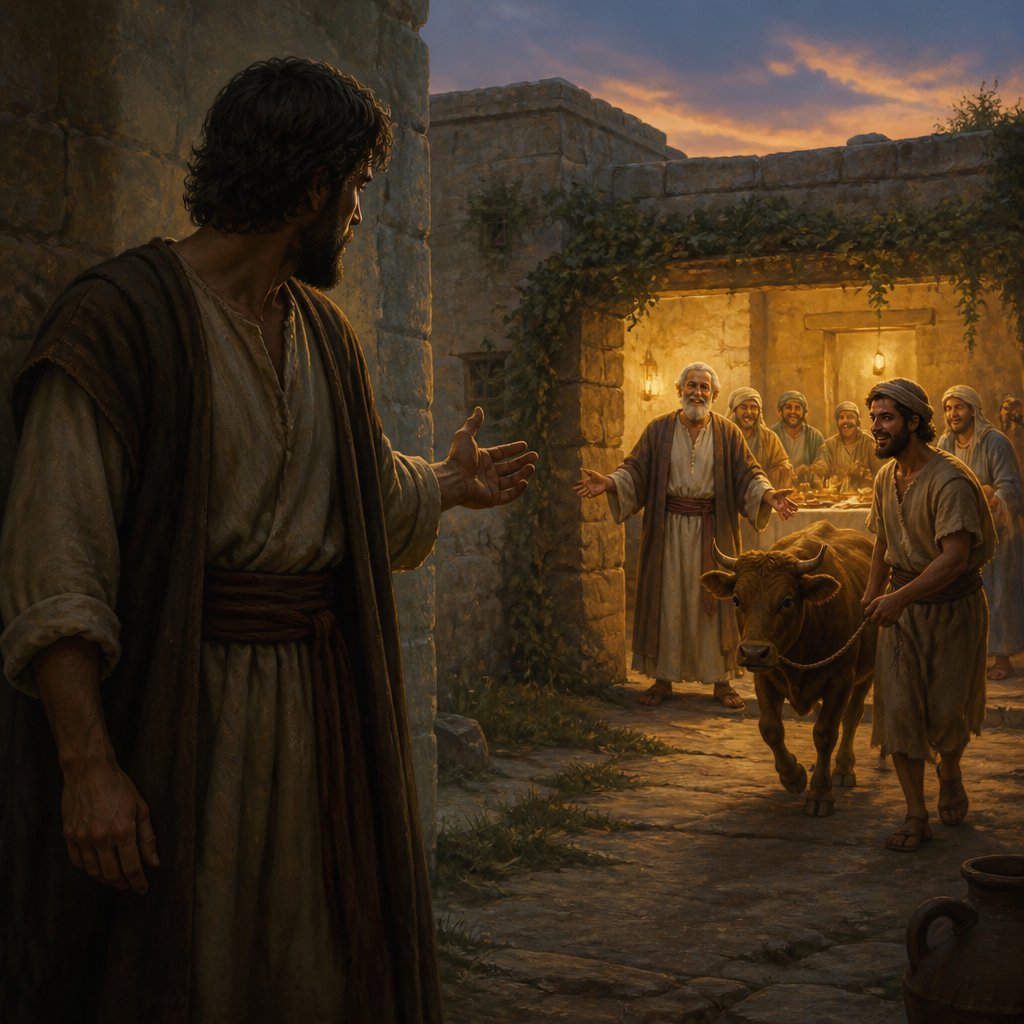
The verse Luke 15:30 in the King James Version of the Bible is part of the famous Parable of the Prodigal Son, a story told by Jesus Christ to illustrate God's forgiveness and love for sinners. In this parable, a wealthy man has two sons, one of whom asks for his inheritance and squanders it in reckless living. When he returns home, repentant for his actions, his father welcomes him with open arms and celebrates his return. However, the older son becomes angry and refuses to join in the celebration.
The verse in question reads, "But as soon as this thy son was come, which hath devoured thy living with harlots, thou hast killed for him the fatted calf." This statement is from the older son, who is expressing his frustration and anger towards his father for celebrating the return of his wayward brother. The older son feels that his father is unfairly showing favoritism towards his younger brother, who has wasted his inheritance on sinful living.
This verse brings to light several important themes and lessons that are central to the Christian faith. One of the key themes is the idea of forgiveness and redemption. The parable as a whole emphasizes God's willingness to forgive those who repent and turn back to Him, no matter how far they have strayed. Just as the father in the parable warmly welcomes his repentant son, so too does God welcome sinners who come to Him seeking forgiveness.
Another important theme in this verse is the concept of jealousy and resentment. The older son's reaction to his brother's return reveals the darker side of human nature – the tendency to be envious and bitter towards others. The older son's anger and bitterness towards his father and brother serves as a cautionary tale about the dangers of harboring resentment in one's heart.
Context is an important aspect of understanding this verse. In the broader context of the Gospel of Luke, this parable is one of three parables that Jesus tells in response to the Pharisees and scribes who were grumbling about Jesus associating with sinners and tax collectors. Through the Parable of the Prodigal Son, Jesus teaches about the boundless love and mercy of God, and challenges the religious leaders to reconsider their attitudes towards those who have fallen into sin.
There is also significant symbolism in this verse. The image of the "fatted calf" being slain for the celebration of the prodigal son's return is symbolic of the lavishness and extravagance of God's grace. In biblical times, the killing of a fatted calf was a sign of honor and celebration, and it represents the joy that God experiences when a sinner repents and returns to Him.
Overall, Luke 15:30 is a poignant and powerful verse that encapsulates the timeless themes of forgiveness, redemption, jealousy, and grace. It serves as a reminder of God's unconditional love for all His children, as well as a challenge for believers to examine their own hearts and attitudes towards others. It is a verse that continues to resonate with Christians of all ages, offering hope and encouragement in the face of human frailties and God's unending love.
Get our apps


Artwork for Luke 15:30

Luke 15:30 - "But as soon as this thy son was come, which hath devoured thy living with harlots, thou hast killed for him the fatted calf."
"But as soon as this thy son was come, which hath devoured thy living with harlots, thou hast killed for him the fatted calf." - Luke 15:30

Luke 1:30

luke 9:30

luke 6:30

luke 9:29- 30

african american luke 10:30

Luke 14:30 - "Saying, This man began to build, and was not able to finish."

Luke 2:30 - "For mine eyes have seen thy salvation,"

Joshua 15:30 - "And Eltolad, and Chesil, and Hormah,"

1.samuel 15:30

1.samuel 15:30

Exodus 28:15-30

Genesis 29:15-30
Luke 20:30 - "And the second took her to wife, and he died childless."

Luke 1:30 Gabriel visits Mary

Luke 17:30 - "Even thus shall it be in the day when the Son of man is revealed."

Luke 4:30 - "But he passing through the midst of them went his way,"

Luke 13:30 - "And, behold, there are last which shall be first, and there are first which shall be last."

Luke 23:30 - "Then shall they begin to say to the mountains, Fall on us; and to the hills, Cover us."

Luke 9:30 - "And, behold, there talked with him two men, which were Moses and Elias:"

Mark 15:30 - "Save thyself, and come down from the cross."

Luke 7:30 - "But the Pharisees and lawyers rejected the counsel of God against themselves, being not baptized of him."

Luke 11:30 - "For as Jonas was a sign unto the Ninevites, so shall also the Son of man be to this generation."
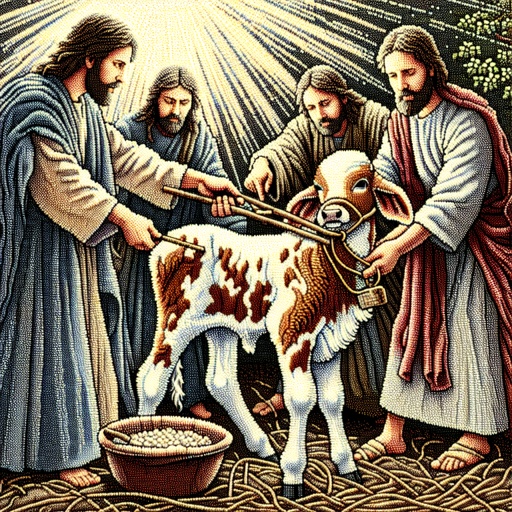
Luke 15:23

Luke 15:10

Luke 15:21

Luke 15:21

1 Corinthians 15:30 - "And why stand we in jeopardy every hour?"

Luke 1:30 - "And the angel said unto her, Fear not, Mary: for thou hast found favour with God."