What does Luke 15:6 mean?
“And when he cometh home, he calleth together his friends and neighbours, saying unto them, Rejoice with me; for I have found my sheep which was lost.” — Luke 15:6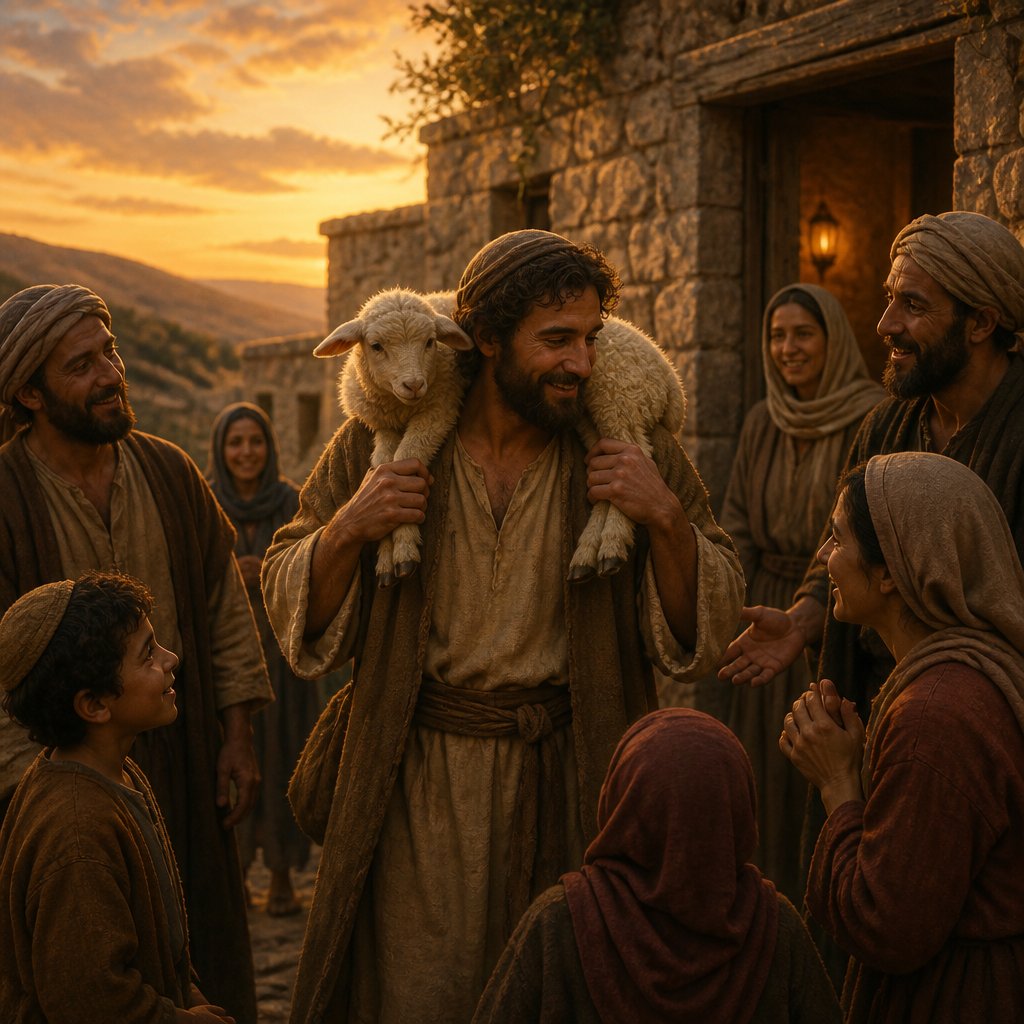
The Bible verse Luke 15:6, as quoted in the King James Version, states, "And when he cometh home, he calleth together his friends and neighbours, saying unto them, Rejoice with me; for I have found my sheep which was lost."
This verse is found within the larger context of Luke 15, which is a chapter in the New Testament that contains a series of parables shared by Jesus. In this particular chapter, Jesus tells the parables of the Lost Sheep, the Lost Coin, and the Prodigal Son to illustrate the importance of God's love and mercy for those who have gone astray.
In the context of this verse, the shepherd represents God, who searches for and rescues those who have strayed from Him. The lost sheep represents humanity, which has turned away from God and become lost in sin. The shepherd's joy upon finding the lost sheep reflects the joy that God experiences when one of His lost children is found and returns to Him.
One of the central themes of this verse is the concept of God's love and compassion for His people. The shepherd's actions demonstrate the lengths to which God will go to seek out and rescue those who have become lost. This serves as a powerful reminder that no matter how far we may have strayed, God is always there, ready to welcome us back into His embrace with open arms.
Another important theme in this verse is the importance of community and celebration. When the shepherd finds the lost sheep, he calls together his friends and neighbors to celebrate and rejoice with him. This illustrates the joy that is experienced not only by the shepherd, but also by those around him. In a similar way, when someone turns back to God after being lost in sin, there is great rejoicing and celebration in heaven (Luke 15:7).
The symbolism within this verse is rich and profound. The shepherd represents God, who actively seeks out those who are lost. The sheep represents humanity, which is prone to wandering and becoming lost in sin. The act of finding the lost sheep represents God's mercy and grace, as well as the restoration and reconciliation that comes from being reunited with Him. The celebration that follows the finding of the lost sheep represents the joy and rejoicing that takes place in heaven when a sinner repents and returns to God.
Overall, this verse serves as a powerful reminder of God's unending love and compassion for His people. It also emphasizes the importance of community and celebration in the context of spiritual restoration. The imagery and symbolism contained within this verse provide a powerful illustration of the depth of God's love and the lengths to which He will go to seek out and save those who have become lost. It is a message of hope and redemption that continues to resonate with believers today.
Get our apps


Artwork for Luke 15:6

Luke 15:6 - "And when he cometh home, he calleth together his friends and neighbours, saying unto them, Rejoice with me; for I have found my sheep which was lost."
"And when he cometh home, he calleth together his friends and neighbours, saying unto them, Rejoice with me; for I have found my sheep which was lost." - Luke 15:6

Luke 6:15 - "Matthew and Thomas, James the son of Alphaeus, and Simon called Zelotes,"
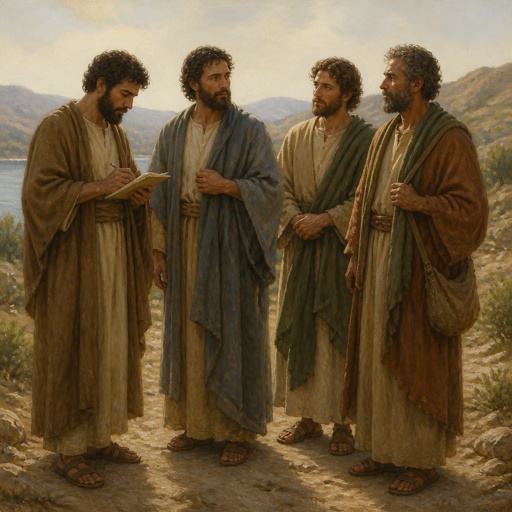
"Matthew and Thomas, James the son of Alphaeus, and Simon called Zelotes," - Luke 6:15
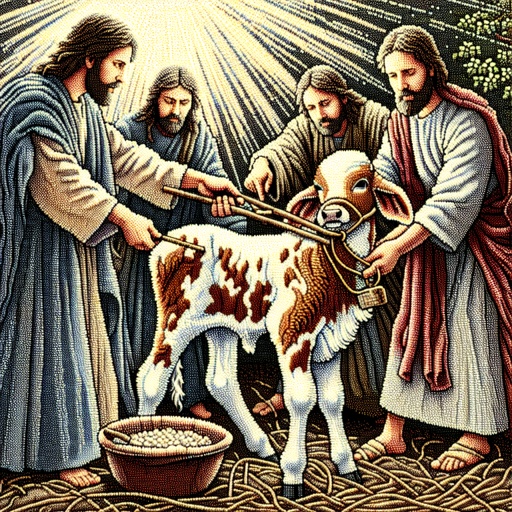
Luke 15:23

Luke 15:10

Luke 15:21

Luke 15:21

Luke 6

Luke 15: 4-7

Luke 11:14-15

Luke 21:15-19

Luke 15:11-32

luke 6: 27

luke 6:30

Luke 15:15 - "And he went and joined himself to a citizen of that country; and he sent him into his fields to feed swine."

Luke 4:15 - "And he taught in their synagogues, being glorified of all."

Luke 15:3 - "¶ And he spake this parable unto them, saying,"

Luke 6: 27-38

Luke 6:21-26

Luke 13:6-9

Luke 3:1-6

Luke 3:1-6

Luke 6:27-38

Luke 6:21-26

luke 3:1-6

Luke 15:11 - "¶ And he said, A certain man had two sons:"

Luke 9:15 - "And they did so, and made them all sit down."

Luke 15:26 - "And he called one of the servants, and asked what these things meant."

Luke 14:6 - "And they could not answer him again to these things."