What does Luke 16:25 mean?
"But Abraham said, Son, remember that thou in thy lifetime receivedst thy good things, and likewise Lazarus evil things: but now he is comforted, and thou art tormented." - Luke 16:25
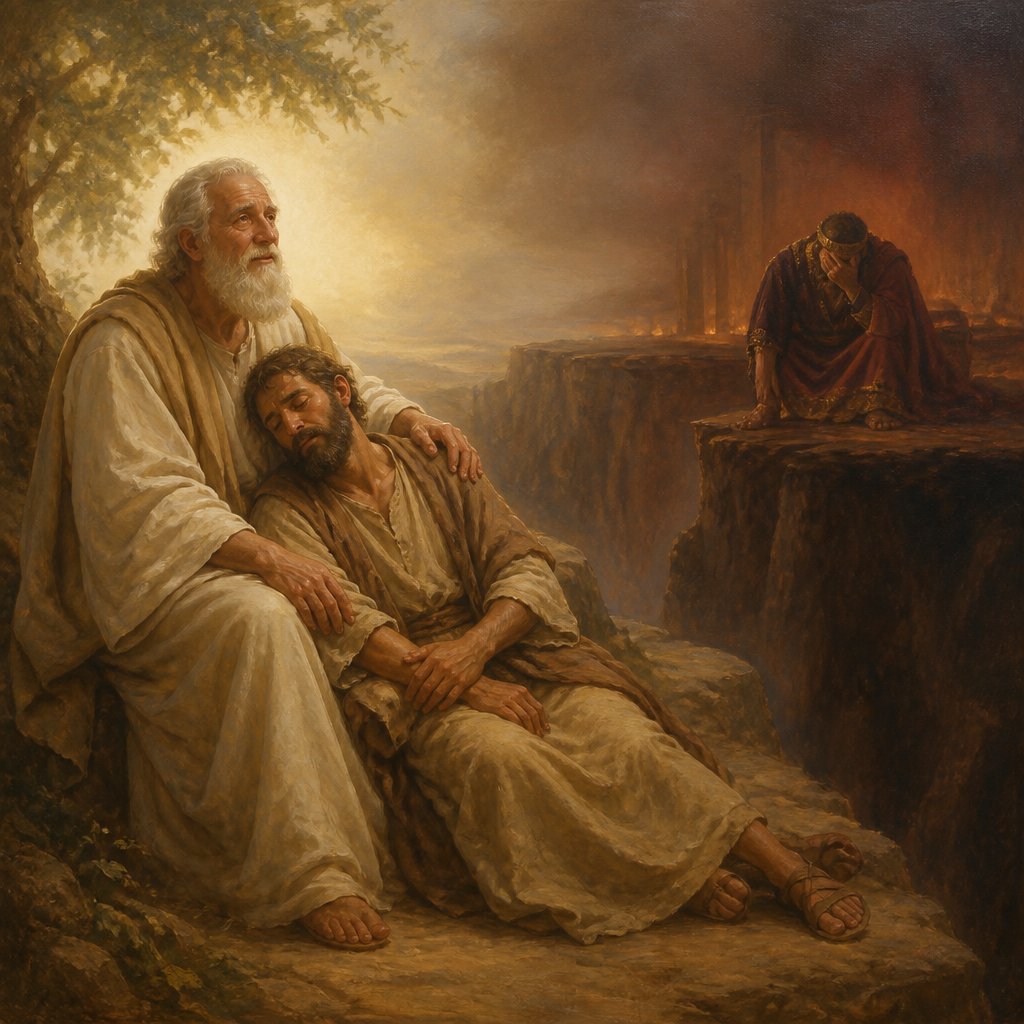
Luke 16:25 (KJV) states, "But Abraham said, Son, remember that thou in thy lifetime receivedst thy good things, and likewise Lazarus evil things: but now he is comforted, and thou art tormented."
This verse is part of a parable told by Jesus to his disciples. In this parable, Jesus tells the story of a rich man and a poor man named Lazarus. The rich man lived a life of luxury and abundance while Lazarus lived a life of poverty and suffering. In the afterlife, the roles are reversed, with Lazarus finding comfort and the rich man experiencing torment.
The themes present in this verse include justice, mercy, and the importance of living a righteous life. The verse serves as a reminder that the choices and actions we make in this life have eternal consequences. This life is a time to prepare for the next, and how we live and treat others matters deeply.
The context of this verse is important in understanding its full meaning. In the preceding verses, Jesus is teaching his disciples about the proper use of wealth and the dangers of serving money over God. The Pharisees, who were lovers of money, were also present and listening to Jesus' teachings. Jesus was using this parable to illustrate the dangers of living a life solely focused on wealth and neglecting the needs of others.
Abraham's words to the rich man in this verse serve as a reminder of the disparity in their earthly lives and the reversal of their fortunes in the afterlife. It also serves as a warning to those who prioritize material wealth over spiritual well-being. The rich man had his good things in life, and now he is experiencing the consequences of his choices.
The symbolism present in this verse is profound. The contrast between the rich man and Lazarus symbolizes the injustices and inequalities present in the world. The rich man represents those who live comfortably and selfishly, while Lazarus represents the poor and marginalized. The reversal of their fates in the afterlife symbolizes the divine justice and mercy of God.
This verse also symbolizes the importance of cultivating a compassionate and righteous heart. The rich man's failure to show compassion and generosity to Lazarus during his earthly life resulted in his torment in the afterlife. This serves as a powerful reminder of the biblical principle of reaping what one sows.
In conclusion, Luke 16:25 (KJV) holds a deep and profound meaning that encompasses themes of justice, mercy, and the consequences of our actions. The context of this verse within the teachings of Jesus further emphasizes its importance in guiding our lives. The symbolism present in the reversal of fortunes between the rich man and Lazarus serves as a powerful reminder of the importance of living a compassionate and righteous life. This verse challenges us to prioritize spiritual wealth over material wealth and to show kindness and generosity to those in need.
Have questions about Luke 16:25?
Dive deeper into this scripture with Bible Chat — an AI-powered tool for exploring God's Word through conversation. Ask questions, get context, and grow in your understanding of the Bible.
Get Our Apps


Luke 16:25 Artwork

Luke 16:25 - "But Abraham said, Son, remember that thou in thy lifetime receivedst thy good things, and likewise Lazarus evil things: but now he is comforted, and thou art tormented."
"But Abraham said, Son, remember that thou in thy lifetime receivedst thy good things, and likewise Lazarus evil things: but now he is comforted, and thou art tormented." - Luke 16:25

Luke 1:25

Luke 1:25

Luke 1:25

Luke 12:25

Luke 1:25

Luke 12:25

Luke 1:25

Luke 12:25-26
Luke 12:25-26

Luke 12:25-26

Luke 12:25-26

Luke 12:25-26

Luke 12:25-26

Luke 14:25 - 33

Luke 12:25-26

Genesis 25-16

Matthew 16:25

Exodus 25:16

Exodus 25:16

Exodus 25:16

Luke 8:16

luke 4:16

Luke 11:25 - "And when he cometh, he findeth it swept and garnished."

Luke 19:25 - "(And they said unto him, Lord, he hath ten pounds.)"

Numbers 25:16 - "¶ And the LORD spake unto Moses, saying,"

Luke 17:25 - "But first must he suffer many things, and be rejected of this generation."

Luke 16:1-13

Luke 14:25 - "¶ And there went great multitudes with him: and he turned, and said unto them,"