What does Luke 17:8 mean?
"And will not rather say unto him, Make ready wherewith I may sup, and gird thyself, and serve me, till I have eaten and drunken; and afterward thou shalt eat and drink?" - Luke 17:8
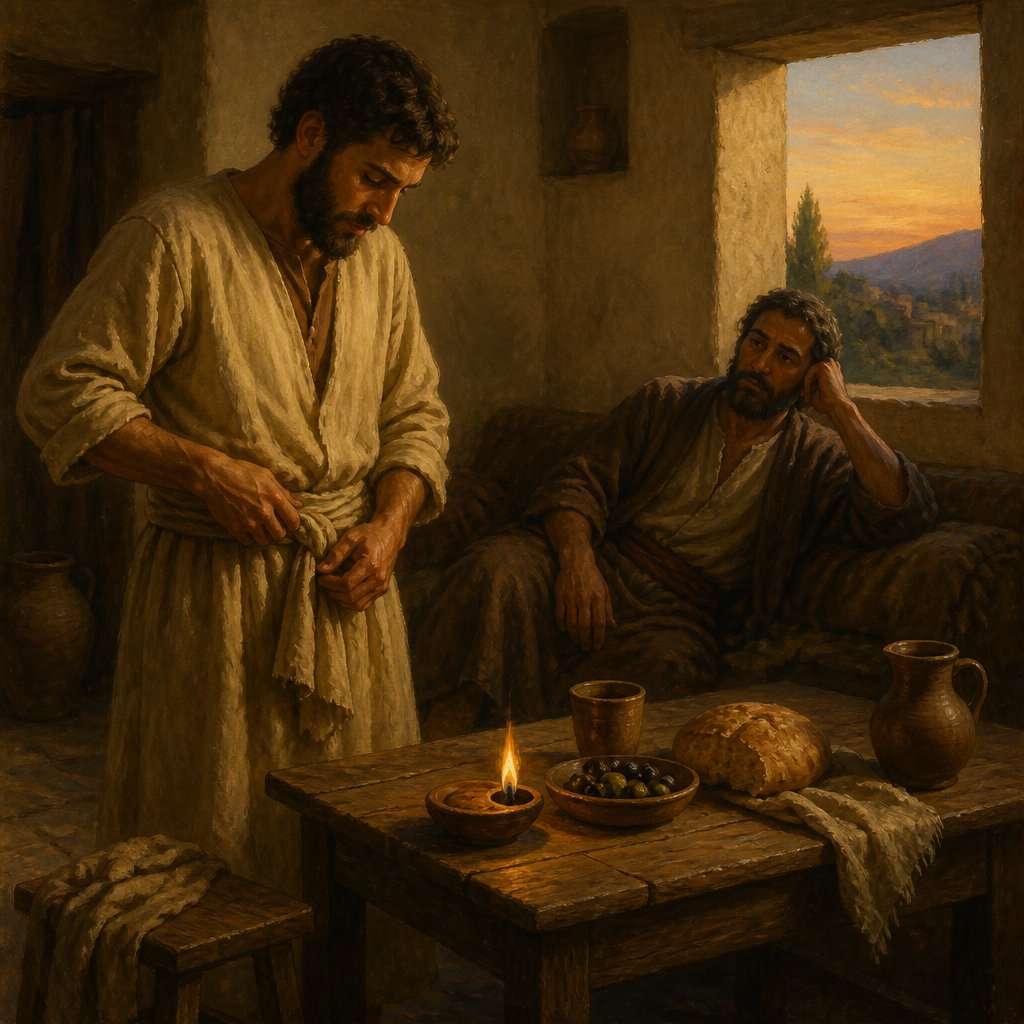
Luke 17:8, King James Version (KJV): "And will not rather say unto him, Make ready wherewith I may sup, and gird thyself, and serve me, till I have eaten and drunken; and afterward thou shalt eat and drink."
In this verse, Jesus uses a parable to illustrate a point about the nature of service and obedience. The verse is part of a larger passage in which Jesus is teaching his disciples about the importance of faith and forgiveness. The parable of the servant and the master serves as a metaphor for the relationship between God and his followers.
The passage opens with Jesus asking his disciples, "Which of you, having a servant plowing or feeding cattle, will say unto him by and by, when he is come from the field, Go and sit down to meat?" (Luke 17:7, KJV). Jesus then answers his own question by stating that the master will instead instruct the servant to prepare a meal and serve him before taking care of his own needs. The master is not obligated to thank the servant for doing his duty, just as a follower is not entitled to praise for simply obeying God's commands.
The message of this parable is two-fold. On one hand, it teaches humility and obedience to God. Just as the servant is expected to serve his master without expecting reward or recognition, so too must believers serve God with a humble and obedient heart. This requires selflessness and a willingness to prioritize God's will above one's own desires.
On the other hand, the parable also carries a message about the nature of God's love and provision. The master in the story ultimately rewards the servant by allowing him to eat and drink after attending to his needs. Likewise, God promises to provide for his followers and reward them for their obedience. This serves as a reminder that even when we are called to serve God selflessly, we can trust in his provision and ultimately find fulfillment in following his commands.
The context of this verse is important for understanding its significance within the larger narrative of the Gospel of Luke. Throughout the book, Jesus frequently uses parables and metaphors to convey spiritual truths to his disciples and the crowds that follow him. These stories were often rooted in the everyday experiences of the people, making them relatable and easy to understand. In the case of this parable, the concept of a servant serving his master would have been familiar to Jesus' audience, many of whom would have been familiar with the dynamics of servitude and power in their society.
Furthermore, the theme of service and obedience is a recurring motif in the teachings of Jesus. In Luke 22:27, Jesus tells his disciples, "For whether is greater, he that sitteth at meat, or he that serveth? is not he that sitteth at meat? but I am among you as he that serveth." Here, Jesus sets an example of servanthood for his followers, emphasizing the value of humility and service in the kingdom of God.
The symbol of the master and servant in this parable can also be interpreted in a broader theological context. The relationship between God and humanity is often depicted in the Bible as that of a master and servant. Through this metaphor, Jesus emphasizes the need for Christians to submit themselves to God's will, trusting in his provision and ultimately finding fulfillment in serving him faithfully.
In conclusion, Luke 17:8 in the King James Version serves as a powerful illustration of the principles of humility, obedience, and trust in God's provision. The parable conveys a timeless message about the nature of service and the relationship between God and his followers. By obeying God selflessly and trusting in his provision, believers can find fulfillment and ultimately receive the reward of faithful service.
Have questions about Luke 17:8?
Dive deeper into this scripture with Bible Chat — an AI-powered tool for exploring God's Word through conversation. Ask questions, get context, and grow in your understanding of the Bible.
Get Our Apps


Luke 17:8 Artwork

Luke 17:8 - "And will not rather say unto him, Make ready wherewith I may sup, and gird thyself, and serve me, till I have eaten and drunken; and afterward thou shalt eat and drink?"
"And will not rather say unto him, Make ready wherewith I may sup, and gird thyself, and serve me, till I have eaten and drunken; and afterward thou shalt eat and drink?" - Luke 17:8

Luke 8:17

Luke 8:17 - "For nothing is secret, that shall not be made manifest; neither any thing hid, that shall not be known and come abroad."

Luke 10:17-19

"For nothing is secret, that shall not be made manifest; neither any thing hid, that shall not be known and come abroad." - Luke 8:17

Luke 10:17-19

Luke 17:17 - "And Jesus answering said, Were there not ten cleansed? but where are the nine?"

Luke 17:10

luke 24:17

Luke 8:5-8

Luke 17:32-37

Luke 17:32 - "Remember Lot's wife."

Luke 5:17-26

Luke 8:16

Luke 8:11

Luke 8:13

Luke 8:13

Luke 8:13

Luke 17:5 - "And the apostles said unto the Lord, Increase our faith."

Luke 24:8 - "And they remembered his words,"

Genesis 17:8

Luke 2 v 8

Luke 17:18 - "There are not found that returned to give glory to God, save this stranger."

Luke 8:4-18

Luke 21:17 - "And ye shall be hated of all men for my name's sake."

Luke 23:17 - "(For of necessity he must release one unto them at the feast.)"

Luke 17:26 - "And as it was in the days of Noe, so shall it be also in the days of the Son of man."

"Remember Lot's wife." - Luke 17:32

Luke 17:30 - "Even thus shall it be in the day when the Son of man is revealed."