What does Luke 18:12 mean?
"I fast twice in the week, I give tithes of all that I possess." - Luke 18:12
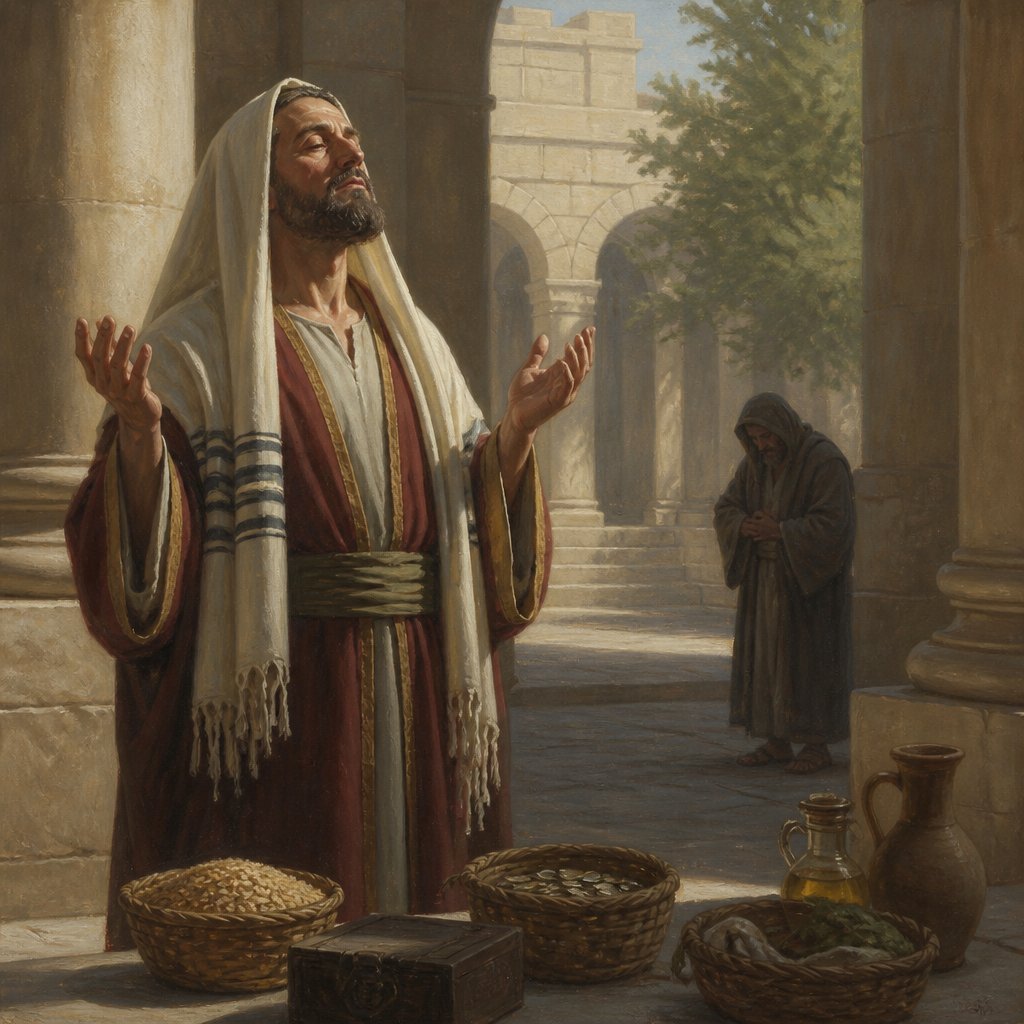
"Luke 18:12 (KJV) - I fast twice in the week, I give tithes of all that I possess."
This verse comes from a parable that Jesus tells in the Gospel of Luke. The parable is about a Pharisee and a tax collector who go to the temple to pray. The Pharisee, known for his religious devotion, prays arrogantly, while the tax collector, who is seen as a sinner, prays humbly.
The Pharisee in this verse boasts about his religious practices, claiming that he fasts twice a week and gives tithes of all that he possesses. While fasting and tithing were both good and important practices in Jewish culture, the Pharisee’s attitude reflects a prideful and self-righteous heart. He is not genuinely seeking God but rather seeking to elevate himself in the eyes of others.
The context of this verse is important for understanding its true meaning. Jesus tells this parable in response to those who trusted in their own righteousness and viewed others with contempt. This passage reveals the danger of self-righteousness and the importance of humility in the eyes of God.
The themes of this verse include the dangers of pride and self-righteousness, the importance of genuine humility, and the nature of true righteousness. Jesus often spoke against the religious leaders of his day who were more concerned with external appearances and following religious rituals than with having a true relationship with God. The Pharisee in this parable is a perfect example of this type of false piety.
The symbolism in this verse is also significant. Fasting and tithing were both considered acts of devotion and worship in ancient Jewish culture. However, the Pharisee’s use of these practices as a means to boast about his own righteousness reflects a distortion of their intended purpose. The true significance of these practices lies in their sincere expression of devotion to God and care for others, rather than as a means of self-elevation.
In contrast to the Pharisee, the tax collector in the parable demonstrates true humility and recognizes his own sinfulness. He beats his breast in contrition, pleading for God’s mercy. Jesus concludes the parable by stating that it was the tax collector, not the Pharisee, who went home justified before God. This challenges the traditional understanding of righteousness and religious piety, emphasizing that true righteousness comes from a humble and contrite heart, rather than from external acts of religious devotion.
In conclusion, Luke 18:12 from the King James Version captures the essence of the parable of the Pharisee and the tax collector. It serves as a warning against the dangers of pride and self-righteousness, while also emphasizing the importance of humility and genuine devotion to God. This verse challenges us to examine our own hearts and motives, reminding us that true righteousness is found in a humble and contrite spirit before God. It calls us to reflect on the ways in which we express our devotion to God, ensuring that our motives are pure and our hearts are humble.
Have questions about Luke 18:12?
Dive deeper into this scripture with Bible Chat — an AI-powered tool for exploring God's Word through conversation. Ask questions, get context, and grow in your understanding of the Bible.
Get Our Apps


Luke 18:12 Artwork

Luke 18:12 - "I fast twice in the week, I give tithes of all that I possess."
"I fast twice in the week, I give tithes of all that I possess." - Luke 18:12

Luke 12:18 - "And he said, This will I do: I will pull down my barns, and build greater; and there will I bestow all my fruits and my goods."

Luke 10:18-19

Luke 13:18-19

Luke 10:18-19

Luke 10:18-19

Luke 13:18-19

Luke 10:18-19

Luke 10:18-19

Luke 10:18-19

Luke 4:18

Luke 4:18

Luke 18: 9-14

Luke 8:4-18

Luke 10:18-19

Luke 18:9-14

Luke 12:25

Luke 12:25

Luke 12: 49

Luke 12:34

Luke 12:10

Luke 12:50

Luke 18:37 - "And they told him, that Jesus of Nazareth passeth by."

Luke 18:18 - "And a certain ruler asked him, saying, Good Master, what shall I do to inherit eternal life?"

Luke 18:26 - "And they that heard it said, Who then can be saved?"

Luke 21:18 - "But there shall not an hair of your head perish."

Luke 12:12 - "For the Holy Ghost shall teach you in the same hour what ye ought to say."

Luke 6:18 - "And they that were vexed with unclean spirits: and they were healed."
Luke 7:18 - "And the disciples of John shewed him of all these things."