What does Luke 18:13 mean?
"And the publican, standing afar off, would not lift up so much as his eyes unto heaven, but smote upon his breast, saying, God be merciful to me a sinner." - Luke 18:13
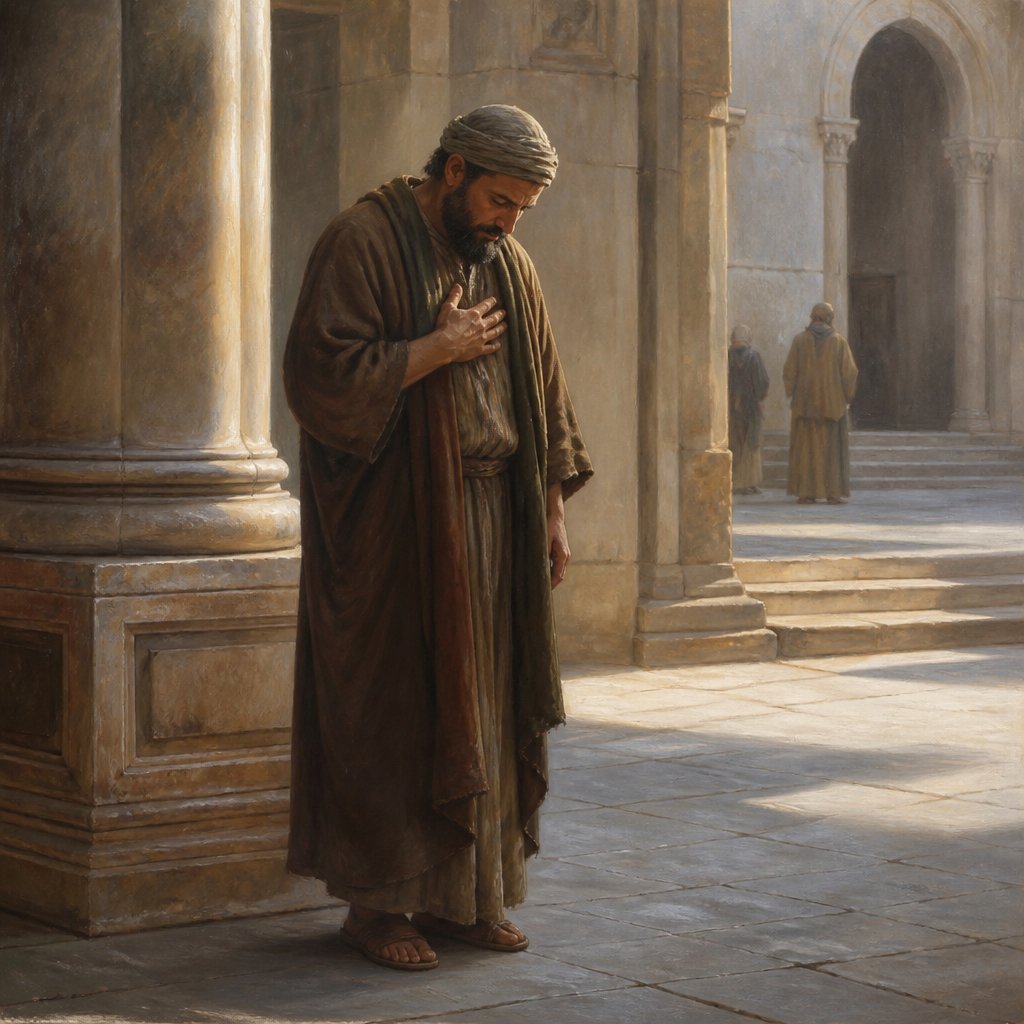
The Bible verse Luke 18:13 in the King James Version (KJV) states, "And the publican, standing afar off, would not lift up so much as his eyes unto heaven, but smote upon his breast, saying, God be merciful to me a sinner." This verse is a part of the parable of the Pharisee and the Tax Collector, which Jesus told to his disciples to teach them about the importance of humility and repentance in prayer. This parable is found in Luke 18:9-14 and highlights a stark contrast between two different attitudes in approaching God.
The term "publican" in this verse refers to a tax collector, who was often despised by the Jewish community at that time. The tax collectors were seen as collaborators with the oppressive Roman government, and they were notorious for their dishonest and unethical practices. On the other hand, the Pharisees were the religious leaders of the time, known for their strict adherence to the Mosaic law and their outward displays of righteousness.
In this parable, the Pharisee and the tax collector both go up to the temple to pray. The Pharisee stands and prays with a prideful attitude, thanking God that he is not like the other people—specifically, like the tax collector. He boasts about his own righteousness and religious practices, looking down on others with judgment. In contrast, the tax collector stands at a distance, unable to even lift his eyes to heaven, beating his chest in sorrow and humility, acknowledging his sinful nature and pleading for God's mercy.
This verse illustrates the repentant and humble heart of the tax collector, who recognizes his own unworthiness and sinfulness before God. He does not try to justify himself or compare himself to others; instead, he seeks God's mercy and forgiveness. This shows a genuine acknowledgment of his need for God's grace and a true desire for reconciliation with God. The tax collector's prayer is a model of contrition and humility, as he recognizes his own fallen state and turns to God for salvation.
The underlying theme of Luke 18:13 is the concept of true repentance and humility in prayer. It emphasizes the importance of approaching God with a contrite and sincere heart, acknowledging our own failures and sins. This verse reminds us that God looks at the condition of our hearts rather than our external appearances or actions. It is not enough to merely perform outward religious duties or compare ourselves to others; what truly matters is our inner attitude and relationship with God.
The context of this verse is important to understand its significance within the larger narrative of Jesus' teachings. In the preceding verses, Jesus tells the parable of the persistent widow and the unjust judge, emphasizing the value of persistent prayer and faith in God's justice. Following the parable of the Pharisee and the Tax Collector, Jesus blesses the little children and teaches about the rich young ruler, highlighting the importance of childlike faith and the challenges of entering the kingdom of God.
The symbolism in Luke 18:13 lies in the contrasting attitudes of the Pharisee and the tax collector. The Pharisee represents self-righteousness, pride, and judgment of others, while the tax collector symbolizes humility, repentance, and a desperate need for God's mercy. The act of the tax collector standing at a distance, not daring to lift his eyes to heaven, and beating his chest shows his deep sense of unworthiness and sorrow for his sins. His plea for God's mercy symbolizes the universal need for forgiveness and the grace of God in salvation.
In conclusion, Luke 18:13 in the King James Version of the Bible delivers a powerful message about the importance of humility and repentance in prayer. It serves as a reminder for believers to approach God with sincerity, confessing our sins and seeking His mercy. The parable of the Pharisee and the Tax Collector challenges us to examine the condition of our hearts and to cultivate a humble and repentant attitude in our relationship with God. It teaches us that true righteousness is not found in our own efforts or comparisons with others, but in our humble dependence on God's grace and forgiveness.
Have questions about Luke 18:13?
Dive deeper into this scripture with Bible Chat — an AI-powered tool for exploring God's Word through conversation. Ask questions, get context, and grow in your understanding of the Bible.
Get Our Apps


Luke 18:13 Artwork

Luke 18:13 - "And the publican, standing afar off, would not lift up so much as his eyes unto heaven, but smote upon his breast, saying, God be merciful to me a sinner."
"And the publican, standing afar off, would not lift up so much as his eyes unto heaven, but smote upon his breast, saying, God be merciful to me a sinner." - Luke 18:13

Luke 13:18-19

Luke 13:18-19

Luke 13:18 - "¶ Then said he, Unto what is the kingdom of God like? and whereunto shall I resemble it?"

"¶ Then said he, Unto what is the kingdom of God like? and whereunto shall I resemble it?" - Luke 13:18

Luke 10:18-19

Luke 10:18-19

Luke 10:18-19

Luke 10:18-19

Luke 10:18-19

Luke 10:18-19

Luke 4:18

Luke 4:18

Luke 13:20-21

Luke 13:20-21
Luke 13:20-21

Luke 13:20-21

Luke 13:20-21

Luke 18: 9-14

Luke 8:4-18

Luke 1:13

Luke 1:13

Luke 8:13

Luke 13:24

Luke 8:13

Luke 1:13

Luke 1:13

Luke 8:13

Luke 10:18-19