What does Luke 18:27 mean?
"And he said, The things which are impossible with men are possible with God." - Luke 18:27

Luke 18:27 in the KJV reads, “And he said, The things which are impossible with men are possible with God.” In its plain sense, the verse is a declaration from the Lord Jesus Christ that human inability is not the boundary of divine power. What men cannot bring to pass by strength, merit, wisdom, or resource, God can accomplish by his own might and grace. The saying is brief, but it gathers into itself the whole posture of faith: it turns the eye away from man’s sufficiency and fixes it upon God’s sufficiency.
The immediate context is Christ’s encounter with the rich ruler and the instruction that follows. A ruler comes with an earnest question about eternal life, and Jesus, after exposing the man’s attachment to his possessions, tells him to sell what he hath and distribute unto the poor, and to follow him. The ruler goes away sorrowful, “for he was very rich.” Jesus then speaks of the difficulty of the rich entering the kingdom of God, using a striking picture about a camel and the eye of a needle. The hearers, startled by this hard saying, respond with the anxious question, “Who then can be saved?” Luke 18:27 is Christ’s answer. It is not a softening of the warning; it is the only doorway through it. If salvation is measured by what man can do, then it truly is impossible; if salvation rests upon what God can do, then it is not only possible, but certain in all whom God saves.
The verse therefore bears the theme of the impossibility of self-salvation. The ruler’s outward morality and religious seriousness were not presented as enough; rather, Jesus brought the man to the point where his heart’s true master was revealed. Wealth in this passage is not merely money; it is a symbol of any competing trust that promises security, identity, and control. Riches can make a man feel able, insulated, and self-directed, and thus less willing to come as a beggar to God. Yet the deeper issue is not limited to the wealthy. The disciples’ question, “Who then can be saved?” shows that when Christ presses the law to the heart, everyone is shut up to the same conclusion: if God require a heart wholly given to him, then no man can supply it of himself. Luke 18:27 answers that the saving change of heart is God’s work.
The verse also carries the theme of grace as the active power of God. Jesus does not say merely that God can make the hard easier, or that God will help men finish what they begin. He states that what is impossible “with men” is “possible with God.” Salvation is not portrayed as a human project supported by divine assistance, but as a divine act that reaches where human effort cannot reach. This touches repentance, because men cannot, by mere resolution, loosen the grip of an idolized treasure; it touches faith, because men cannot manufacture saving trust in Christ as though it were a natural ability; and it touches conversion itself, because the entrance into the kingdom is not achieved by status, inheritance, or achievement, but by God’s intervention.
Symbolically, the contrast between “men” and “God” in the verse sets two realms over against each other. “With men” represents the sphere of creaturely limitation: limited sight, limited strength, limited righteousness, limited control over the heart. “With God” represents the sphere of sovereign freedom and omnipotence: the Lord who “quickneth the dead,” who can humble the proud, break the power of sin, and create in a man a new direction of desire. In the rich ruler’s story, the “impossible” is not that a rich man may perform an outward act of charity, but that a man who is bound to treasure can be brought to treasure Christ above all. The needle’s eye image underscores human impossibility by exaggeration: it is meant to shut the mouth of self-confidence and drive the soul to God.
The wider context of Luke 18 reinforces this meaning. Just before the rich ruler, Jesus speaks the parable of the Pharisee and the publican, where the self-justifying man is rejected and the penitent man is “justified.” He also receives little children and says that the kingdom must be received “as a little child.” These scenes prepare for Luke 18:27 by showing that the kingdom is not entered by the strong, the impressive, or the self-assured, but by those who come empty-handed and looking to mercy. In that light, “possible with God” is not a general encouragement for any human ambition; it is specifically tied to the saving mercy of God that justifies the humble and brings the helpless into his kingdom.
The significance of Luke 18:27, then, is both sobering and comforting. It is sobering because it strips man of boasting. If salvation is “impossible with men,” then no amount of wealth, morality, religious privilege, or personal discipline can purchase entrance into eternal life. It is comforting because it anchors hope in God rather than in man. The very fact that the task is impossible to men becomes a reason to look to God, for God is not confined by the impossibilities that bind human nature. Christ’s word teaches that when the soul is confronted with its inability, it is not meant to despair as though nothing can be done; it is meant to despair of self, and thereby to trust in the God to whom the impossible is possible.
Have questions about Luke 18:27?
Dive deeper into this scripture with Bible Chat — an AI-powered tool for exploring God's Word through conversation. Ask questions, get context, and grow in your understanding of the Bible.
Get Our Apps


Luke 18:27 Artwork

Luke 18:27 - "And he said, The things which are impossible with men are possible with God."
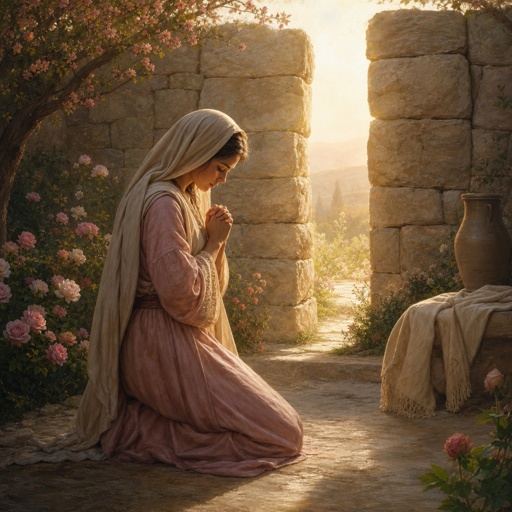
"And he said, The things which are impossible with men are possible with God." - Luke 18:27

"And he said, The things which are impossible with men are possible with God." - Luke 18:27

"And he said, The things which are impossible with men are possible with God." - Luke 18:27

luke 1:27

luke 6: 27

Luke 10:27

Luke 6: 27-38

Luke 6:27-38

Luke 13:28-27

Luke 13:28-27

Luke 13:28-27

Genesis 18-27

Luke 10:18-19

Luke 13:18-19

Luke 10:18-19

Luke 10:18-19

Luke 13:18-19

Genesis 27:18-19

Luke 10:18-19

Luke 10:18-19

Luke 10:18-19

Joshua 18:27 - "And Rekem, and Irpeel, and Taralah,"

Luke 4:18

Luke 4:18

John 18:27 - "Peter then denied again: and immediately the cock crew."

Matthew 27:18 - "For he knew that for envy they had delivered him."

Luke 18: 9-14

Luke 8:4-18

Luke 21:27 - "And then shall they see the Son of man coming in a cloud with power and great glory."