What does Luke 18:41 mean?
“Saying, What wilt thou that I shall do unto thee? And he said, Lord, that I may receive my sight.” — Luke 18:41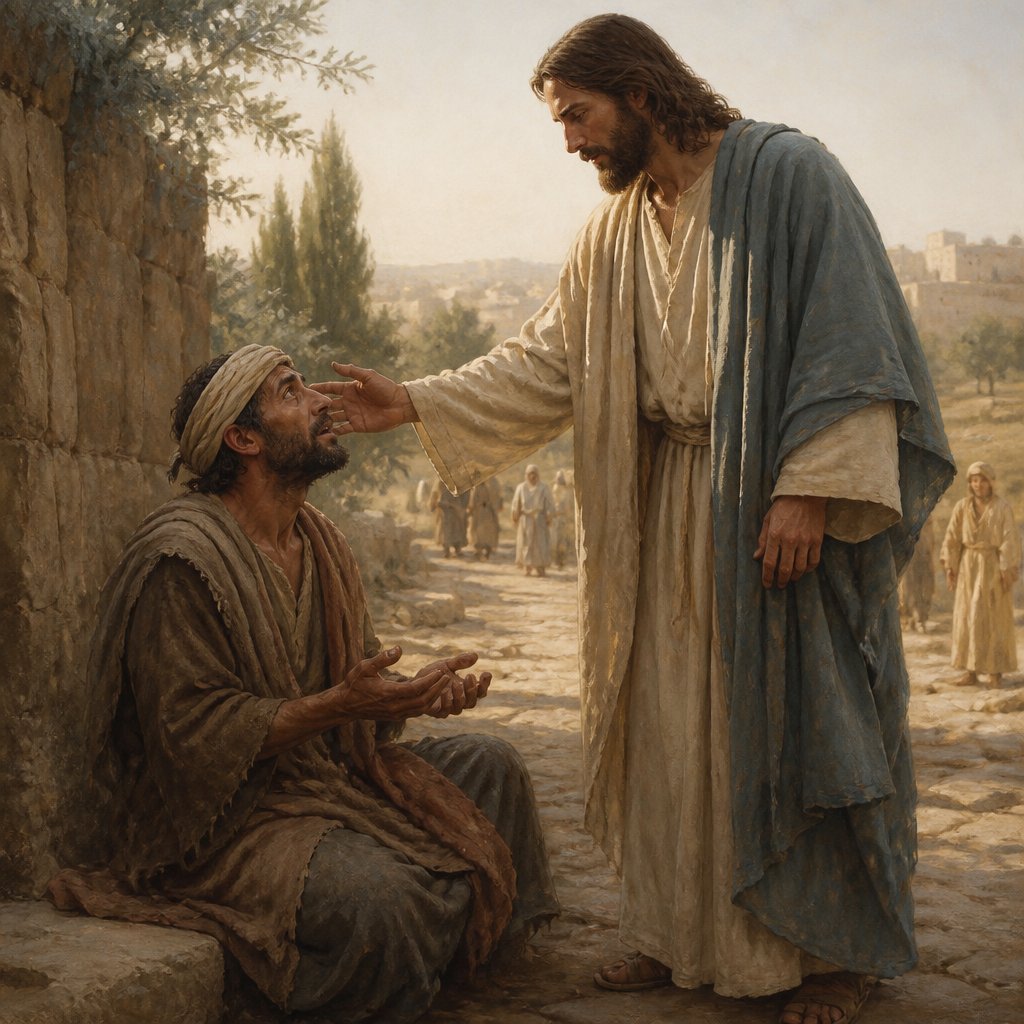
The Bible verse Luke 18:41 in the King James Version reads, "Saying, What wilt thou that I shall do unto thee? And he said, Lord, that I may receive my sight." This verse captures a powerful moment in the New Testament when Jesus performs a miracle by restoring sight to a blind man. This verse is part of a larger narrative in which Jesus encounters the blind man as he is passing through Jericho.
To fully understand the significance of this verse, it is essential to examine the context in which it occurs. In the preceding verses, Jesus is on his way to Jerusalem, and a large crowd is following him. As he approaches Jericho, a blind beggar sitting by the roadside hears the commotion and asks what is happening. When he is told that Jesus of Nazareth is passing by, the blind man begins to cry out, "Jesus, thou Son of David, have mercy on me." The crowd sternly tells him to be quiet, but he cries out all the more, begging Jesus to have compassion on him.
At this point, Jesus stops and commands that the blind man be brought to him. When the man approaches, Jesus asks him, "What wilt thou that I shall do unto thee?" In response, the blind man expresses his deep desire to receive his sight. It is at this moment that Jesus, moved by the man's faith and persistence, heals him, saying, "Receive thy sight: thy faith hath saved thee."
One of the central themes of this verse is the power of faith and the compassion of Jesus. The blind man's persistent faith and unwavering belief in Jesus' ability to heal him ultimately lead to his miraculous restoration of sight. This narrative illustrates the fundamental Christian belief in the transformative power of faith and the boundless mercy of Jesus.
Moreover, this verse also speaks to the universal human longing for healing and wholeness. The blind man's plea for sight reflects a deep desire for physical and spiritual restoration. In a broader sense, this story serves as a poignant reminder that Jesus has the power to heal all forms of brokenness and bring about inner and outer renewal.
Symbolically, the blind man represents all those who are spiritually blind or in need of healing. His physical blindness serves as a metaphor for the spiritual blindness that afflicts humanity. By healing the blind man, Jesus demonstrates his ability to bring spiritual enlightenment and healing to all those who seek him with faith and humility.
Overall, Luke 18:41 is a poignant and uplifting verse that encapsulates essential Christian themes of faith, compassion, and healing. It serves as a powerful reminder of Jesus' transformative power and his boundless love for all those who come to him in need. This verse continues to inspire and reassure believers that through faith and perseverance, they can receive the healing and restoration they seek from the compassionate Savior, Jesus Christ.
Get our apps


Artwork for Luke 18:41

Luke 18:41 - "Saying, What wilt thou that I shall do unto thee? And he said, Lord, that I may receive my sight."
"Saying, What wilt thou that I shall do unto thee? And he said, Lord, that I may receive my sight." - Luke 18:41

Joshua 4:1-8

Joshua 4:1-8

LUKE 24:41-43

Luke 2:41-52

Luke 7:41-47

Luke 19:41 - "¶ And when he was come near, he beheld the city, and wept over it,"

Luke 20:41 - "And he said unto them, How say they that Christ is David's son?"

Luke 22:41 - "And he was withdrawn from them about a stone's cast, and kneeled down, and prayed,"

Luke 2:41 - "Now his parents went to Jerusalem every year at the feast of the passover."

Luke 6:41 - "And why beholdest thou the mote that is in thy brother's eye, but perceivest not the beam that is in thine own eye?"

Psalms 18:41 - "They cried, but there was none to save them: even unto the LORD, but he answered them not."

Job 41:18 - "By his neesings a light doth shine, and his eyes are like the eyelids of the morning."

Luke 12:41 - "¶ Then Peter said unto him, Lord, speakest thou this parable unto us, or even to all?"

Luke 11:41 - "But rather give alms of such things as ye have; and, behold, all things are clean unto you."

Luke 23:41 - "And we indeed justly; for we receive the due reward of our deeds: but this man hath done nothing amiss."

Luke 7:41 - "There was a certain creditor which had two debtors: the one owed five hundred pence, and the other fifty."

Luke 1:41 - "And it came to pass, that, when Elisabeth heard the salutation of Mary, the babe leaped in her womb; and Elisabeth was filled with the Holy Ghost:"

Luke 24:41 - "And while they yet believed not for joy, and wondered, he said unto them, Have ye here any meat?"

Luke 10:41 - "And Jesus answered and said unto her, Martha, Martha, thou art careful and troubled about many things:"

Genesis 41:18 - "And, behold, there came up out of the river seven kine, fatfleshed and well favoured; and they fed in a meadow:"

1 Kings 18:41 - "¶ And Elijah said unto Ahab, Get thee up, eat and drink; for there is a sound of abundance of rain."

Luke 4:40-41 KJVA (41) And devils also came out of many, crying out, and saying, Thou art Christ the Son of God. And he rebuking them suffered them not to speak: for they knew that he was Christ.

Luke 10:18-19

Luke 13:18-19

Luke 10:18-19

Luke 10:18-19

Luke 13:18-19

Luke 10:18-19