What does Luke 18:5 mean?
“Yet because this widow troubleth me, I will avenge her, lest by her continual coming she weary me.” — Luke 18:5
"And he said unto them, Which of you shall have a friend, and shall go unto him at midnight, and say unto him, Friend, lend me three loaves;"
In Luke 11, Jesus tells a parable about a man who goes to his friend's house at midnight to ask for bread to feed a visitor who has arrived unexpectedly. The friend initially refuses to help him, saying that the door is already bolted and his children are in bed, and he doesn't want to disturb them. However, the man persists in his request, and because of his persistence, the friend eventually relents and gives him what he needs.
The parable of the friend at midnight is a part of Jesus' teachings on prayer and persistence. It's a lesson about the importance of being persistent in prayer and having faith that God will answer our prayers in his own perfect timing.
In the cultural context of the time, hospitality was highly valued, and it was considered a great shame not to be able to provide for a guest. This adds an extra layer of significance to the man's request for bread. He is not just asking for something for himself, but for something to give to someone else, emphasizing the importance of meeting the needs of others, even when it may inconvenience us.
The parable also highlights the nature of the friend's relationship with the man. Despite initially refusing to help, he eventually relents and gives him what he needs. This illustrates the nature of prayer as a conversation with a friend. It's a reminder that we can approach God with our needs and desires, knowing that he cares for us and wants to provide for us.
The parable also emphasizes the concept of persistence in prayer. The man doesn't give up when his friend initially refuses to help him. Instead, he continues to ask, knowing that his friend has what he needs and is able to provide it for him. This persistence is mirrored in our own prayers. We are encouraged to keep praying and seeking God, trusting that he will answer us, even if it's not in the way or the time that we expect.
The parable of the friend at midnight also serves as a reminder of God's willingness to give good things to those who ask him. In the Gospel of Luke, Jesus goes on to say, "Ask and it will be given to you; seek and you will find; knock and the door will be opened to you." (Luke 11:9). This echoes the persistence of the man in the parable and encourages us to have faith that God will provide for our needs.
In conclusion, the parable of the friend at midnight teaches us about the importance of persistence in prayer, the nature of our relationship with God as a friend who cares for us, and the assurance that God will provide for our needs. It also emphasizes the importance of hospitality and meeting the needs of others. This parable serves as a powerful reminder of the nature of prayer and the character of God.
Get our apps


Artwork for Luke 18:5

Luke 18:5 - "Yet because this widow troubleth me, I will avenge her, lest by her continual coming she weary me."

"Yet because this widow troubleth me, I will avenge her, lest by her continual coming she weary me." - Luke 18:5
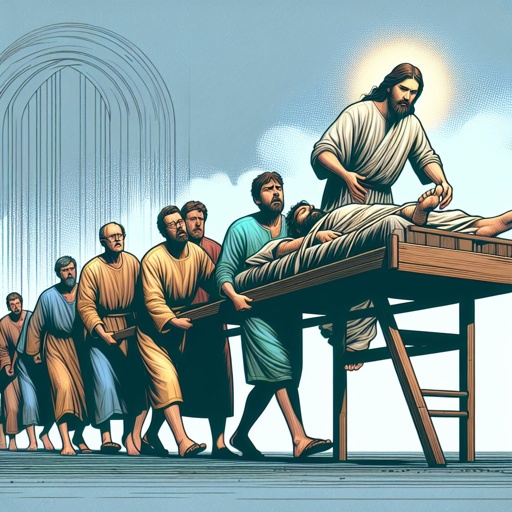
Luke 5:18 - "¶ And, behold, men brought in a bed a man which was taken with a palsy: and they sought means to bring him in, and to lay him before him."

Luke 10:18-19

Luke 13:18-19

Luke 10:18-19

Luke 10:18-19

Luke 13:18-19

Luke 10:18-19

Luke 10:18-19

Luke 10:18-19

luke 5:5

Luke 4:18

Luke 4:18

Luke 10:5

Luke 10:5

Luke 18: 9-14

Luke 8:4-18

Luke 10:5

Luke 10:18-19

Luke 18:9-14

Luke 18:37 - "And they told him, that Jesus of Nazareth passeth by."

Luke 18:18 - "And a certain ruler asked him, saying, Good Master, what shall I do to inherit eternal life?"

Luke 21:18 - "But there shall not an hair of your head perish."

Luke 18:26 - "And they that heard it said, Who then can be saved?"

"¶ And, behold, men brought in a bed a man which was taken with a palsy: and they sought means to bring him in, and to lay him before him." - Luke 5:18

Luke 5:36

Luke 5:39

Luke 6:18 - "And they that were vexed with unclean spirits: and they were healed."

Luke 7:18 - "And the disciples of John shewed him of all these things."