What does Luke 19:15-19 mean?
"And it came to pass, that when he was returned, having received the kingdom, then he commanded these servants to be called unto him, to whom he had given the money, that he might know how much every man had gained by trading. Then came the first, saying, Lord, thy pound hath gained ten pounds. And he said unto him, Well, thou good servant: because thou hast been faithful in a very little, have thou authority over ten cities. And the second came, saying, Lord, thy pound hath gained five pounds. And he said likewise to him, Be thou also over five cities." - Luke 19:15-19
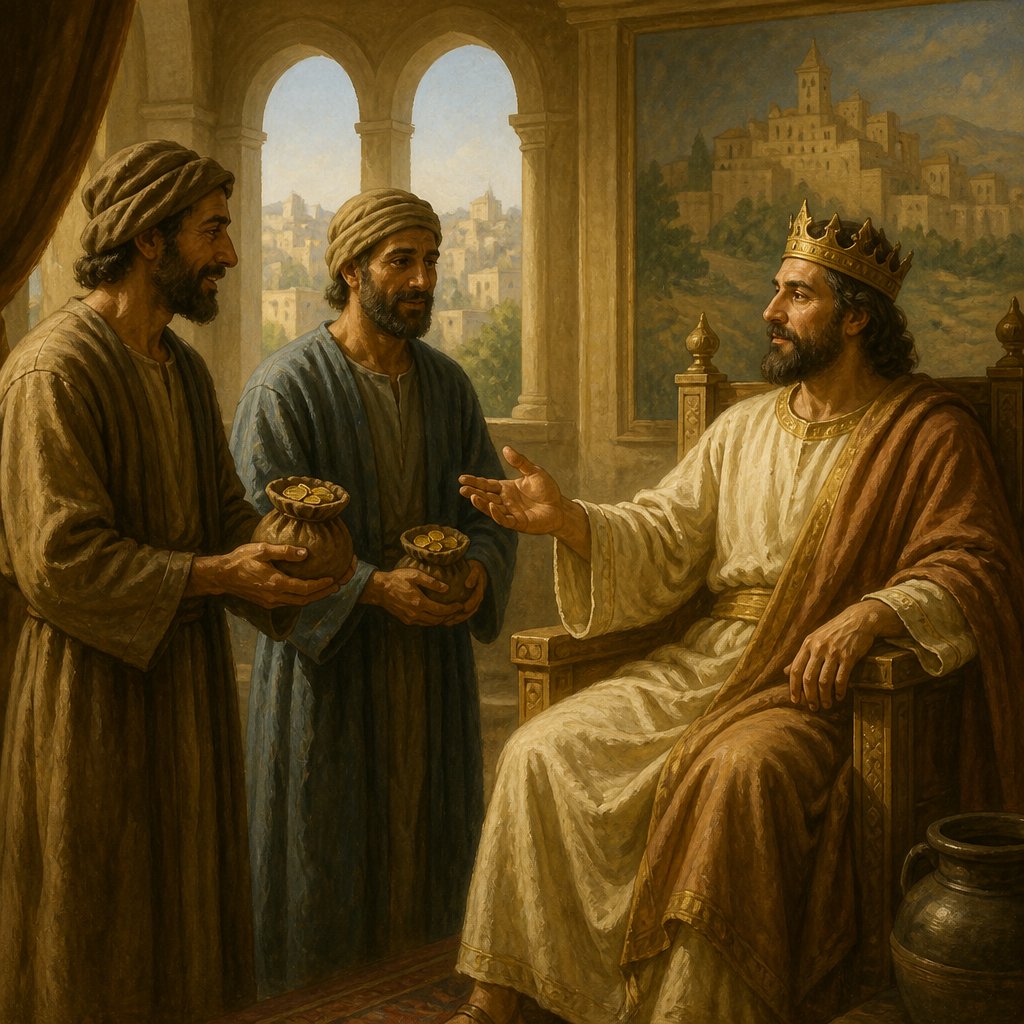
The Bible verse Luke 19:15-19 from the King James Version reads:
"And it came to pass, that when he was returned, having received the kingdom, then he commanded these servants to be called unto him, to whom he had given the money, that he might know how much every man had gained by trading. Then came the first, saying, Lord, thy pound hath gained ten pounds. And he said unto him, Well, thou good servant: because thou hast been faithful in a very little, have thou authority over ten cities. And the second came, saying, Lord, thy pound hath gained five pounds. And he said likewise to him, Be thou also over five cities."
This passage is part of the parable of the ten minas, which is found in the Gospel of Luke. In this parable, Jesus tells the story of a nobleman who goes away to receive a kingdom, and while he is gone, he gives ten of his servants one mina each to do business with. When he returns, he calls his servants to see how much they had gained.
The parable carries several important themes, the first being stewardship. The nobleman represents Jesus, and the minas represent the resources and abilities that God has given to each person. The servants represent believers, and their actions with the minas represent how they use their resources and abilities for the Kingdom of God. This parable emphasizes the importance of faithfulness and using our God-given gifts and resources to advance His kingdom on earth.
Another key theme in this parable is accountability. The nobleman's return symbolizes the second coming of Christ, and the servants' report of their gains symbolizes the judgment that will occur when Christ returns. This parable teaches that we will all be held accountable for how we have used our resources and abilities in our lives. Those who have been faithful in using what God has given them will be rewarded, while those who have neglected or squandered their resources will be held accountable.
The parable also teaches about the nature of reward and responsibility in the Kingdom of God. The first servant who gained ten more minas is rewarded with authority over ten cities, while the second servant who gained five more minas is rewarded with authority over five cities. This represents the idea that those who are faithful with what they have been given will be given greater responsibility and authority in the Kingdom of God. It also illustrates God's fairness and justice in rewarding each person according to their faithfulness.
In addition to these themes, the parable of the ten minas also holds symbolism. The nobleman's journey to receive a kingdom represents Jesus' ascension to heaven and his eventual return in glory. The minas symbolize the resources and abilities that God has given to each of us, and the servants represent believers who are called to use these resources to advance God's kingdom. The cities over which the servants are given authority represent the responsibilities and rewards that will be given to faithful believers in the Kingdom of God.
In the context of the Gospel of Luke, this parable is part of a larger message about the kingdom of God. Throughout the Gospel, Jesus teaches about the nature of the kingdom and what it means to be a part of it. This parable serves as a reminder to believers that God has entrusted them with resources and abilities, and they are called to use them faithfully for His kingdom.
In conclusion, the parable of the ten minas in Luke 19:15-19 is a rich and powerful teaching from Jesus about stewardship, accountability, reward, and responsibility in the Kingdom of God. It serves as a reminder to believers that they are called to use their God-given resources and abilities faithfully and wisely, knowing that they will one day be called to give an account for how they have used them. It also offers hope and encouragement, reminding believers that those who are faithful in using what God has given them will be rewarded and given greater responsibility in the Kingdom of God.
Have questions about Luke 19:15-19?
Dive deeper into this scripture with Bible Chat — an AI-powered tool for exploring God's Word through conversation. Ask questions, get context, and grow in your understanding of the Bible.
Get Our Apps


Luke 19:15-19 Artwork

Luke 19:15-19 - "And it came to pass, that when he was returned, having received the kingdom, then he commanded these servants to be called unto him, to whom he had given the money, that he might know how much every man had gained by trading. Then came the first, saying, Lord, thy pound hath gained ten pounds. And he said unto him, Well, thou good servant: because thou hast been faithful in a very little, have thou authority over ten cities. And the second came, saying, Lord, thy pound hath gained five pounds. And he said likewise to him, Be thou also over five cities."
"And it came to pass, that when he was returned, having received the kingdom, then he commanded these servants to be called unto him, to whom he had given the money, that he might know how much every man had gained by trading. Then came the first, saying, Lord, thy pound hath gained ten pounds. And he said unto him, Well, thou good servant: because thou hast been faithful in a very little, have thou authority over ten cities. And the second came, saying, Lord, thy pound hath gained five pounds. And he said likewise to him, Be thou also over five cities." - Luke 19:15-19

Luke 21:15-19

Luke 15:19 - "And am no more worthy to be called thy son: make me as one of thy hired servants."

Luke 19:19 - "And he said likewise to him, Be thou also over five cities."

Luke 10:18-19

Luke 13:18-19

Luke 10:18-19

Luke 10:18-19

Luke 10:17-19

Luke 13:18-19

Luke 10:18-19

Luke 10:18-19

Luke 10:18-19

Luke 10:17-19

Luke 19:23

Luke 1:19

Luke 19:23

Luke 19:10

Luke 19:28

Luke 1:19

Luke 1:19

luke 21:5-19

Luke 19:1-10

Genesis 15:19

Luke 4:19 - "To preach the acceptable year of the Lord."

Luke 10:18-19

Luke 19:1-10

Genesis 19-15

Luke 19:34 - "And they said, The Lord hath need of him."