What does Luke 19:32 mean?
“And they that were sent went their way, and found even as he had said unto them.” — Luke 19:32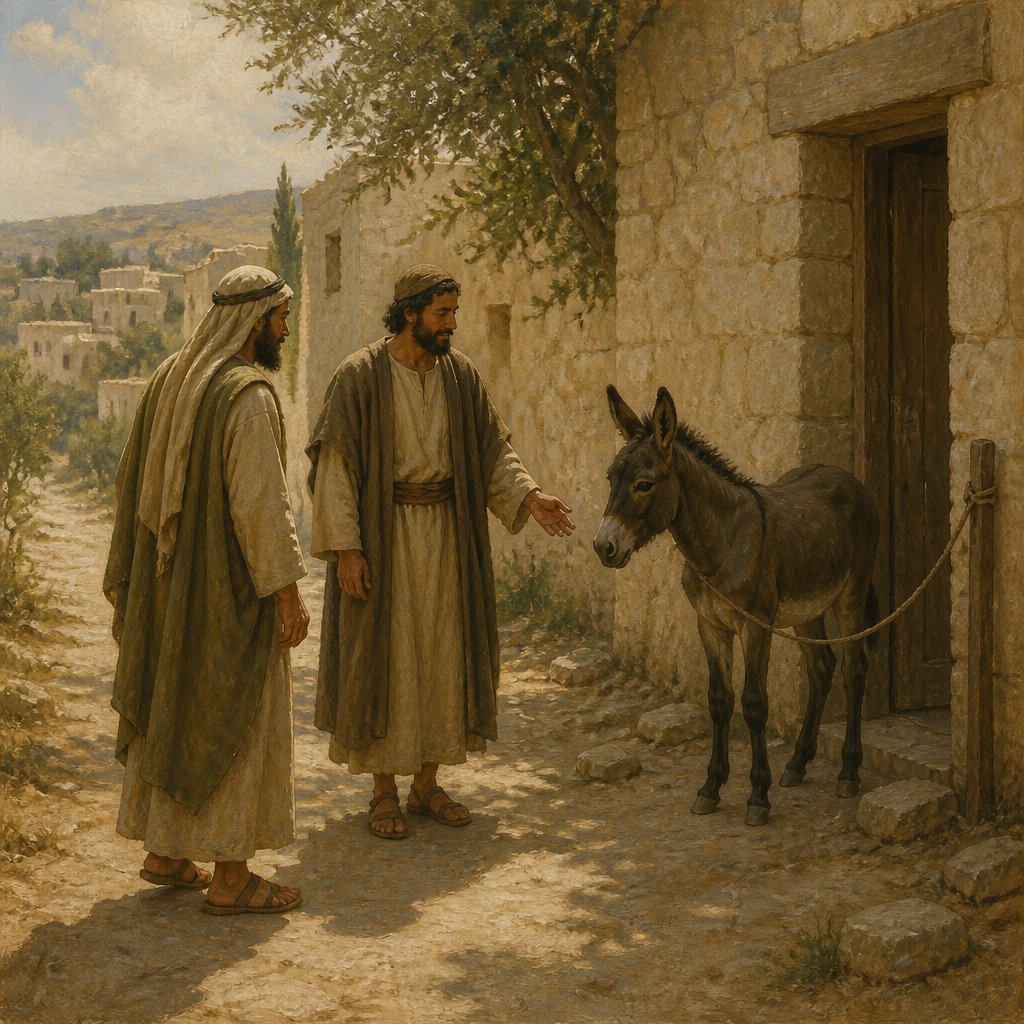
Luke 19:32 (KJV) states, "And they that were sent went their way, and found even as he had said unto them."
This verse is a part of the narrative of Jesus' triumphal entry into Jerusalem, commonly known as Palm Sunday. As Jesus and his disciples approached Jerusalem, Jesus sent two of his disciples ahead to find a colt that had never been ridden. He instructed them to bring the colt to him, and if anyone asked why they were taking it, to respond that "the Lord hath need of him" (Luke 19:31, KJV). In verse 32, we see that the disciples found exactly what Jesus had described they would find.
This verse is a testament to the power and authority of Jesus. It illustrates his ability to see and know things that are beyond the perception of normal human beings. Jesus' prediction of finding the colt exactly as he had said is evidence of his divine foresight and knowledge. This demonstrates his supernatural understanding and control over the circumstances surrounding his entry into Jerusalem.
In a broader context, this verse also serves as a reminder of the fulfillment of prophecy. It echoes the Old Testament prophecies, specifically Zechariah 9:9, which foretold the coming of a king who would be "lowly, and riding upon an ass, and upon a colt the foal of an ass" (KJV). By sending his disciples to find the colt, Jesus deliberately fulfills this prophecy, further establishing his identity as the promised Messiah.
The theme of obedience is also present in this verse. The disciples were obedient to Jesus' instructions, and their obedience led to the realization of his divine plan. This serves as an example of the importance of obeying the will of God and trusting in his guidance. It also highlights the disciples' faith in Jesus as they carried out his instructions without question.
Symbolically, the colt itself holds significance. In ancient times, a king riding on a colt symbolized a message of peace. This symbolic act was in direct contrast to the common image of a conquering warrior riding on a horse, which represented war and domination. Jesus, as the Prince of Peace, intentionally chose to enter Jerusalem on a colt as a declaration of his intentions to bring peace and salvation rather than war and destruction.
Furthermore, the colt represents the humility and gentleness of Jesus. Despite being the prophesied king, he chose to humble himself by riding on a young, unbroken colt. This act exemplifies Jesus' servant leadership and his willingness to identify with the lowly and the meek.
Overall, Luke 19:32 carries profound theological significance. It reveals Jesus' divine knowledge and authority, the fulfillment of prophecy, the importance of obedience, and the symbolism of Jesus as the peaceful and humble Messiah. As Christians reflect on this verse, they are reminded of the power and sovereignty of Jesus, as well as the attributes of humility and obedience that they are called to embody in their own lives.
Get our apps


Artwork for Luke 19:32

Luke 19:32 - "And they that were sent went their way, and found even as he had said unto them."
"And they that were sent went their way, and found even as he had said unto them." - Luke 19:32

Luke 1:32

Luke 1:32

Luke 1:32

Luke 1:32

Luke 1:32

Luke 1:32

Luke 1:32

Genesis 19-32

Luke 17:32 - "Remember Lot's wife."

Luke 17:32-37

Luke 15:11-32

Luke 20:32 - "Last of all the woman died also."

Luke 5:32 - "I came not to call the righteous, but sinners to repentance."

Luke 22:31-32 - "Luke 22:31-32: And the Lord said, Simon, Simon, behold, Satan hath desired to have you, that he may sift you as wheat: But I have prayed for thee, that thy faith fail not: and when thou art converted, strengthen thy brethren."

Luke 2:32 - "A light to lighten the Gentiles, and the glory of thy people Israel."

Luke 4:32 - "And they were astonished at his doctrine: for his word was with power."

"Remember Lot's wife." - Luke 17:32

Luke 23:32 - "And there were also two other, malefactors, led with him to be put to death."

Luke 10:18-19

Luke 13:18-19

Luke 10:18-19

Luke 10:18-19

Luke 13:18-19

Luke 10:17-19

Luke 10:18-19

Luke 10:18-19

Luke 10:18-19

Luke 10:17-19