What does Luke 19:35 mean?
“And they brought him to Jesus: and they cast their garments upon the colt, and they set Jesus thereon.” — Luke 19:35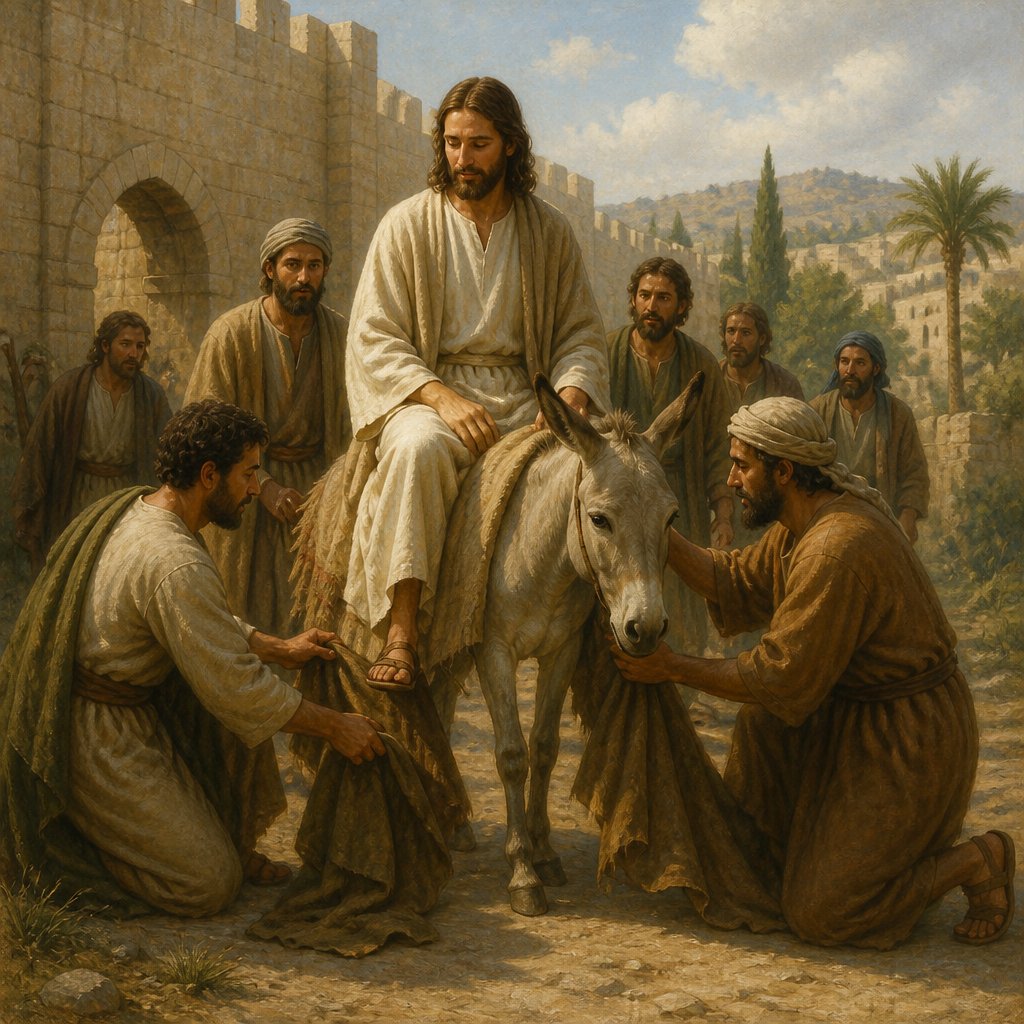
Luke 19:35 - "And they brought him to Jesus: and they cast their garments upon the colt, and they set Jesus thereon."
The passage from Luke 19:35 details the triumphant entry of Jesus into Jerusalem, commonly known as Palm Sunday. This event is one of the key moments in the Christian calendar, as it marks the beginning of the Holy Week leading up to Jesus' crucifixion and resurrection. The symbolism and themes in this passage are rich and meaningful, offering insight into the nature of Jesus' kingship and the unique role he plays in the redemption of humanity.
First, the act of "bringing him to Jesus" refers to the disciples bringing a colt to Jesus. In the ancient world, riding on a donkey or a colt symbolized peace and humility, as opposed to riding on a horse, which was a symbol of war and conquest. By choosing to ride on a colt, Jesus was intentionally fulfilling the prophecy found in Zechariah 9:9, which describes the Messiah as a humble and peaceful king. This sets the stage for the juxtaposition of Jesus' arrival with the expectations of the people regarding the nature of his kingship.
The act of "casting their garments upon the colt" is significant as well. In the ancient Near East, spreading one's garment on the ground was a sign of honor and respect for someone of high rank or status. In this context, the disciples are expressing their recognition of Jesus as the rightful king and their willingness to honor him as such. The setting of Jesus on the colt is an act of coronation, as it was customary for kings to be presented to the people in this manner. The disciples are participating in a symbolic declaration of Jesus' kingship, recognizing him as the long-awaited Messiah.
This event takes place in the context of the Jewish festival of Passover, when Jews from all over the region would gather in Jerusalem to commemorate the Exodus and celebrate their freedom from slavery in Egypt. As such, the city would have been bustling with excitement and anticipation, and the people would have been especially open to the idea of a new king delivering them from the Roman occupation. The use of the colt, a symbol of peace, in this context would have resonated deeply with the people, as they longed for the arrival of a messianic figure who would usher in a new era of peace and prosperity.
However, the true nature of Jesus' kingship differs from the expectations of the people. While they hailed him as a conquering hero, Jesus' mission was one of humility, sacrifice, and redemption. The irony of the triumphal entry lies in the fact that Jesus, the rightful king, was not coming to establish an earthly kingdom, but to offer himself as a sacrifice for the sins of humanity. The people's cries of "Hosanna" (which means "save, we pray" in Hebrew) take on a deeper significance in light of this, as Jesus was indeed coming to save, but in a way that was contrary to their expectations.
In a broader sense, this passage speaks to the paradoxical nature of Jesus' kingship and the Kingdom of God. While the world often values power, wealth, and military might, Jesus' reign is marked by humility, servanthood, and sacrificial love. This is encapsulated in his own words in Luke 22:29-30, where he tells his disciples, "I appoint unto you a kingdom, as my Father hath appointed unto me; that ye may eat and drink at my table in my kingdom, and sit on thrones judging the twelve tribes of Israel." This statement emphasizes the upside-down nature of Jesus' kingdom, where the first shall be last and the last shall be first.
In conclusion, the passage from Luke 19:35 holds deep theological and symbolic significance, offering insights into the nature of Jesus' kingship, the expectations of the people, and the broader themes of the Kingdom of God. It serves as a powerful reminder that God's ways are not our ways, and that true greatness lies in humility, service, and sacrificial love. This event sets the stage for the pivotal events of Holy Week, ultimately leading to Jesus' crucifixion and resurrection, which form the heart of the Christian faith.
Get our apps


Artwork for Luke 19:35

Luke 19:35 - "And they brought him to Jesus: and they cast their garments upon the colt, and they set Jesus thereon."
"And they brought him to Jesus: and they cast their garments upon the colt, and they set Jesus thereon." - Luke 19:35

Luke 19:35-38 - "And they brought him to Jesus: and they cast their garments upon the colt, and they set Jesus thereon. And as he went, they spread their clothes in the way. And when he was come nigh, even now at the descent of the mount of Olives, the whole multitude of the disciples began to rejoice and praise God with a loud voice for all the mighty works that they had seen; Saying, Blessed be the King that cometh in the name of the Lord: peace in heaven, and glory in the highest."
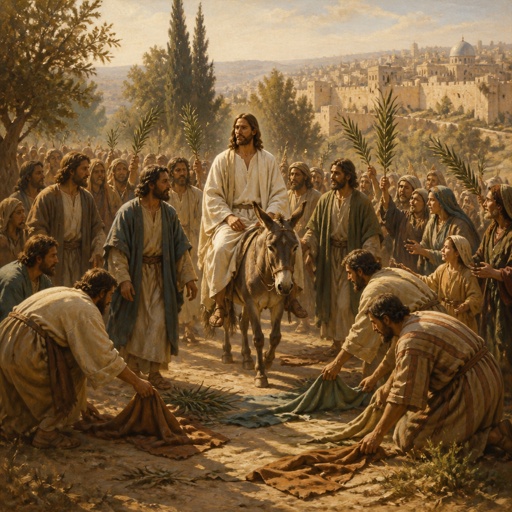
"And they brought him to Jesus: and they cast their garments upon the colt, and they set Jesus thereon. And as he went, they spread their clothes in the way. And when he was come nigh, even now at the descent of the mount of Olives, the whole multitude of the disciples began to rejoice and praise God with a loud voice for all the mighty works that they had seen; Saying, Blessed be the King that cometh in the name of the Lord: peace in heaven, and glory in the highest." - Luke 19:35-38

luke 9:35

luke 9:35

Luke 24:35

Genesis 19-35

Luke 24:13-35

Luke 7:35 - "But wisdom is justified of all her children."

Luke 11:35 - "Take heed therefore that the light which is in thee be not darkness."

Luke 12:35 - "Let your loins be girded about, and your lights burning;"

2 Chronicles 35:19 - "In the eighteenth year of the reign of Josiah was this passover kept."

Joshua 19:35 - "And the fenced cities are Ziddim, Zer, and Hammath, Rakkath, and Chinnereth,"

Luke 21:35 - "For as a snare shall it come on all them that dwell on the face of the whole earth."

Leviticus 19:35 - "¶ Ye shall do no unrighteousness in judgment, in meteyard, in weight, or in measure."

Genesis 35:19 - "And Rachel died, and was buried in the way to Ephrath, which is Beth-lehem."

Luke 17:35 - "Two women shall be grinding together; the one shall be taken, and the other left."

Luke 9:35 - "And there came a voice out of the cloud, saying, This is my beloved Son: hear him."

Luke 24:35 - "And they told what things were done in the way, and how he was known of them in breaking of bread."

"But wisdom is justified of all her children." - Luke 7:35

Luke 10:18-19

Luke 13:18-19

Luke 10:18-19

Luke 10:18-19

Luke 13:18-19

Luke 10:17-19

Luke 5:35 - "But the days will come, when the bridegroom shall be taken away from them, and then shall they fast in those days."

Luke 10:18-19

Luke 10:18-19