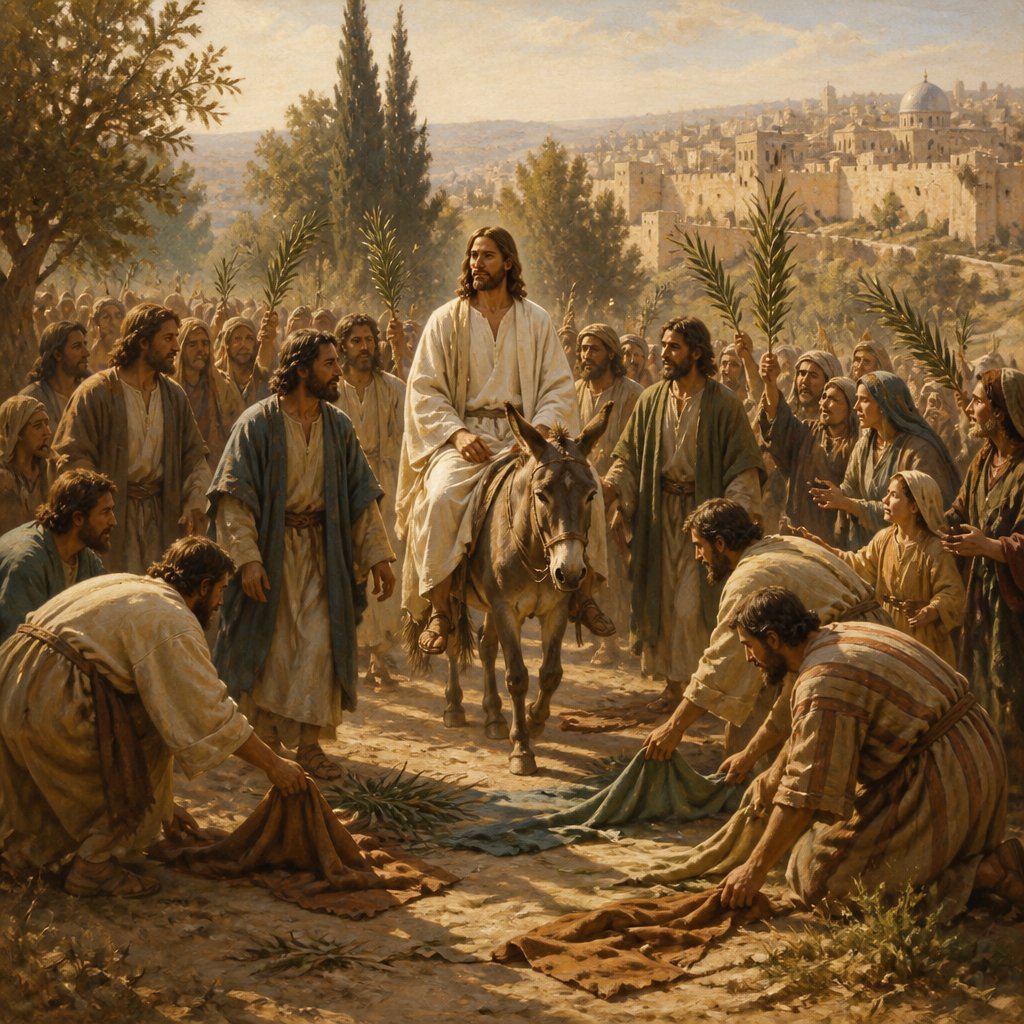
Luke 19:35-38 (KJV) reads:
35 And they brought him to Jesus: and they cast their garments upon the colt, and they set Jesus thereon.
36 And as he went, they spread their clothes in the way.
37 And when he was come nigh, even now at the descent of the mount of Olives, the whole multitude of the disciples began to rejoice and praise God with a loud voice for all the mighty works that they had seen;
38 Saying, Blessed be the King that cometh in the name of the Lord: peace in heaven, and glory in the highest.
The passage from Luke 19:35-38 describes Jesus' triumphal entry into Jerusalem. This event is often celebrated by Christians during the Palm Sunday, which marks the beginning of Holy Week. It is a significant moment in the Bible as it fulfills the prophecy in Zechariah 9:9, which states, "Rejoice greatly, O daughter of Zion! Shout, daughter of Jerusalem! See, your king comes to you, righteous and victorious, lowly and riding on a donkey, on a colt, the foal of a donkey."
When Jesus rode into Jerusalem on a donkey, he fulfilled this prophecy, signaling to the people that he was the long-awaited Messiah. The people's response to his entry reflects the Messianic expectations of the time; they were looking for a king who would liberate them from Roman rule and establish an earthly kingdom. The crowd's actions of spreading their garments on the road and waving palm branches were customary for welcoming a king or victorious leader, demonstrating their recognition of Jesus as their long-awaited king.
The symbolism within this passage is rich and multi-layered. The use of a donkey as Jesus' mode of transportation is significant as it symbolizes peace. In contrast, a king riding on a horse would symbolize war. By consciously choosing to ride a donkey, Jesus communicated that he came in peace, as the Prince of Peace prophesied by Isaiah. This reflects the humility and gentleness of Jesus, as he entered not as a conquering warrior but as a servant-king.
Furthermore, the act of casting their garments upon the colt and spreading their clothes on the road were symbolic gestures of honor and submission. It was a way for the people to show reverence and respect to Jesus, acknowledging him as their rightful king. This act also mirrors the Old Testament practice of laying down cloaks before a king, as seen in 2 Kings 9:13, where the people did the same for Jehu, an anointed king.
The response of the crowd, as described in verse 38, also holds profound significance. They shouted "Blessed be the King that cometh in the name of the Lord" and praised God for the mighty works they had seen. This proclamation echoes the Messianic hope of the Jewish people, expressing their belief that Jesus was the promised King who came in the name of the Lord. The phrase "peace in heaven, and glory in the highest" is reminiscent of the angels' announcement in Luke 2:14 at the birth of Jesus, reinforcing the idea that Jesus' arrival in Jerusalem is a moment of divine fulfillment and significance.
Additionally, the setting of the Mount of Olives is crucial to the context of this passage. The Mount of Olives held significant historical and prophetic symbolism for the Jewish people. It was a place of messianic expectation, as it was believed that the Messiah would come from the east and first appear on the Mount of Olives. By entering Jerusalem from the Mount of Olives, Jesus was symbolically fulfilling this messianic expectation, further solidifying his claim to be the long-awaited Messiah.
In conclusion, Luke 19:35-38 captures a pivotal moment in Jesus' ministry, marking his triumphal entry into Jerusalem. The symbolism, context, and themes present in this passage are essential to understanding the significance of this event. It represents the fulfillment of Old Testament prophecies, the recognition of Jesus as the Messiah, and the establishment of his kingship. The passage sets the stage for the events that will unfold in Holy Week, leading to Jesus' crucifixion and ultimately, his resurrection. It serves as a powerful reminder of Jesus' identity as the promised Savior and King, and it invites believers to reflect on the humble and triumphant nature of Christ.
Get our apps


Artwork for Luke 19:35-38

Luke 19:35-38 - "And they brought him to Jesus: and they cast their garments upon the colt, and they set Jesus thereon. And as he went, they spread their clothes in the way. And when he was come nigh, even now at the descent of the mount of Olives, the whole multitude of the disciples began to rejoice and praise God with a loud voice for all the mighty works that they had seen; Saying, Blessed be the King that cometh in the name of the Lord: peace in heaven, and glory in the highest."
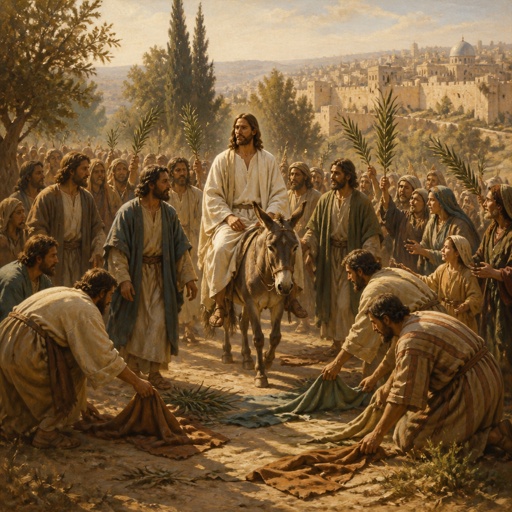
"And they brought him to Jesus: and they cast their garments upon the colt, and they set Jesus thereon. And as he went, they spread their clothes in the way. And when he was come nigh, even now at the descent of the mount of Olives, the whole multitude of the disciples began to rejoice and praise God with a loud voice for all the mighty works that they had seen; Saying, Blessed be the King that cometh in the name of the Lord: peace in heaven, and glory in the highest." - Luke 19:35-38

Luke 19:38 - "Saying, Blessed be the King that cometh in the name of the Lord: peace in heaven, and glory in the highest."

Luke 19:35 - "And they brought him to Jesus: and they cast their garments upon the colt, and they set Jesus thereon."
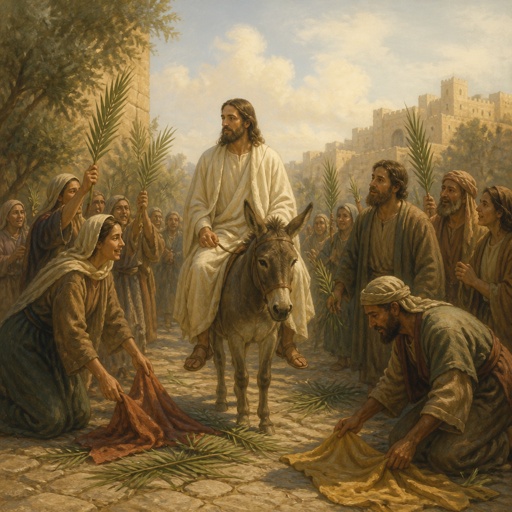
"Saying, Blessed be the King that cometh in the name of the Lord: peace in heaven, and glory in the highest." - Luke 19:38
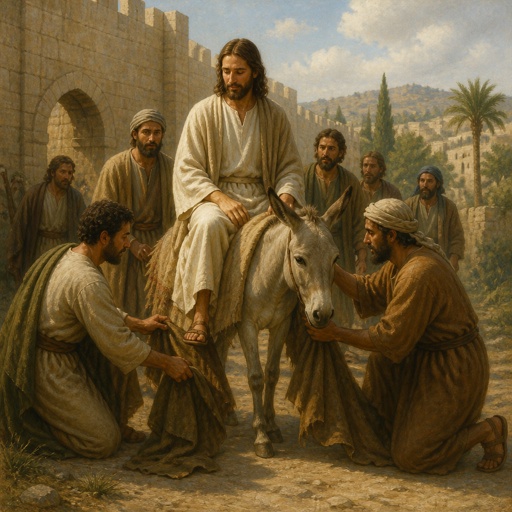
"And they brought him to Jesus: and they cast their garments upon the colt, and they set Jesus thereon." - Luke 19:35

Job 38:35 - "Canst thou send lightnings, that they may go, and say unto thee, Here we are?"

John 19:38

luke 9:35

luke 9:35

Luke 24:35

Genesis 19-38

Luke 6:27-38

Luke 6: 27-38

Genesis 19-35

Luke 24:13-35

Luke 7:35 - "But wisdom is justified of all her children."

Luke 6:38 Give, and it will be given to you

Luke 5:38 - "But new wine must be put into new bottles; and both are preserved."

Luke 20:38 - "For he is not a God of the dead, but of the living: for all live unto him."

Luke 11:35 - "Take heed therefore that the light which is in thee be not darkness."

Luke 21:38 - "And all the people came early in the morning to him in the temple, for to hear him."

Luke 12:35 - "Let your loins be girded about, and your lights burning;"

2 Chronicles 35:19 - "In the eighteenth year of the reign of Josiah was this passover kept."

Joshua 19:35 - "And the fenced cities are Ziddim, Zer, and Hammath, Rakkath, and Chinnereth,"

Psalms 38:19 - "But mine enemies are lively, and they are strong: and they that hate me wrongfully are multiplied."

Luke 20:27-38. All people of color.

Luke 18:38 - "And he cried, saying, Jesus, thou Son of David, have mercy on me."

Luke 21:35 - "For as a snare shall it come on all them that dwell on the face of the whole earth."

Leviticus 19:35 - "¶ Ye shall do no unrighteousness in judgment, in meteyard, in weight, or in measure."