What does Luke 19:5 mean?
“And when Jesus came to the place, he looked up, and saw him, and said unto him, Zacchæus, make haste, and come down; for to day I must abide at thy house.” — Luke 19:5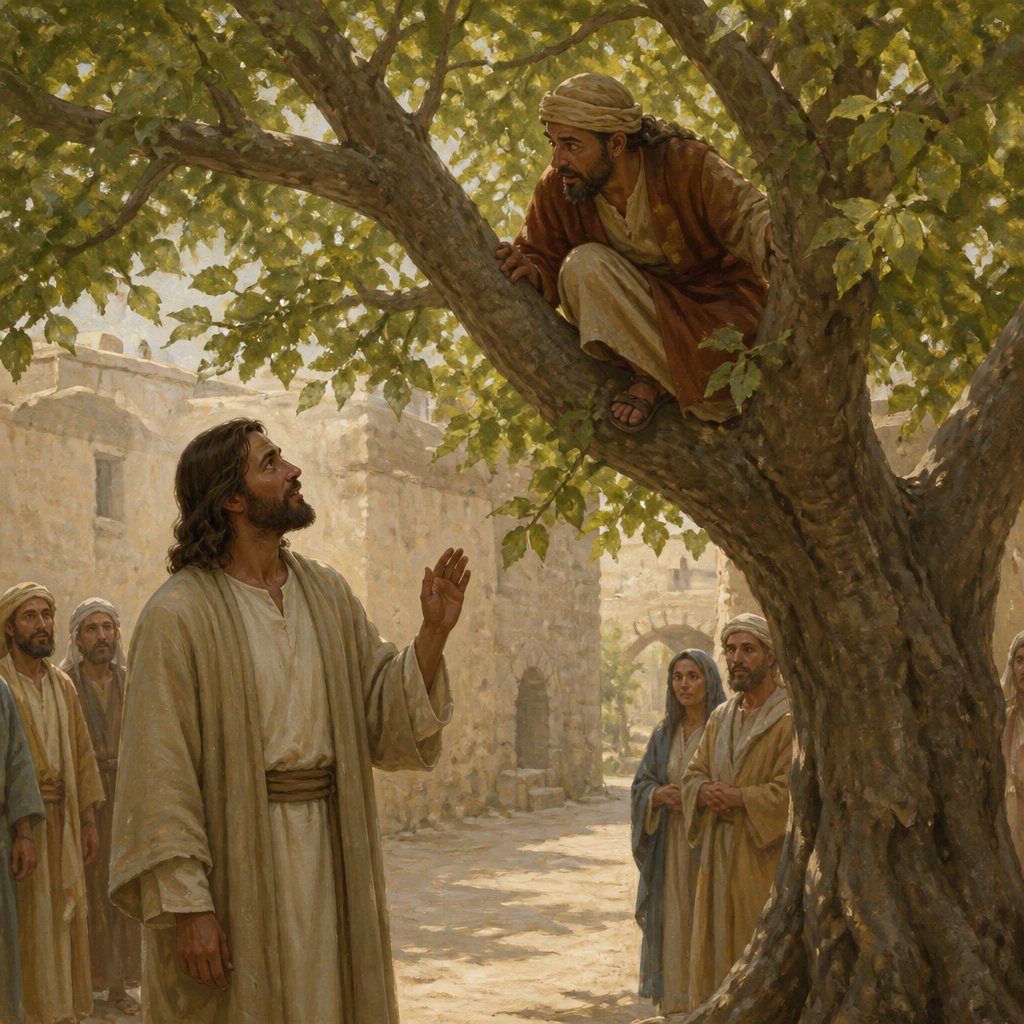
Luke 19:5 (KJV) states: "And when Jesus came to the place, he looked up, and saw him, and said unto him, Zacchaeus, make haste, and come down; for to day I must abide at thy house."
This verse comes from the New Testament, specifically from the book of Luke. It is found in the context of the story of Zacchaeus, a tax collector who was wealthy but not well-liked as tax collectors were seen as corrupt and dishonest by the people. Zacchaeus was a short man who climbed a sycamore tree in order to get a better view of Jesus as he passed through Jericho. When Jesus approached the tree, he looked up and saw Zacchaeus, and told him to come down as he intended to stay at his house.
This verse is significant as it shows Jesus' ability to see people for who they truly are and make a personal connection with them. It also demonstrates Jesus' willingness to reach out to those who are marginalized or disliked by society. The encounter with Zacchaeus shows that Jesus is not concerned with outward appearances or societal status, but rather with the heart and willingness to change.
The theme of this verse is that of unconditional love and acceptance. Jesus does not hesitate to invite himself into Zacchaeus' home, despite the fact that Zacchaeus is a tax collector and thus viewed as a sinner by the people. This exemplifies Jesus' mission to bring salvation to all people, regardless of their social standing or reputation. It also provides a powerful message about the transformative power of encountering Jesus.
The context of this verse is important to consider when interpreting its meaning. In the preceding verses, Jesus had just healed a blind man, demonstrating his power and compassion. The encounter with Zacchaeus serves as a further illustration of Jesus' grace and willingness to extend his love to those who society deems unworthy.
Furthermore, the symbolism of Zacchaeus climbing a tree to see Jesus is significant. The action of climbing the tree can be seen as a metaphor for the sincere efforts that we should make to seek Jesus in our lives. It also symbolizes the desire for spiritual growth and the willingness to go to great lengths to encounter Jesus.
The sycamore tree itself holds symbolic significance. In biblical times, the sycamore tree was associated with wealth and prosperity. This adds depth to the story of Zacchaeus, as it suggests that despite his wealth, he still felt a spiritual emptiness and sought something more meaningful in his encounter with Jesus.
The verse also emphasizes the importance of hospitality and generosity. In Jewish culture, it was a great honor for a host to offer hospitality to a guest, and for Jesus to invite himself to Zacchaeus' house was a significant gesture. It also reflects Jesus' call for us to open our hearts and homes to others, especially those who are in need of love and acceptance.
In conclusion, Luke 19:5 is a powerful verse that demonstrates Jesus' unconditional love and acceptance, as well as his ability to transform the lives of those who encounter him. The encounter with Zacchaeus serves as a reminder of the inclusivity of Jesus' message and the transformative power of encountering his love and grace. This verse holds timeless relevance and continues to inspire and challenge believers to live out the message of love and acceptance in their own lives.
Get our apps


Artwork for Luke 19:5

Luke 19:5 - "And when Jesus came to the place, he looked up, and saw him, and said unto him, Zacchaeus, make haste, and come down; for to day I must abide at thy house."
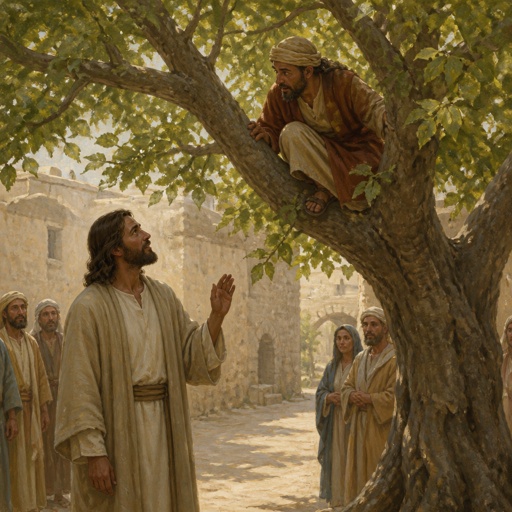
"And when Jesus came to the place, he looked up, and saw him, and said unto him, Zacchaeus, make haste, and come down; for to day I must abide at thy house." - Luke 19:5

luke 21:5-19

luke 21:5-19 with all people of color

luke 21:5-19 with all people of color

luke 21:5-19 with all people of color

luke 21:5-19 with all people of color

Luke 5:19 - "And when they could not find by what way they might bring him in because of the multitude, they went upon the housetop, and let him down through the tiling with his couch into the midst before Jesus."

Luke 10:18-19

Luke 13:18-19

Luke 10:18-19

Luke 10:18-19

Luke 10:17-19

Luke 13:18-19

Luke 10:18-19

Luke 10:18-19

Luke 10:18-19

Luke 10:17-19

luke 5:5

Luke 19:23

Luke 1:19

Luke 19:23

Luke 19:19 - "And he said likewise to him, Be thou also over five cities."

Luke 19:10

Luke 19:28

Luke 1:19

Luke 1:19

Luke 19:1-10

Luke 10:5

Luke 10:5