What does Luke 1:24 mean?
"And after those days his wife Elisabeth conceived, and hid herself five months, saying," - Luke 1:24
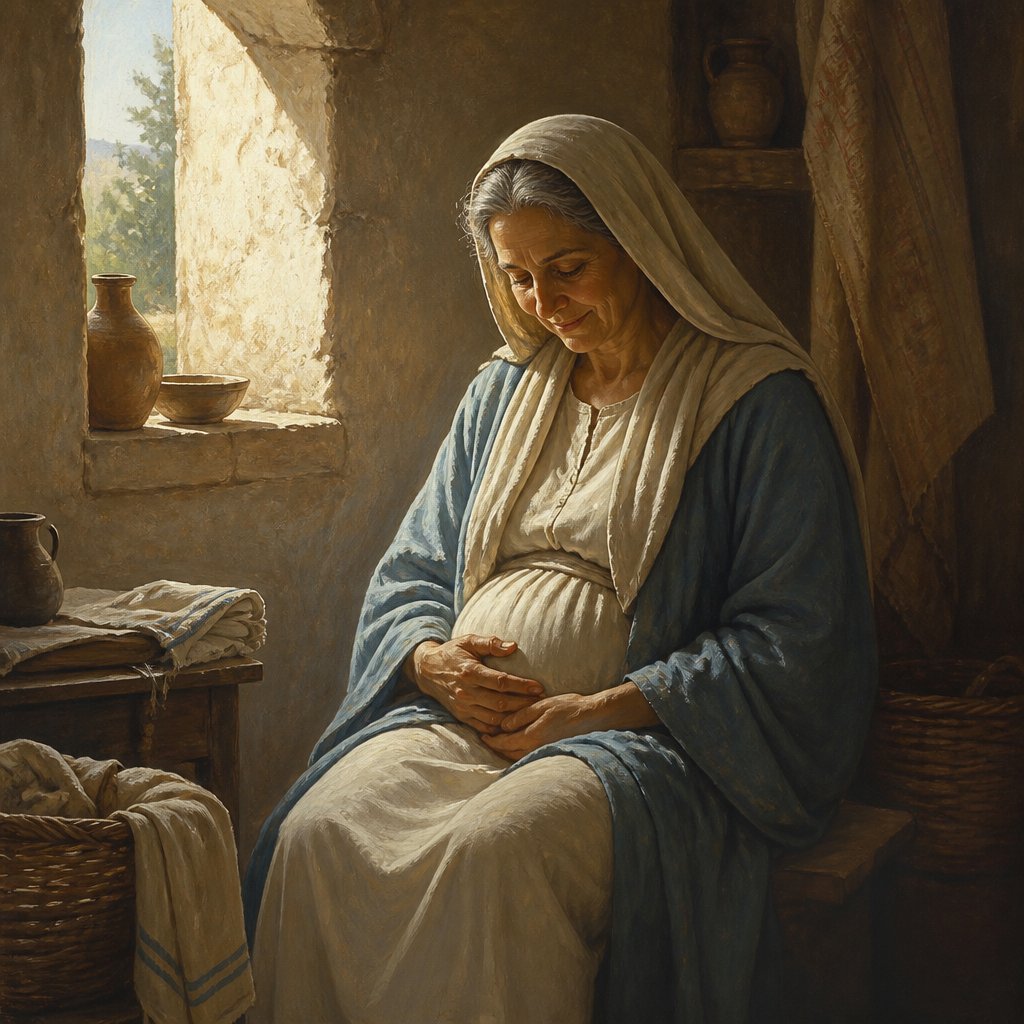
The Bible verse Luke 1:24 in the King James Version (KJV) states, "And after those days his wife Elisabeth conceived, and hid herself five months, saying." This verse is part of the larger story of the birth of John the Baptist, which marks the beginning of the fulfillment of God's promises and the coming of the Messiah, Jesus Christ.
To fully understand the meaning and significance of this verse, it's important to look at the larger context in which it falls. The chapter begins with the introduction of a priest named Zechariah and his wife Elizabeth, who were both righteous and devout before God. However, they were childless and well advanced in years, leading to a sense of shame and disappointment in their culture. One day, while Zechariah was performing his priestly duties in the temple, the angel Gabriel appeared to him and announced that Elizabeth would conceive and bear a son, who would be named John.
In verse 24, we see the fulfillment of this prophecy as Elizabeth conceives a child, a miraculous event given her advanced age and previous barrenness. This event serves as a direct fulfillment of the promise made by the angel Gabriel, demonstrating the faithfulness and power of God to fulfill His word.
The hiding of Elisabeth for five months can be interpreted to signify her sense of wonder and awe at the miracle that has taken place within her. It also serves as a period of contemplation and preparation for the coming birth, as she undoubtedly grapples with the significance of the child she is carrying and the role he will play in God's plans.
The themes present in this verse and the larger story include the faithfulness and power of God, the fulfillment of His promises, and the miraculous nature of the birth of John the Baptist. These themes point to the larger context of the Gospel of Luke, which emphasizes the fulfillment of Old Testament prophecies and the coming of the long-awaited Messiah. The birth of John the Baptist serves as a precursor to the birth of Jesus, preparing the way for His ministry and the fulfillment of God's redemptive plan for humanity.
Symbolism can also be found in this verse, particularly in the miraculous conception of John the Baptist. The idea of barrenness and advanced age being overcome to bring forth new life points to the broader theme of God's ability to bring forth new beginnings and fulfill His purposes, even in the most unlikely of circumstances. The hiding of Elisabeth for five months can symbolize the mysterious and awe-inspiring nature of the events taking place, as well as the gestation period leading up to the birth of John.
In conclusion, Luke 1:24 in the KJV holds deep meaning and significance within the larger story of the birth of John the Baptist. It serves as a testament to the faithfulness and power of God to fulfill His promises and bring forth new life in the most miraculous of ways. The themes of fulfillment, faith, and preparation are woven throughout this verse, pointing to the larger context of the coming of the Messiah and God's redemptive plan for humanity. Through its symbolism, this verse invites readers to contemplate the mysterious and awe-inspiring nature of God's work in bringing about new beginnings and fulfilling His purposes in the world.
Have questions about Luke 1:24?
Dive deeper into this scripture with Bible Chat — an AI-powered tool for exploring God's Word through conversation. Ask questions, get context, and grow in your understanding of the Bible.
Get Our Apps


Luke 1:24 Artwork

Luke 1:24 - "And after those days his wife Elisabeth conceived, and hid herself five months, saying,"
"And after those days his wife Elisabeth conceived, and hid herself five months, saying," - Luke 1:24

Luke 24:1

Luke 24:35

Luke 21:24

Luke 24:13-35

Luke 21:24 And Kerusalem willbe trodden down by the Gentiles

Luke 24:42

Luke 13:24

luke 24:17

Luke 24:1 - "Now upon the first day of the week, very early in the morning, they came unto the sepulchre, bringing the spices which they had prepared, and certain others with them."

Luke 24:8 - "And they remembered his words,"

LUKE 24:41-43

Luke 24:48 - "And ye are witnesses of these things."

Luke 24:24 - "And certain of them which were with us went to the sepulchre, and found it even so as the women had said: but him they saw not."

Luke 24:3 - "And they entered in, and found not the body of the Lord Jesus."

Luke 23:24 - "And Pilate gave sentence that it should be as they required."

Luke 24:45 - "Then opened he their understanding, that they might understand the scriptures,"

Luke 24:52 - "And they worshipped him, and returned to Jerusalem with great joy:"

Luke 24:16 - "But their eyes were holden that they should not know him."

Luke 24:42 - "And they gave him a piece of a broiled fish, and of an honeycomb."

Luke 24:2 - "And they found the stone rolled away from the sepulchre."

Luke 24:43 - "And he took it, and did eat before them."

Luke 24:37 - "But they were terrified and affrighted, and supposed that they had seen a spirit."

Luke 24:14 - "And they talked together of all these things which had happened."

Luke 24:53 - "And were continually in the temple, praising and blessing God. Amen."

Luke 24:11 - "And their words seemed to them as idle tales, and they believed them not."

Luke 24:34 - "Saying, The Lord is risen indeed, and hath appeared to Simon."

Luke 24:1-3 - "On the first day of the week, very early in the morning, the women took the spices they had prepared and went to the tomb. They found the stone rolled away from the tomb, but when they entered, they did not find the body of the Lord Jesus."

"And ye are witnesses of these things." - Luke 24:48