What does Luke 1:78 mean?
“Through the tender mercy of our God; whereby the dayspring from on high hath visited us,” — Luke 1:78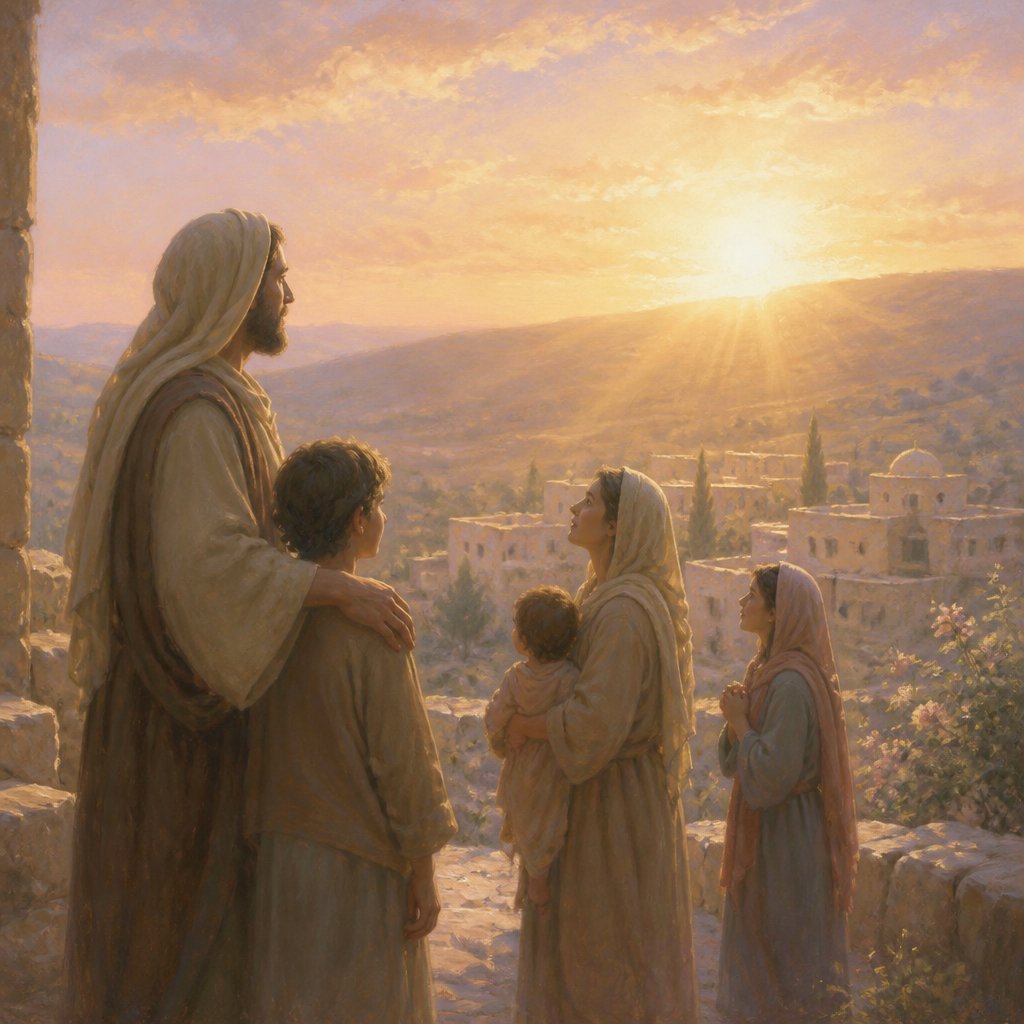
Luke 1:78 in the KJV reads, “Through the tender mercy of our God; whereby the dayspring from on high hath visited us.”
This line comes from the prophecy of Zacharias, often called his “song,” spoken after his tongue is loosed at the birth of John the Baptist. For months Zacharias had been unable to speak, and when he finally blesses God, his words are not merely personal gratitude but a Spirit-filled proclamation of what God is doing in salvation history. The whole passage is set at the hinge of the ages: Israel has waited long under promise, prophecy, and longing, and now, with the birth of John and the imminent birth of Jesus, the promised redemption is breaking into the world. Luke 1:78 sits near the climax of that prophecy, explaining why and how God’s salvation will come: it comes “through the tender mercy of our God,” and it arrives as a heavenly dawn, “the dayspring from on high,” coming to “visit” God’s people.
The first theme is mercy, and not mercy in the abstract but mercy described as “tender.” The phrase “tender mercy” speaks of compassion that is deep, gentle, and personal. In Zacharias’s prophecy, God’s saving work is not portrayed as a cold transaction or a mere display of power; it is the outflow of God’s own heart toward a people in need. The context of the chapter reinforces that the coming of Christ is not earned by human strength or national achievement. Israel is under foreign rule, the faithful are depicted as waiting and praying, and two unlikely births frame the narrative: Elisabeth’s barrenness and Mary’s virginity. These impossibilities highlight that the new beginning is God’s initiative. Luke 1:78 therefore grounds everything in God’s character: salvation arises because God is merciful, and merciful in a way that bends down to the weak and the weary.
A second theme is divine visitation. The verse says the dayspring “hath visited us.” In Scripture, when God “visits,” it is not casual; it is God drawing near in decisive action. A visitation can mean deliverance, mercy, correction, or judgment, but here the visitation is explicitly linked to “tender mercy,” so it is the visitation of saving grace. The word “us” is significant too. Zacharias speaks as part of the covenant people, yet Luke’s Gospel will soon show that this visitation expands outward, bringing light to those beyond Israel as well. Still, the immediate force is covenantal: God has not forgotten his people. He has come to them, entering their history, not remaining distant.
The central symbol is “the dayspring from on high.” “Dayspring” is a vivid image of dawn, the rising of day after a long night. It carries the idea of a new beginning, the end of darkness, and the arrival of light and warmth. In the KJV wording, it is not merely a sunrise that happens within the world; it is “from on high,” stressing heavenly origin. The deliverance Zacharias foresees is not simply political liberation or a human renaissance; it is a light sent from above, a salvation that comes down from God. This symbolism connects naturally to the larger biblical pattern in which light represents God’s presence, truth, holiness, and life, while darkness represents ignorance, sin, fear, and death. Luke’s immediate context supports this, because the next verse explains the purpose of this dawn: “To give light to them that sit in darkness and in the shadow of death, to guide our feet into the way of peace.” So Luke 1:78 introduces the image, and Luke 1:79 unfolds what that image means. The dayspring is not an ornament of poetry; it is the arrival of the One who illuminates those trapped in darkness and guides them into peace.
There is also strong messianic significance. Zacharias is speaking about what God is doing through the coming Messiah, even as he also speaks about John’s role in preparing the way. John’s ministry will be to “give knowledge of salvation unto his people by the remission of their sins,” but Luke 1:78 shows that the source of this saving knowledge is God’s merciful advent in the Messiah. The dayspring “from on high” points beyond John to the greater One whose coming John announces. In other words, John is like the herald at dawn, but Christ is the dawn itself, the new day visiting the world.
The verse also quietly weaves together humility and majesty. “Tender mercy” emphasizes God’s gentleness; “from on high” emphasizes God’s exalted sovereignty. The same God who is enthroned above is the God who stoops to visit. That union of heavenly height and compassionate nearness is at the heart of the incarnation as Luke presents it: God’s salvation is both transcendent in origin and intimate in effect.
Finally, Luke 1:78 bears the weight of hope. A dawn implies that night has been real and long, yet it also implies that night is not final. Zacharias speaks for people who know waiting, silence, and limitation—his own months of muteness become a personal echo of Israel’s long quiet between prophetic voices. When he proclaims that the dayspring “hath visited us,” it is as though he is saying that God’s silence has broken, that the morning God promised is now arriving. The significance of the verse, then, is that it locates salvation in God’s compassionate initiative, describes it as a heavenly light entering human darkness, and announces it as a divine visitation that changes history from the inside out.
Get our apps


Artwork for Luke 1:78
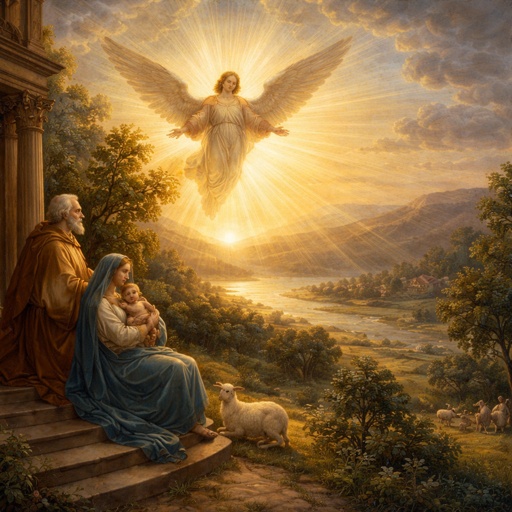
Luke 1:78

Luke 1:78 - "Through the tender mercy of our God; whereby the dayspring from on high hath visited us,"

"Through the tender mercy of our God; whereby the dayspring from on high hath visited us," - Luke 1:78
"Through the tender mercy of our God; whereby the dayspring from on high hath visited us," - Luke 1:78

Psalms 78:1 - "Give ear, O my people, to my law: incline your ears to the words of my mouth."

1 Chronicles 6:78 - "And on the other side Jordan by Jericho, on the east side of Jordan, were given them out of the tribe of Reuben, Bezer in the wilderness with her suburbs, and Jahzah with her suburbs,"

"Give ear, O my people, to my law: incline your ears to the words of my mouth." - Psalms 78:1

Luke 1:1

Luke 1:31

Luke 1:26

luke 1:26

Luke 1:13

luke 1:26

luke 1:27

luke 1:29
Luke:1

Luke 2.12

Luke 2:1-20

Luke 19:1-10

Luke 19:1-10

Luke 1:32

Luke 1:32

Luke 1:32

Luke 1:32

Luke 1:32

Luke 1:32

Luke 1:25

Luke 1:30

Luke 1:13

Luke 1:13