What does Luke 20:24 mean?
"Shew me a penny. Whose image and superscription hath it? They answered and said, Caesar's." - Luke 20:24

In the book of Luke, chapter 20, verse 24, the King James Version (KJV) of the Bible states, "Shew me a penny. Whose image and superscription hath it? They answered and said, Caesar's."
This verse is part of a larger passage in which Jesus is responding to a question about paying taxes to Caesar. The Pharisees and Herodians, who were trying to trap Jesus, asked him whether it was lawful to pay tribute to Caesar or not. Jesus' response is a masterful example of wisdom and diplomacy. He asks for a coin and then poses the query, "Whose image and superscription hath it?" When they respond that it is Caesar's, Jesus famously replies, "Render therefore unto Caesar the things which be Caesar's, and unto God the things which be God's" (Luke 20:25).
The primary theme of this passage is the tension between religious and political authority. The Pharisees and Herodians are trying to manipulate Jesus into making a controversial statement that would either alienate him from the Jewish people or put him at odds with the Roman authorities. This verse demonstrates Jesus' ability to navigate these treacherous waters with grace and intelligence. By emphasizing the distinction between the secular and the sacred, Jesus effectively sidesteps the trap set by his adversaries.
On a more symbolic level, the coin itself becomes a powerful metaphor for the complex relationship between the divine and the worldly. The image and inscription on the coin represent the authority and power of the Roman Empire, while Jesus' words remind his audience that ultimately, everything belongs to God. This distinction is crucial for understanding the Christian perspective on citizenship, obedience to earthly rulers, and the ultimate allegiance that believers owe to God.
The historical and cultural context of this passage is also important for understanding its significance. During the time of Jesus, the Jewish people were living under Roman occupation, and there was significant tension between the Jewish religious leaders and the Roman authorities. The issue of paying taxes to Caesar was not just a practical matter but a deeply symbolic and ideological one. By addressing this contentious issue, Jesus was addressing the broader question of how his followers should engage with the political and social realities of their time.
In addition to its immediate context, this verse has broader implications for the Christian faith and its understanding of the relationship between the spiritual and the temporal. It has been used to support the idea of the separation of church and state, as well as the concept of dual citizenship—the idea that Christians are citizens of both their earthly nations and the kingdom of God. This passage has also been interpreted as a call for believers to discern the proper balance between fulfilling their civic duties and remaining faithful to their religious convictions.
In conclusion, Luke 20:24 and its surrounding passages offer a profound exploration of the intersection of religion and politics, and the tension between the sacred and the secular. Jesus' response to the question about paying taxes to Caesar is a timeless example of moral and spiritual discernment, and it continues to inspire reflection and debate among Christians and scholars to this day. This verse challenges believers to consider how they can navigate the complexities of living in the world while remaining true to their faith and allegiance to God. It serves as a reminder that, while we are called to honor and respect earthly authorities, our ultimate loyalty and devotion belong to the Lord.
Have questions about Luke 20:24?
Dive deeper into this scripture with Bible Chat — an AI-powered tool for exploring God's Word through conversation. Ask questions, get context, and grow in your understanding of the Bible.
Get Our Apps


Luke 20:24 Artwork

Luke 20:24 - "Shew me a penny. Whose image and superscription hath it? They answered and said, Caesar's."

"Shew me a penny. Whose image and superscription hath it? They answered and said, Caesar's." - Luke 20:24

Luke 24:20 - "And how the chief priests and our rulers delivered him to be condemned to death, and have crucified him."

"And how the chief priests and our rulers delivered him to be condemned to death, and have crucified him." - Luke 24:20

Luke 24:1

Luke 24:35

Luke 24:42

Luke 21:24

Luke 13:24

luke 24:17

Luke 13:20-21

Luke 13:20-21

Luke 13:20-21

Luke 13:20-21
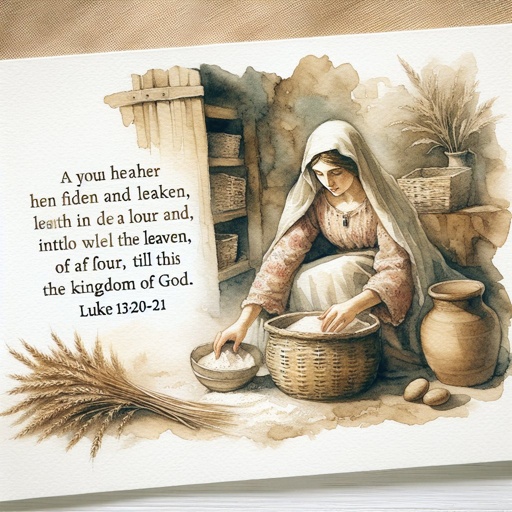
Luke 13:20-21

Luke 24:8 - "And they remembered his words,"

Genesis 24-20

Luke 24:13-35

LUKE 24:41-43

Luke 24:48 - "And ye are witnesses of these things."

Luke 20:28

Leviticus 24:20-23

Luke 24:24 - "And certain of them which were with us went to the sepulchre, and found it even so as the women had said: but him they saw not."

Luke 24:3 - "And they entered in, and found not the body of the Lord Jesus."

Luke 23:24 - "And Pilate gave sentence that it should be as they required."

Luke 2:1-20

Luke 24:45 - "Then opened he their understanding, that they might understand the scriptures,"

Luke 24:52 - "And they worshipped him, and returned to Jerusalem with great joy:"

Luke 24:16 - "But their eyes were holden that they should not know him."

Luke 24:42 - "And they gave him a piece of a broiled fish, and of an honeycomb."