What does Luke 20:15 mean?
"So they cast him out of the vineyard, and killed him. What therefore shall the lord of the vineyard do unto them?" - Luke 20:15
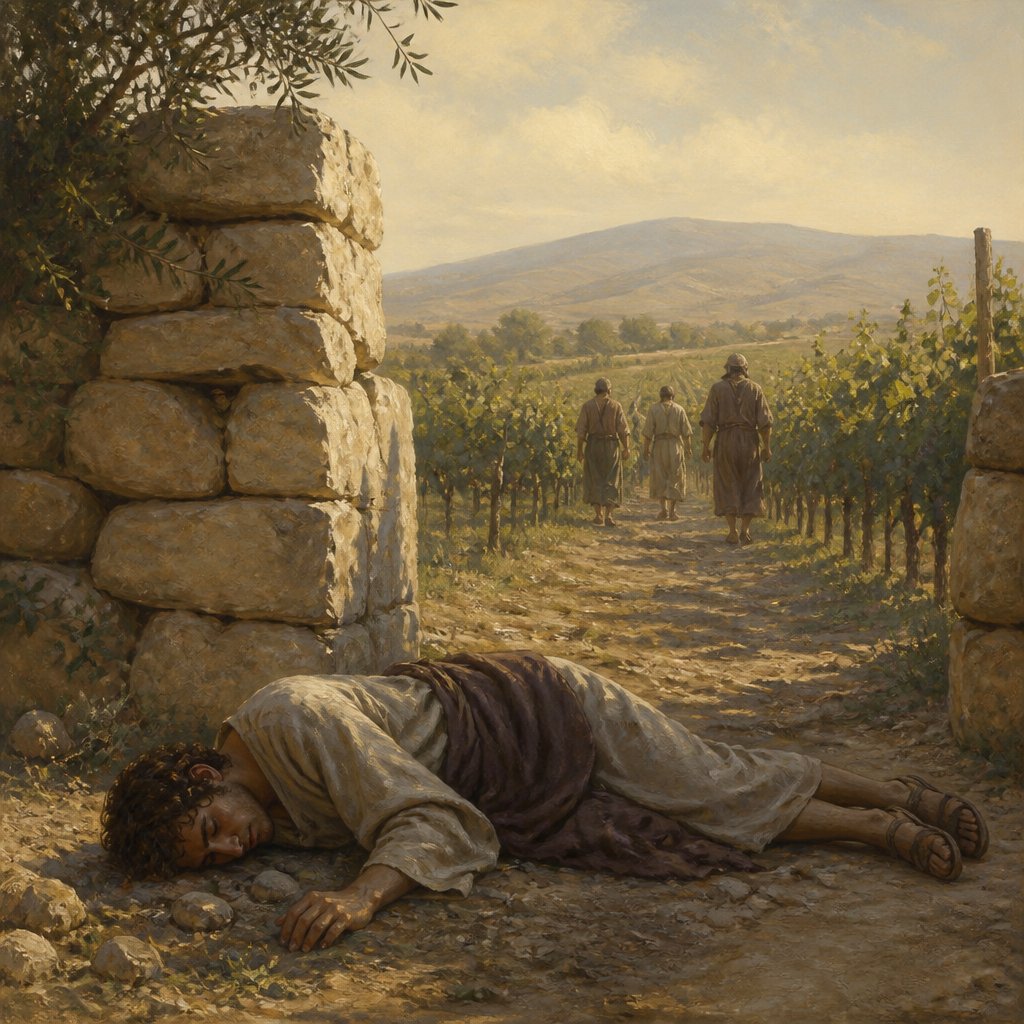
The Bible verse Luke 20:15 from the King James Version (KJV) reads, "So they cast him out of the vineyard, and killed him. What therefore shall the lord of the vineyard do unto them?"
This verse is part of the parable of the wicked tenants, which Jesus shares with his disciples and the chief priests and scribes in the temple. In this parable, a man plants a vineyard and leases it to tenants. When the time comes to collect the fruit, the owner sends his servants to the tenants, but they are mistreated and sent away empty-handed. Finally, the owner decides to send his son, thinking that the tenants will respect him. However, the tenants see the son as their opportunity to seize the vineyard for themselves, and they kill him.
The deeper meaning of this parable is multi-faceted. On one level, it is a reflection of the history of Israel, with God as the owner of the vineyard, the prophets as the servants who were mistreated, and Jesus as the son who was ultimately rejected and killed. This rejection of God's messengers and ultimately of His own Son reflects the Israelites' consistent rebellion and disobedience throughout the Old Testament.
On another level, this parable serves as a warning to the religious leaders of Jesus' time. The chief priests and scribes were meant to be the caretakers of God's people, but they had become corrupt and were using their positions for personal gain. By telling this parable, Jesus is pointing out their responsibility and their failing, indicating that they will be held accountable for their actions.
The context of this verse sheds further light on its significance. At this point in Luke's gospel, Jesus is in Jerusalem, where tensions are rising between Him and the religious leaders. He has just entered the temple and overturned the tables of the money-changers, making a powerful statement against the corruption and exploitation that had infiltrated the religious institutions.
The symbolism in this verse is rich and poignant. The vineyard represents God's kingdom and the people of Israel. The owner of the vineyard represents God, who has entrusted His people to the care of others. The wicked tenants symbolize the religious leaders who have rejected God's authority and mistreated His messengers. Finally, the son who is killed is a clear representation of Jesus, the long-awaited Messiah who was rejected and crucified by the very people He came to save.
In the broader scope of the Bible, this parable also foreshadows Jesus' own fate. Like the son in the parable, Jesus is ultimately rejected and killed by those who should have embraced Him. However, just as the parable does not end with the death of the son, so too does the story of Jesus not end with His crucifixion. His resurrection and ultimate victory over sin and death are the culmination of God's redemptive plan for His people.
In conclusion, Luke 20:15 from the King James Version of the Bible is a powerful and thought-provoking verse that carries deep meaning and significance. It serves as a warning to those who reject God's authority and mistreat His messengers, while also pointing to the ultimate victory and redemption that comes through Jesus Christ. It is a reminder of the responsibility we have as caretakers of God's kingdom and a call to examine our own hearts and actions in light of God's grace and mercy.
Have questions about Luke 20:15?
Dive deeper into this scripture with Bible Chat — an AI-powered tool for exploring God's Word through conversation. Ask questions, get context, and grow in your understanding of the Bible.
Get Our Apps


Luke 20:15 Artwork

Luke 20:15 - "So they cast him out of the vineyard, and killed him. What therefore shall the lord of the vineyard do unto them?"
"So they cast him out of the vineyard, and killed him. What therefore shall the lord of the vineyard do unto them?" - Luke 20:15

"And he arose, and came to his father. But when he was yet a great way off, his father saw him, and had compassion, and ran, and fell on his neck, and kissed him." - Luke 15:20

Luke 15:20 - "And he arose, and came to his father. But when he was yet a great way off, his father saw him, and had compassion, and ran, and fell on his neck, and kissed him."

Luke 13:20-21

Luke 13:20-21

Luke 13:20-21

Luke 13:20-21
Luke 13:20-21

Luke 20:28
Luke 15:23

Luke 15:10

Luke 2:1-20

Luke 15:21

Luke 15:21

Luke 20:7 - "And they answered, that they could not tell whence it was."

Genesis 15:20

Genesis 20-15

Luke 20:4 - "The baptism of John, was it from heaven, or of men?"

Luke 20:32 - "Last of all the woman died also."

Luke 15: 4-7

Luke 11:14-15

Luke 21:15-19

Luke 15:11-32

Luke 20:22 - "Is it lawful for us to give tribute unto Caesar, or no?"

Genesis 15:20 - "And the Hittites, and the Perizzites, and the Rephaims,"

Exodus 20:15 - "Thou shalt not steal."

Luke 15:15 - "And he went and joined himself to a citizen of that country; and he sent him into his fields to feed swine."
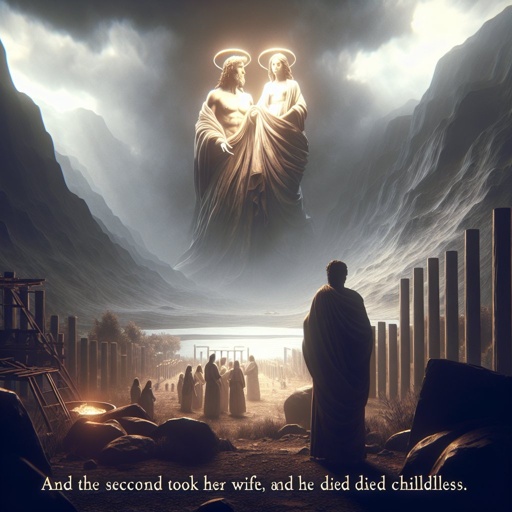
Luke 20:30 - "And the second took her to wife, and he died childless."

Colossians 1:15-20