What does Luke 20:29 mean?
“There were therefore seven brethren: and the first took a wife, and died without children.” — Luke 20:29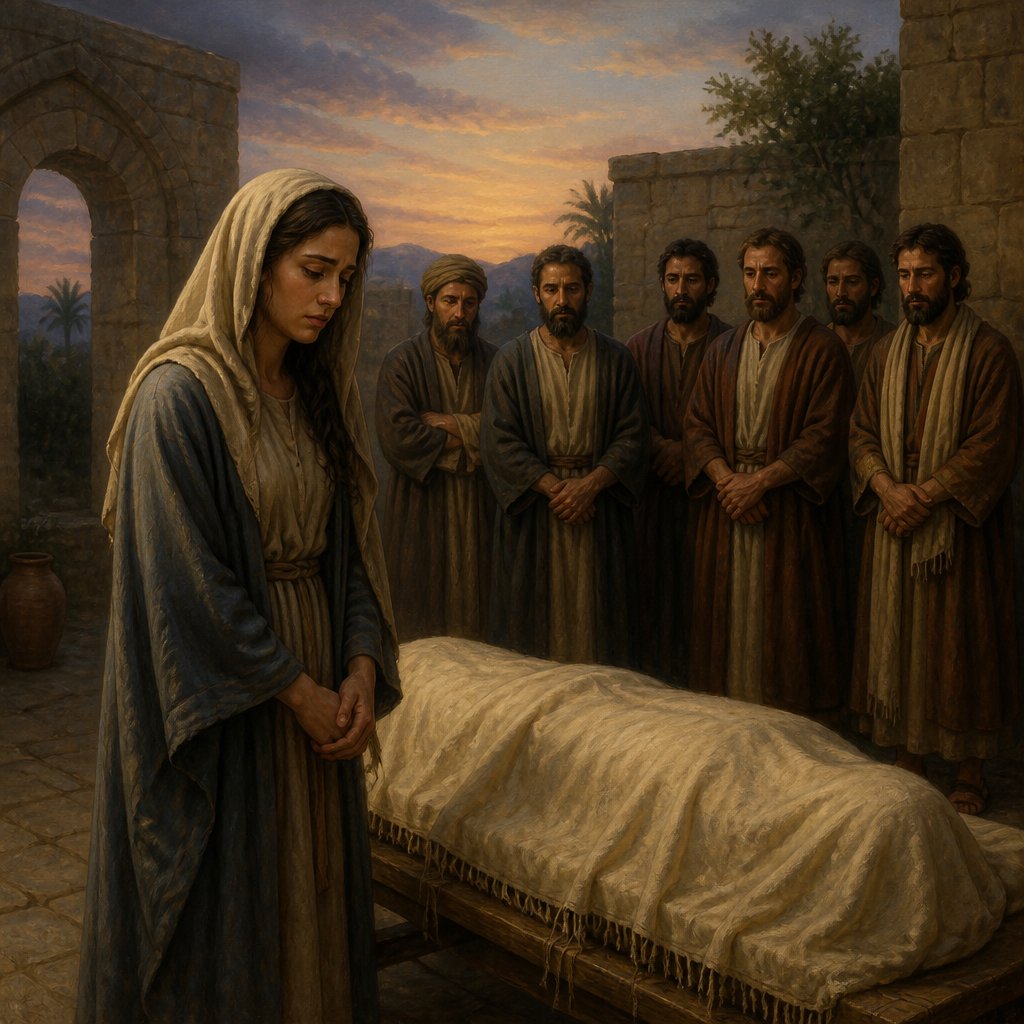
Luke 20:29 (KJV) - "There were therefore seven brethren: and the first took a wife, and died without children."
In order to understand the meaning and significance of Luke 20:29, it is important to consider the context in which it is found. Luke 20 contains the account of the confrontation between Jesus and the religious leaders in Jerusalem. The leaders questioned Jesus' authority and sought to trap him in his words. In response, Jesus tells the parable of the wicked tenants, who mistreated the owner's servants and eventually killed his son. This parable is followed by a discussion about paying taxes to Caesar and the question about the resurrection. It is within this context that we find the verse in question.
The verse itself describes a situation in which a man marries a woman, but dies without having any children. In Jewish culture, it was considered important for a man to have children in order to carry on his name and legacy. In the event that a man died without children, it was customary for his brother to marry the widow in order to produce offspring in the deceased man's name. This practice, known as levirate marriage, is described in the book of Deuteronomy and was intended to ensure the continuation of the deceased man's lineage.
The specific details provided in Luke 20:29 may seem inconsequential at first, but they serve to set the stage for the question posed to Jesus in the following verses. The verse is part of a larger narrative in which the religious leaders attempt to test Jesus' knowledge and beliefs about the resurrection. They present a hypothetical scenario in which a woman is married to seven brothers, each of whom dies without producing children. According to Jewish law, the woman would have been married to each of the brothers in turn, but remains childless.
The religious leaders then ask Jesus whose wife the woman will be at the resurrection, since she had been married to all seven brothers. This question was intended to challenge Jesus and expose any inconsistencies in his understanding of the resurrection. However, Jesus' response focuses on the nature of the resurrection itself, rather than on the specific details of levirate marriage. His answer redirects the focus from the complexities of earthly relationships to the profound realities of the afterlife.
In considering the symbolism and themes present in Luke 20:29, it is important to recognize the underlying theological implications. The verse raises questions about destiny, fate, and the concept of inheritance. It also touches on themes of love, marriage, and the continuity of lineage. Through the hypothetical scenario presented to Jesus, the religious leaders seek to probe the depths of his understanding of the resurrection and the afterlife. However, Jesus' response redirects the focus from legalistic details to the transformative power of the resurrection.
The verse also serves as a reminder of the limitations of human understanding and the need for a deeper perspective on spiritual matters. The religious leaders' question reflects a distinctly earthly perspective, rooted in the complexities of marital relationships. Jesus' response offers a transcendent viewpoint, emphasizing the eternal nature of the resurrection and the transformation of earthly bonds in the divine realm.
In conclusion, Luke 20:29 is a verse that carries deep theological significance within its broader context. It raises questions about earthly relationships, the complexities of human legal systems, and the eternal nature of the resurrection. Through this verse, Jesus challenges his listeners to transcend the limitations of human understanding and to embrace the transformative power of divine truth. Ultimately, the verse serves as a reminder of the profound spiritual realities that transcend earthly concerns.
Get our apps


Artwork for Luke 20:29

Luke 20:29 - "There were therefore seven brethren: and the first took a wife, and died without children."
"There were therefore seven brethren: and the first took a wife, and died without children." - Luke 20:29

luke 1:29

Luke 4:29

luke 9:29- 30

Psalm 89:20-29

Matthew 20:29-34

Luke 13:20-21

Luke 13:20-21

Luke 13:20-21

Luke 13:20-21
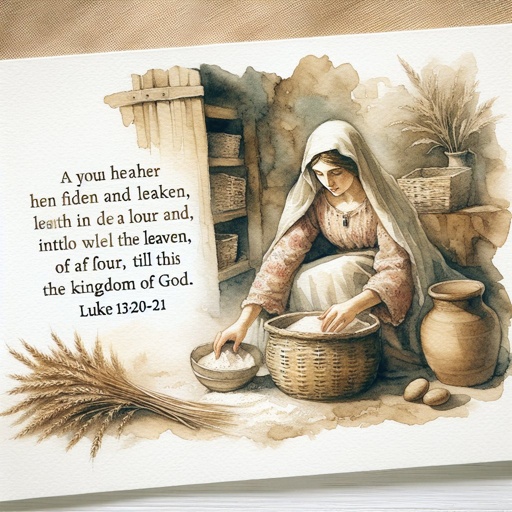
Luke 13:20-21

1 Samuel 20:27-29

Luke 20:28

Judges 20:29 - "And Israel set liers in wait round about Gibeah."

Matthew 20:29 - "And as they departed from Jericho, a great multitude followed him."

Luke 21:29 - "And he spake to them a parable; Behold the fig tree, and all the trees;"

Luke 2:1-20

Luke 9:29 - "And as he prayed, the fashion of his countenance was altered, and his raiment was white and glistering."

Luke 10:29 - "But he, willing to justify himself, said unto Jesus, And who is my neighbour?"

Proverbs 20:29 - "The glory of young men is their strength: and the beauty of old men is the gray head."

Luke 20:7 - "And they answered, that they could not tell whence it was."

Job 29:20 - "My glory was fresh in me, and my bow was renewed in my hand."

Luke 7:29 - "And all the people that heard him, and the publicans, justified God, being baptized with the baptism of John."

Luke 16:29 - "Abraham saith unto him, They have Moses and the prophets; let them hear them."

Luke 2:29 - "Lord, now lettest thou thy servant depart in peace, according to thy word:"

Luke 22:29 - "And I appoint unto you a kingdom, as my Father hath appointed unto me;"

Job 20:29 - "This is the portion of a wicked man from God, and the heritage appointed unto him by God."

Luke 20:32 - "Last of all the woman died also."
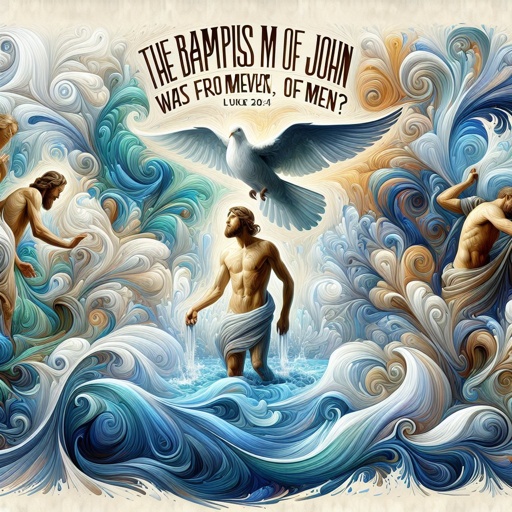
Luke 20:4 - "The baptism of John, was it from heaven, or of men?"