What does Luke 20:31 mean?
“And the third took her; and in like manner the seven also: and they left no children, and died.” — Luke 20:31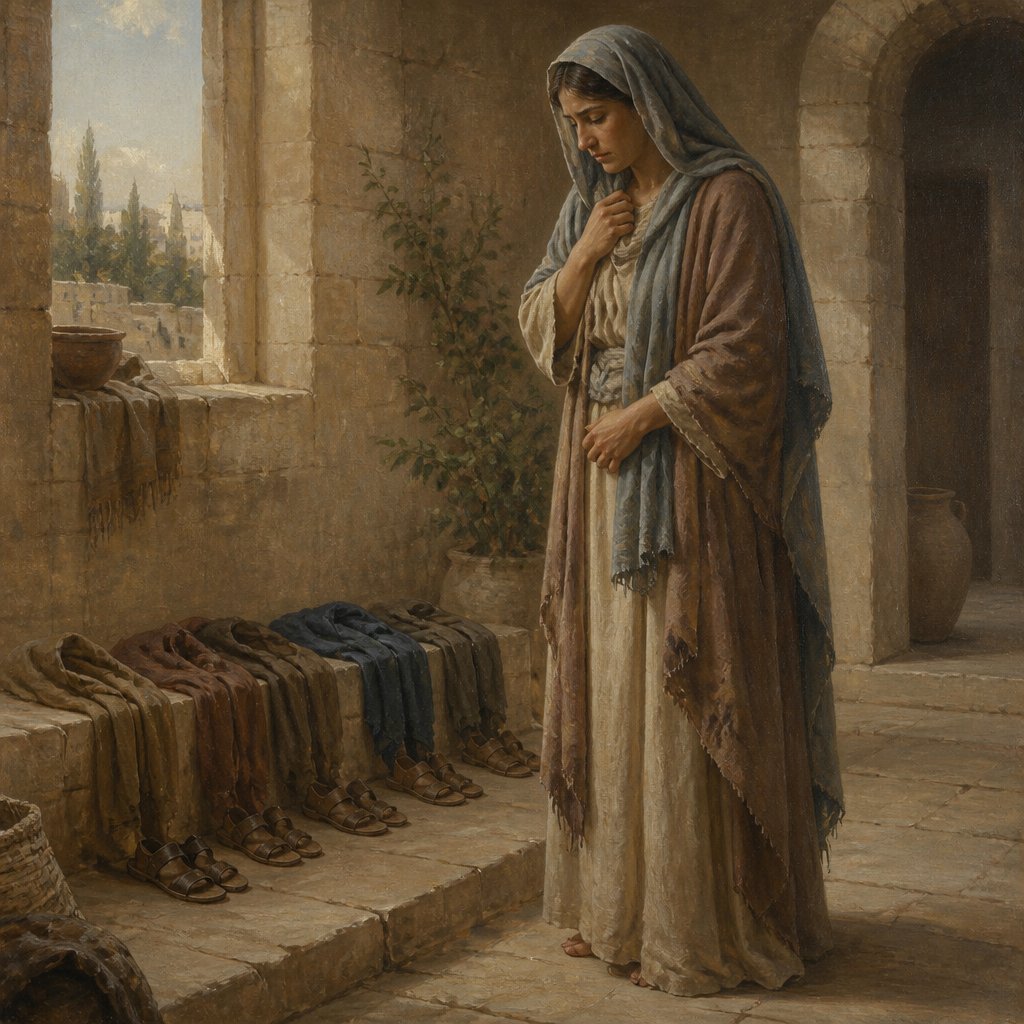
Luke 20:31 in the King James Version of the Bible reads: "And the third took her; and in like manner the seven also: and they left no children, and died."
This verse is part of a larger passage in the Gospel of Luke in which Jesus addresses a group of Sadducees, a Jewish religious sect that denied the resurrection of the dead. The Sadducees present Jesus with a hypothetical scenario involving a woman who was married to seven brothers, each of whom died without leaving any children. Their question was intended to stump Jesus and challenge the idea of resurrection.
In this particular verse, Jesus is explaining how each of the seven brothers took the woman as his wife in turn, but none of them were able to father children with her. This scenario, in the context of the passage, serves to highlight the absurdity of the Sadducees' question and to assert the truth of the resurrection.
One of the key themes of this passage is the resurrection of the dead. The Sadducees, who only accepted the authority of the Torah (the first five books of the Old Testament), did not believe in the resurrection. They likely posed this hypothetical scenario to Jesus in an attempt to ridicule the idea of resurrection and discredit his teachings. However, Jesus uses their question as an opportunity to teach about the nature of the resurrection and to correct their misunderstanding.
Another theme in this passage is the nature of marriage and relationships. The scenario presented by the Sadducees is a complex and unusual one, involving a woman who was married to multiple brothers. Jesus' response serves to emphasize the temporary nature of human relationships in light of the eternal reality of the resurrection.
This verse also contains symbolism that can be interpreted in several ways. The seven brothers may symbolize the limitations of human understanding and the futility of trying to use human logic to comprehend divine truth. The fact that none of the brothers were able to father children with the woman highlights the temporary and imperfect nature of earthly relationships, while also pointing to the greater reality of the resurrection and eternal life.
In a broader context, this passage can also be seen as a demonstration of Jesus' authority and wisdom. He is able to navigate the tricky question posed by the Sadducees and use it as a platform to teach about important spiritual truths. The passage reveals Jesus as a master teacher, capable of turning a challenge into an opportunity for instruction and edification.
In conclusion, Luke 20:31 in the King James Version of the Bible is a verse that is part of a larger passage in which Jesus engages with religious leaders about the resurrection. It contains themes of resurrection, relationships, and Jesus' authority, and offers a symbolic illustration of the limitations of human understanding in the face of divine truth. This passage serves as a reminder of the importance of seeking understanding and wisdom from God rather than relying solely on human logic and reasoning.
Get our apps


Artwork for Luke 20:31
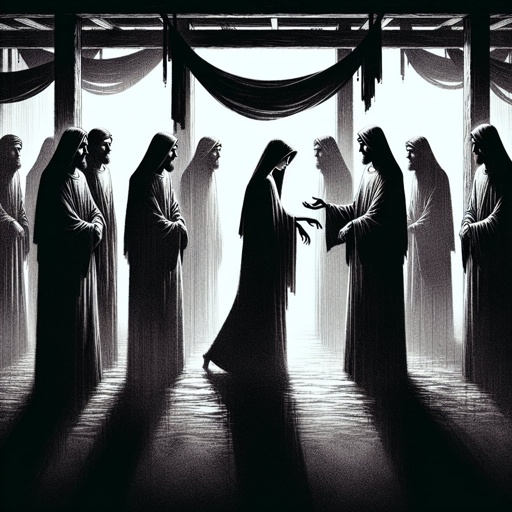
Luke 20:31 - "And the third took her; and in like manner the seven also: and they left no children, and died."
"And the third took her; and in like manner the seven also: and they left no children, and died." - Luke 20:31

Luke 1:31

John 20:30-31

Luke 22:31-32 - "Luke 22:31-32: And the Lord said, Simon, Simon, behold, Satan hath desired to have you, that he may sift you as wheat: But I have prayed for thee, that thy faith fail not: and when thou art converted, strengthen thy brethren."

Luke 13:20-21

Luke 13:20-21

Luke 23:31 - "For if they do these things in a green tree, what shall be done in the dry?"

Luke 2:31 - "Which thou hast prepared before the face of all people;"

Luke 13:20-21

Luke 13:20-21
Luke 13:20-21

Luke 24:31 - "And their eyes were opened, and they knew him; and he vanished out of their sight."

Luke 8:31 - "And they besought him that he would not command them to go out into the deep."

Luke 5:31 - "And Jesus answering said unto them, They that are whole need not a physician; but they that are sick."

Luke 4:31 - "And came down to Capernaum, a city of Galilee, and taught them on the sabbath days."

Luke 20:28

Luke 7:31 - "¶ And the Lord said, Whereunto then shall I liken the men of this generation? and to what are they like?"

Luke 6:31 - "And as ye would that men should do to you, do ye also to them likewise."

Luke 9:31 - "Who appeared in glory, and spake of his decease which he should accomplish at Jerusalem."

Luke 12:31 - "¶ But rather seek ye the kingdom of God; and all these things shall be added unto you."

Luke 2:1-20

Luke 20:7 - "And they answered, that they could not tell whence it was."

Genesis 31:20 - "And Jacob stole away unawares to Laban the Syrian, in that he told him not that he fled."

Job 31:20 - "If his loins have not blessed me, and if he were not warmed with the fleece of my sheep;"

Luke 15:31 - "And he said unto him, Son, thou art ever with me, and all that I have is thine."

Luke 20:32 - "Last of all the woman died also."

Luke 20:4 - "The baptism of John, was it from heaven, or of men?"

Luke 10:31 - "And by chance there came down a certain priest that way: and when he saw him, he passed by on the other side."

Luke 1:31 - "And, behold, thou shalt conceive in thy womb, and bring forth a son, and shalt call his name JESUS."