What does Luke 20:41 mean?
“And he said unto them, How say they that Christ is David’s son?” — Luke 20:41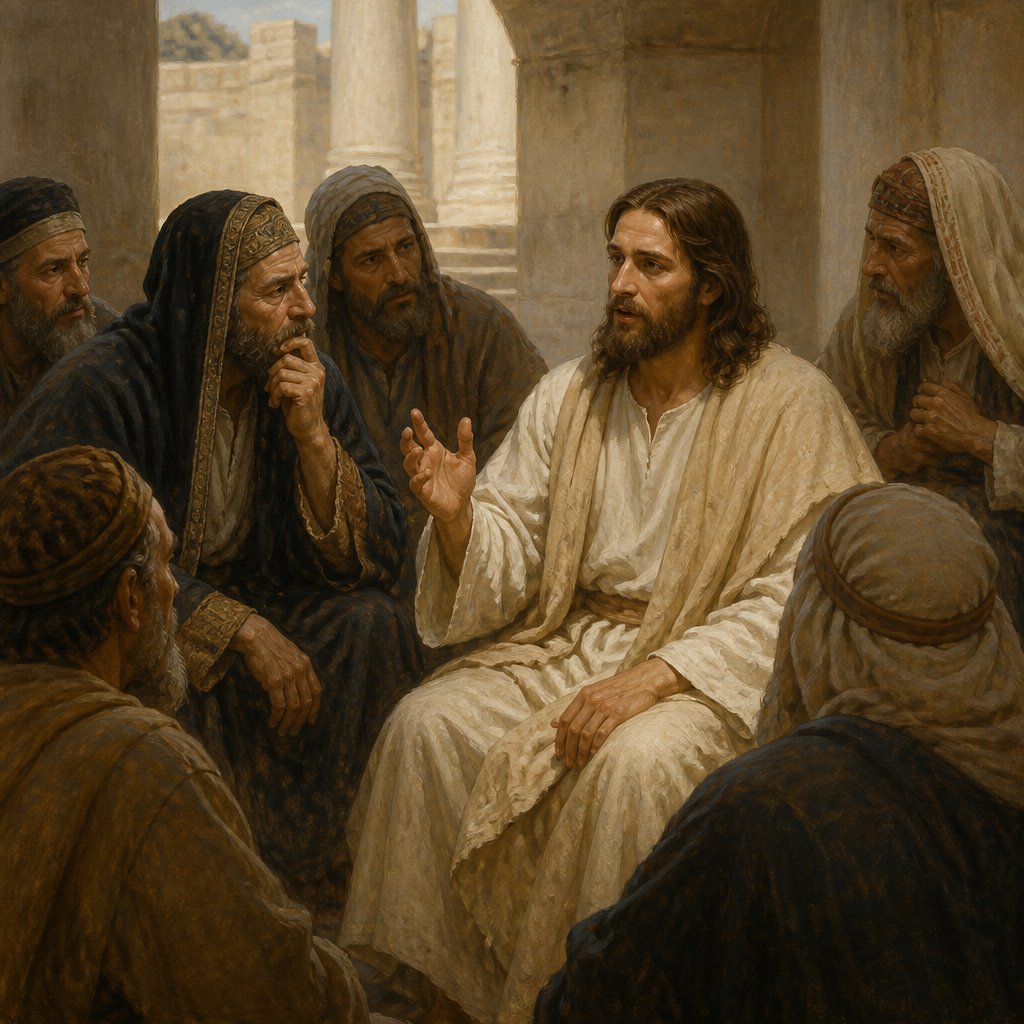
Luke 20:41 from the King James Version states: "And he said unto them, How say they that Christ is David's son?"
This verse is found within the larger context of Luke 20, which records a series of confrontations between Jesus and various groups of religious leaders in Jerusalem. In this particular passage, Jesus is engaging in a debate with the scribes, Pharisees, and Sadducees who are questioning his authority and seeking to trap him in his words.
The verse itself is part of a larger discussion about the identity of the Messiah. Jesus is asking the religious leaders how it can be that the Christ is David's son when David himself calls the Messiah "lord" in the Psalms. This question not only challenges the conventional understanding of the lineage of the Messiah but also alludes to the divinity of Christ, as being lord implies a position of authority and superiority.
One of the key themes in this verse is the Messianic identity of Jesus. The religious leaders of the time were expecting a Messiah who would be a descendant of David, and Jesus is challenging their understanding of what this means. By asking how the Christ can be David's son, he is prompting them to reconsider their assumptions and pointing them to a deeper truth about his own divinity.
The context of this verse is also important to consider. Jesus is speaking in the temple, the center of religious life and authority in Jerusalem. By engaging in these debates within this setting, Jesus is challenging the religious establishment and presenting himself as a figure of authority that surpasses their own. This sets the stage for the later events in the chapter, including the parable of the wicked tenants and the question of paying taxes to Caesar.
Symbolism is also at play in this verse. David is a central figure in Jewish history and the ancestor of the Messiah, so his lineage is significant. By asking how the Christ can be David's son, Jesus is raising questions about the nature of the Messiah and his relationship to the past. This challenges the traditional understanding of the Messiah as a human ruler and points to a more complex understanding of his identity and purpose.
In conclusion, Luke 20:41 is a verse that delves into the identity of Jesus as the Messiah. It challenges conventional beliefs about the lineage of Christ and points to a deeper truth about his divinity and authority. The context of the verse within the larger narrative of Luke 20 further highlights the significance of this challenge to the religious establishment. Through this verse, Jesus is asserting his own authority and prompting those around him to reconsider their understanding of the Messiah.
Get our apps


Artwork for Luke 20:41

Luke 20:41 - "And he said unto them, How say they that Christ is David's son?"

"And he said unto them, How say they that Christ is David's son?" - Luke 20:41

Ezekiel 20:41

Ezekiel 20:41

Ezekiel 20:41

LUKE 24:41-43

Ezekiel 20:41

Ezekiel 20:41

Ezekiel 20:41

Luke 2:41-52

Luke 7:41-47

Luke 19:41 - "¶ And when he was come near, he beheld the city, and wept over it,"

Luke 22:41 - "And he was withdrawn from them about a stone's cast, and kneeled down, and prayed,"

Luke 2:41 - "Now his parents went to Jerusalem every year at the feast of the passover."

Luke 6:41 - "And why beholdest thou the mote that is in thy brother's eye, but perceivest not the beam that is in thine own eye?"

Luke 12:41 - "¶ Then Peter said unto him, Lord, speakest thou this parable unto us, or even to all?"

Luke 11:41 - "But rather give alms of such things as ye have; and, behold, all things are clean unto you."

Ezekiel 41:20 - "From the ground unto above the door were cherubims and palm trees made, and on the wall of the temple."

Genesis 41:20 - "And the lean and the ill favoured kine did eat up the first seven fat kine:"

Luke 23:41 - "And we indeed justly; for we receive the due reward of our deeds: but this man hath done nothing amiss."

Luke 7:41 - "There was a certain creditor which had two debtors: the one owed five hundred pence, and the other fifty."

Luke 1:41 - "And it came to pass, that, when Elisabeth heard the salutation of Mary, the babe leaped in her womb; and Elisabeth was filled with the Holy Ghost:"

Luke 24:41 - "And while they yet believed not for joy, and wondered, he said unto them, Have ye here any meat?"

Luke 10:41 - "And Jesus answered and said unto her, Martha, Martha, thou art careful and troubled about many things:"

Judges 20:41 - "And when the men of Israel turned again, the men of Benjamin were amazed: for they saw that evil was come upon them."

Luke 13:20-21

Luke 13:20-21

Luke 13:20-21

Luke 13:20-21
Luke 13:20-21