What does Luke 20:9 mean?
"Then began he to speak to the people this parable; A certain man planted a vineyard, and let it forth to husbandmen, and went into a far country for a long time." - Luke 20:9
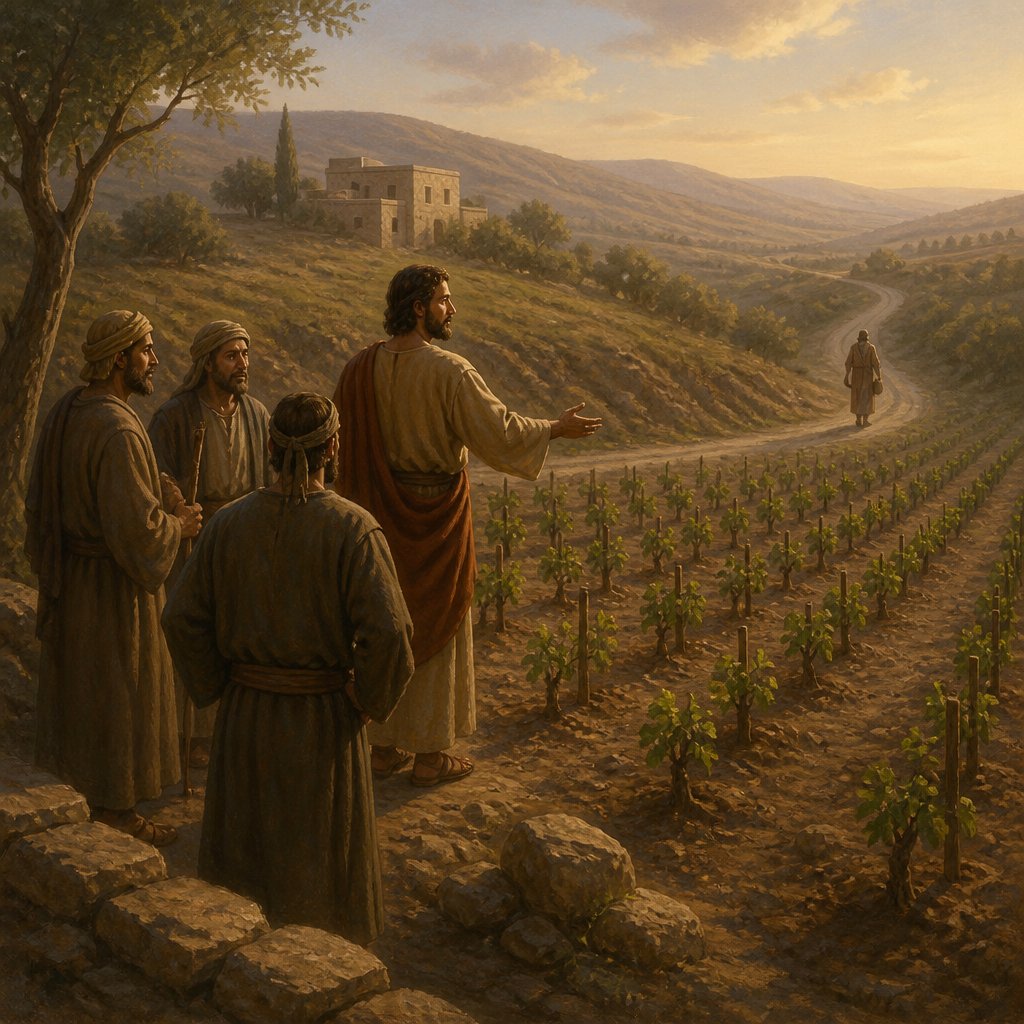
The Bible verse Luke 20:9 in the King James Version reads: "Then began he to speak to the people this parable; A certain man planted a vineyard, and let it forth to husbandmen, and went into a far country for a long time."
This verse is part of a parable told by Jesus to the people, and it holds rich symbolic and contextual significance that can be explored in depth. In order to fully understand the meaning of this verse, it is important to consider the broader context in which it is situated.
In the preceding verses, we find Jesus speaking to the chief priests, scribes, and elders in the temple. They question Jesus' authority to teach and perform miracles, and in response, Jesus tells a series of parables, including the parable of the vineyard. The vineyard in this parable represents Israel, the chosen people of God, and the owner who plants the vineyard represents God. The husbandmen who are given charge of the vineyard represent the religious leaders of Israel, who are expected to care for and cultivate the people of God. The "far country" represents the time between the departure of God (in the form of prophetic revelation) and the arrival of Jesus Christ.
The parable continues with the owner sending servants to the husbandmen to collect the fruit of the vineyard. However, the husbandmen mistreat the servants, even killing some of them. This represents the rejection and persecution of the prophets throughout the history of Israel. Finally, the owner sends his beloved son to the husbandmen, thinking they would respect him. However, the husbandmen conspire to kill the son in order to inherit the vineyard for themselves. This reflects the ultimate rejection and crucifixion of Jesus by the religious leaders of Israel.
The deeper meaning of this parable can be understood in the context of the overall narrative of the Bible. It illustrates the history of God's covenant with Israel, their repeated rejection of God's messengers, and ultimately their rejection of Jesus as the Messiah. This rejection leads to the transfer of the vineyard (the covenant relationship with God) to a new people, the Gentiles, who will bear the fruits of the vineyard in true faith and obedience.
The parable of the vineyard also carries a warning for the religious leaders of Jesus' time and for all who claim to be God's people. It serves as a reminder of the consequences of rejecting God's messengers and failing to produce the fruits of righteousness. It challenges those in positions of authority to examine their hearts and consider whether they are truly being faithful to their calling as stewards of God's people.
The symbolism of the vineyard as God's chosen people is a common theme throughout the Bible. In the Old Testament, the vineyard is often used as a symbol of Israel, and the expectation for the vineyard to yield good fruit is a recurring metaphor for the people's faithfulness to God. This parable draws on this rich symbolism to convey a powerful message about the consequences of failing to live in accordance with God's will.
In conclusion, Luke 20:9 and the parable of the vineyard in the broader context of Jesus' teachings, serve as a powerful message about the consequences of rejecting God's messengers and failing to bear the fruits of righteousness. It also offers a warning to religious leaders and challenges them to reflect on their stewardship of God's people. Through its rich symbolism and deep contextual significance, this parable continues to resonate with believers today, urging them to examine their own lives and their relationship with God.
Have questions about Luke 20:9?
Dive deeper into this scripture with Bible Chat — an AI-powered tool for exploring God's Word through conversation. Ask questions, get context, and grow in your understanding of the Bible.
Get Our Apps


Luke 20:9 Artwork

Luke 20:9 - "Then began he to speak to the people this parable; A certain man planted a vineyard, and let it forth to husbandmen, and went into a far country for a long time."

Create a scene of Luke 20:9 from the Christian Bible, inspired by the art of Richard Gunther and Lambsong.

Create a respectful and devotional art piece visualizing the sentiment of Luke 20:9 from the Christian Bible, inspired by the expressive and fluid style of pre-1912 watercolor paintings.
"Then began he to speak to the people this parable; A certain man planted a vineyard, and let it forth to husbandmen, and went into a far country for a long time." - Luke 20:9

Luke 20:9-18 - "Then He began to tell the people this parable: “A man planted a vineyard and rented it out to vine-growers, and went on a journey for a long time. At the harvest time he sent a slave to the vine-growers, so that they would give him some of the produce of the vineyard; but the vine-growers beat him and sent him away empty-handed. And he proceeded to send another slave; and they beat him also and treated him shamefully and sent him away empty-handed. And he proceeded to send a third; and this one also they wounded and cast out. The owner of the vineyard said, ‘What shall I do? I will send my beloved son; perhaps they will respect him.’ But when the vine-growers saw him, they reasoned with one another, saying, ‘This is the heir; let us kill him so that the inheritance will be ours.’ So they threw him out of the vineyard and killed him. What, therefore, will the owner of the vineyard do to them? He will come and destroy these vine-growers and will give the vineyard to others.” When they heard it, they said, “May it never be!” But Jesus looked at them and said, “What then is this that is written: ‘The stone which the builders rejected, This became the chief corner stone’? Everyone who falls on that stone will be broken to pieces; but on whomever it falls, it will scatter him like dust.”"
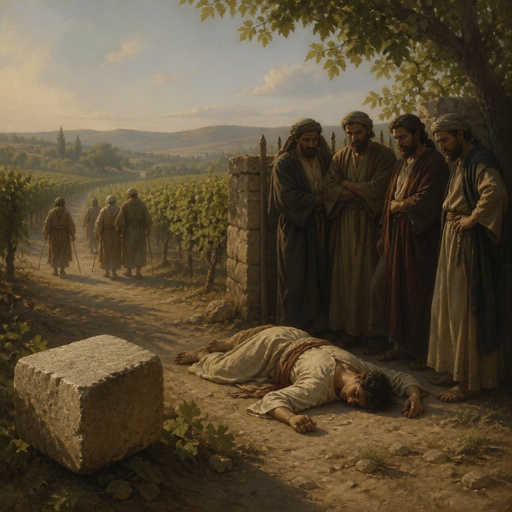
"Then He began to tell the people this parable: “A man planted a vineyard and rented it out to vine-growers, and went on a journey for a long time. At the harvest time he sent a slave to the vine-growers, so that they would give him some of the produce of the vineyard; but the vine-growers beat him and sent him away empty-handed. And he proceeded to send another slave; and they beat him also and treated him shamefully and sent him away empty-handed. And he proceeded to send a third; and this one also they wounded and cast out. The owner of the vineyard said, ‘What shall I do? I will send my beloved son; perhaps they will respect him.’ But when the vine-growers saw him, they reasoned with one another, saying, ‘This is the heir; let us kill him so that the inheritance will be ours.’ So they threw him out of the vineyard and killed him. What, therefore, will the owner of the vineyard do to them? He will come and destroy these vine-growers and will give the vineyard to others.” When they heard it, they said, “May it never be!” But Jesus looked at them and said, “What then is this that is written: ‘The stone which the builders rejected, This became the chief corner stone’? Everyone who falls on that stone will be broken to pieces; but on whomever it falls, it will scatter him like dust.”" - Luke 20:9-18

Luke 9:20 - "He said unto them, But whom say ye that I am? Peter answering said, The Christ of God."

Luke 9:20 He said to them, “But who do you say that I am?” Peter answered and said, “The Christ of God.”

Luke 13:20-21

Luke 13:20-21

Luke 13:20-21

Luke 13:20-21
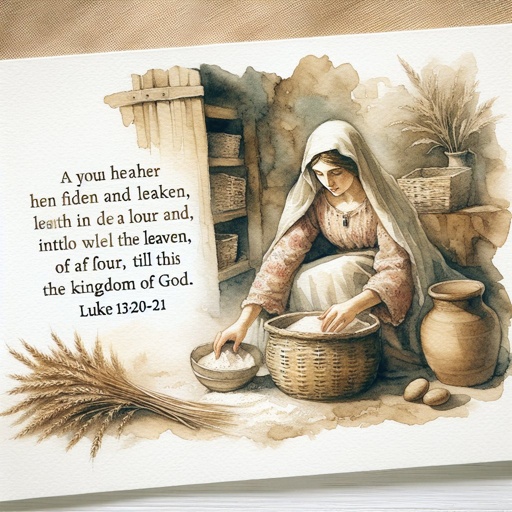
Luke 13:20-21

Luke 20:28
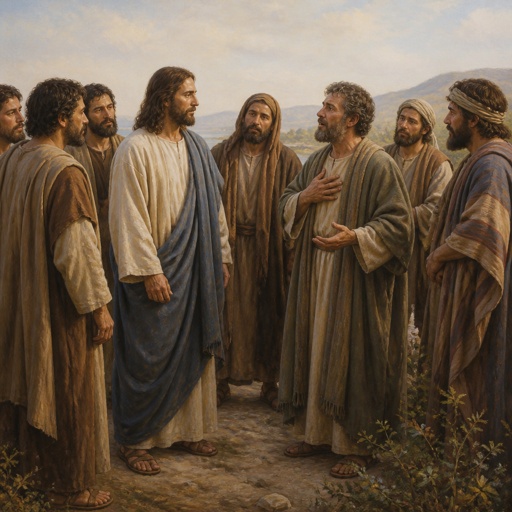
"He said unto them, But whom say ye that I am? Peter answering said, The Christ of God." - Luke 9:20

Luke 2:1-20

Luke 20:7 - "And they answered, that they could not tell whence it was."

Luke 20:4 - "The baptism of John, was it from heaven, or of men?"

Luke 20:32 - "Last of all the woman died also."
Luke 11:9

luke 9:30

luke 9:35

luke 9:35

Luke 9:51

Luke 11:9

Luke 20:22 - "Is it lawful for us to give tribute unto Caesar, or no?"
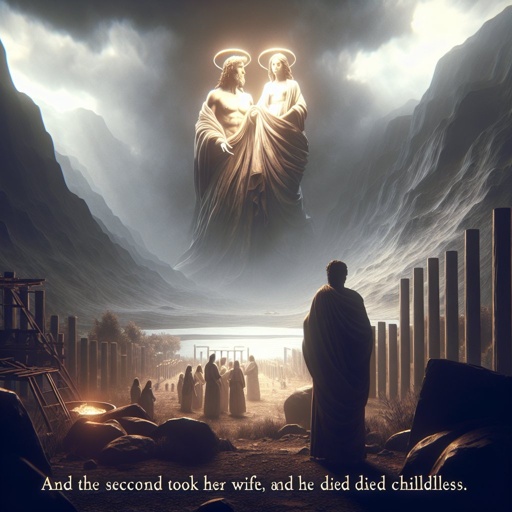
Luke 20:30 - "And the second took her to wife, and he died childless."

Luke 20:40 - "And after that they durst not ask him any question at all."

Luke 20:43 - "Till I make thine enemies thy footstool."

Genesis 20:9