What does Luke 20:9-18 mean?
"Then began he to speak to the people this parable; A certain man planted a vineyard, and let it forth to husbandmen, and went into a far country for a long time. And at the season he sent a servant to the husbandmen, that they should give him of the fruit of the vineyard: but the husbandmen beat him, and sent him away empty. And again he sent another servant: and they beat him also, and entreated him shamefully, and sent him away empty. And again he sent a third: and they wounded him also, and cast him out. Then said the lord of the vineyard, What shall I do? I will send my beloved son: it may be they will reverence him when they see him. But when the husbandmen saw him, they reasoned among themselves, saying, This is the heir: come, let us kill him, that the inheritance may be ours. So they cast him out of the vineyard, and killed him. What therefore shall the lord of the vineyard do unto them? He shall come and destroy these husbandmen, and shall give the vineyard to others. And when they heard it, they said, God forbid. And he beheld them, and said, What is this then that is written, The stone which the builders rejected, the same is become the head of the corner? Whosoever shall fall upon that stone shall be broken; but on whomsoever it shall fall, it will grind him to powder." - Luke 20:9-18
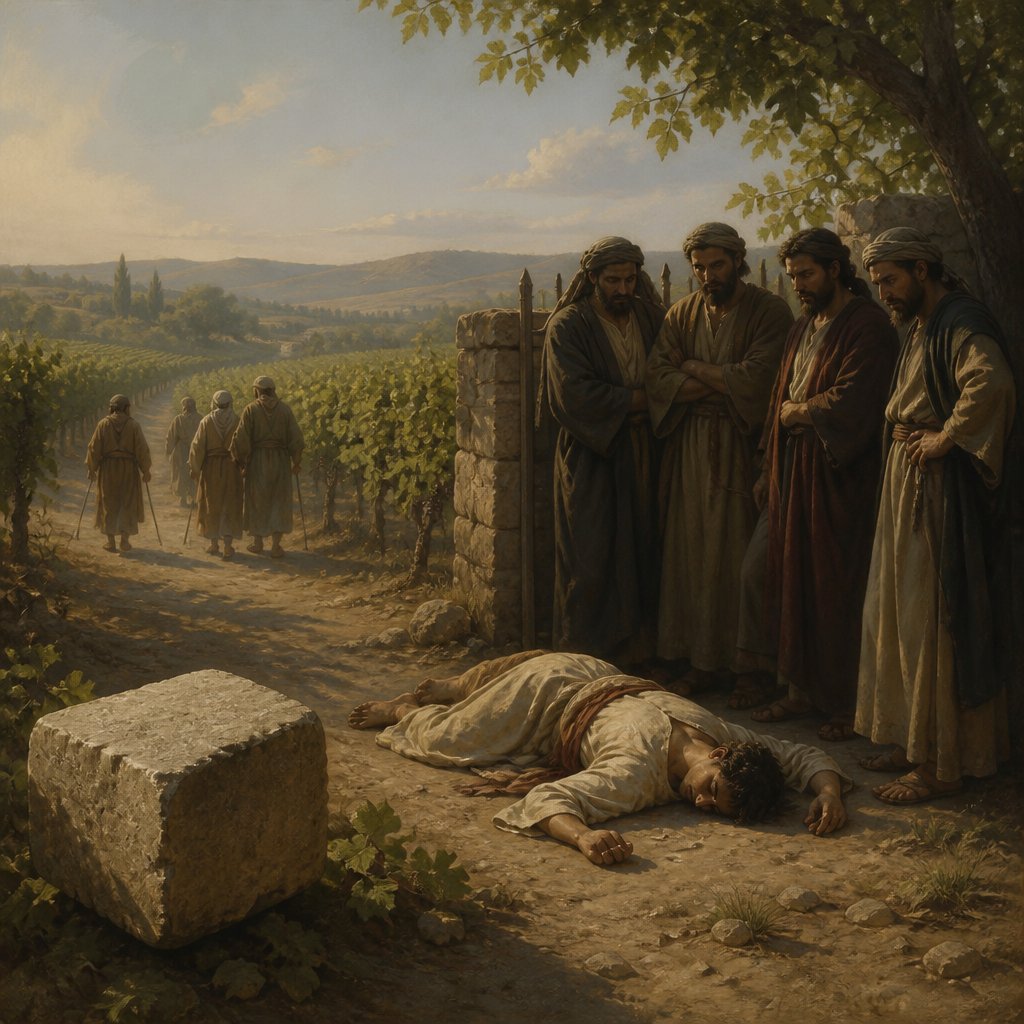
The parable in Luke 20:9-18 is commonly known as the Parable of the Wicked Tenants. It is a parable told by Jesus to the chief priests and the scribes in the temple in Jerusalem. This parable can be found in the New Testament of the Bible, in the Gospel of Luke, and it is part of a series of confrontations and challenges Jesus faces from religious leaders as he teaches in the temple.
The parable begins with Jesus telling a story about a man who planted a vineyard and leased it to tenants. At harvest time, he sends a servant to collect some of the fruit from the vineyard. However, the tenants beat the servant and send him away empty-handed. The man then sends another servant, and the tenants beat and mistreat him as well. This pattern continues with the man sending more servants, all of whom are treated in the same way. Finally, the man sends his beloved son, thinking that surely the tenants will respect him. However, the tenants plot together, kill the son, and throw him out of the vineyard.
After telling the parable, Jesus asks the religious leaders what the owner of the vineyard will do to those wicked tenants. The leaders respond that he will bring those wretches to a wretched end and lease the vineyard to other tenants who will give him his share of the crop at harvest time. Jesus then quotes a verse from Psalm 118, referring to the stone that the builders rejected becoming the cornerstone, and declares that the kingdom of God will be taken away from the religious leaders and given to a people who will produce its fruit.
One common interpretation of this parable is that the man represents God, the vineyard represents Israel, the tenants who mistreat the servants and eventually kill the son represent the religious leaders of Israel, and the new tenants represent the new people of God who will come from all nations. This interpretation emphasizes the idea of the rejection of Jesus by the religious leaders and the subsequent transfer of God’s favor and blessings to the Gentiles. It also emphasizes the need for faithfulness and obedience to God's will, and the consequences of rejecting God's messengers.
Another interpretation sees the parable as a warning to the religious leaders about the impending judgment of God. In this view, the vineyard represents the world, the workers represent all people, and the son represents Jesus. The rejection and murder of the son represent the rejection and crucifixion of Jesus. This interpretation emphasizes the accountability of all people before God and the judgment that follows rejection of Jesus.
The parable also speaks to the theme of stewardship and responsibility. The tenants were given the vineyard to work and take care of, but they failed in their responsibilities and instead acted in wickedness. This can be seen as a call for each individual to use the gifts and responsibilities given to them in a way that honors God and benefits others.
The theme of judgment is also central to this parable. The owner ultimately comes and deals with the wicked tenants, holding them accountable for their actions. This is a reminder of the reality of God's judgment and the consequences of our actions.
The symbolism of the vineyard, the tenants, and the son in the parable also provides rich material for reflection. The vineyard can represent God's creation or God's people, the tenants can represent those in positions of authority or responsibility, and the son can represent Jesus or God's prophets.
In conclusion, the Parable of the Wicked Tenants is a powerful and challenging story that has been interpreted in various ways throughout history. It challenges its listeners to consider their own faithfulness, the reality of God's judgment, and the consequences of rejecting God's messengers. It also points to the new people of God and the ultimate establishment of God's kingdom. This parable continues to be a source of contemplation and reflection for Christians, as they seek to follow God's will and produce the fruits of righteousness.
Have questions about Luke 20:9-18?
Dive deeper into this scripture with Bible Chat — an AI-powered tool for exploring God's Word through conversation. Ask questions, get context, and grow in your understanding of the Bible.
Get Our Apps


Luke 20:9-18 Artwork

Luke 20:9-18 - "Then He began to tell the people this parable: “A man planted a vineyard and rented it out to vine-growers, and went on a journey for a long time. At the harvest time he sent a slave to the vine-growers, so that they would give him some of the produce of the vineyard; but the vine-growers beat him and sent him away empty-handed. And he proceeded to send another slave; and they beat him also and treated him shamefully and sent him away empty-handed. And he proceeded to send a third; and this one also they wounded and cast out. The owner of the vineyard said, ‘What shall I do? I will send my beloved son; perhaps they will respect him.’ But when the vine-growers saw him, they reasoned with one another, saying, ‘This is the heir; let us kill him so that the inheritance will be ours.’ So they threw him out of the vineyard and killed him. What, therefore, will the owner of the vineyard do to them? He will come and destroy these vine-growers and will give the vineyard to others.” When they heard it, they said, “May it never be!” But Jesus looked at them and said, “What then is this that is written: ‘The stone which the builders rejected, This became the chief corner stone’? Everyone who falls on that stone will be broken to pieces; but on whomever it falls, it will scatter him like dust.”"
"Then He began to tell the people this parable: “A man planted a vineyard and rented it out to vine-growers, and went on a journey for a long time. At the harvest time he sent a slave to the vine-growers, so that they would give him some of the produce of the vineyard; but the vine-growers beat him and sent him away empty-handed. And he proceeded to send another slave; and they beat him also and treated him shamefully and sent him away empty-handed. And he proceeded to send a third; and this one also they wounded and cast out. The owner of the vineyard said, ‘What shall I do? I will send my beloved son; perhaps they will respect him.’ But when the vine-growers saw him, they reasoned with one another, saying, ‘This is the heir; let us kill him so that the inheritance will be ours.’ So they threw him out of the vineyard and killed him. What, therefore, will the owner of the vineyard do to them? He will come and destroy these vine-growers and will give the vineyard to others.” When they heard it, they said, “May it never be!” But Jesus looked at them and said, “What then is this that is written: ‘The stone which the builders rejected, This became the chief corner stone’? Everyone who falls on that stone will be broken to pieces; but on whomever it falls, it will scatter him like dust.”" - Luke 20:9-18

Luke 18: 9-14

Luke 18:9-14

Luke 20:18 - "Whosoever shall fall upon that stone shall be broken; but on whomsoever it shall fall, it will grind him to powder."

Luke 20:9 - "Then began he to speak to the people this parable; A certain man planted a vineyard, and let it forth to husbandmen, and went into a far country for a long time."

Luke 18:9 - "And he spake this parable unto certain which trusted in themselves that they were righteous, and despised others:"

Create a scene of Luke 20:9 from the Christian Bible, inspired by the art of Richard Gunther and Lambsong.

Luke 9:20 - "He said unto them, But whom say ye that I am? Peter answering said, The Christ of God."

Luke 18:20 - "Thou knowest the commandments, Do not commit adultery, Do not kill, Do not steal, Do not bear false witness, Honour thy father and thy mother."

Luke 9:18 - "¶ And it came to pass, as he was alone praying, his disciples were with him: and he asked them, saying, Whom say the people that I am?"

Create a respectful and devotional art piece visualizing the sentiment of Luke 20:9 from the Christian Bible, inspired by the expressive and fluid style of pre-1912 watercolor paintings.

Luke 9:20 He said to them, “But who do you say that I am?” Peter answered and said, “The Christ of God.”
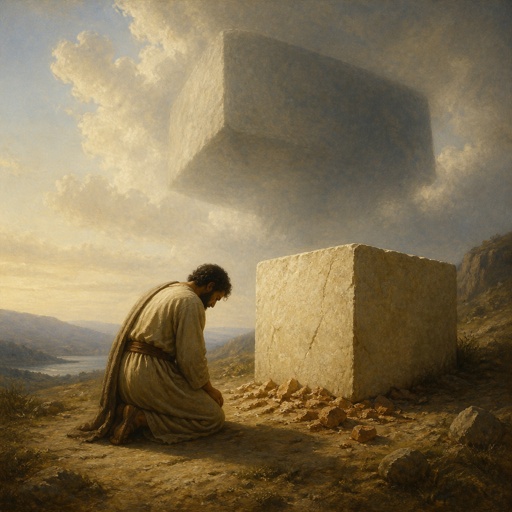
"Whosoever shall fall upon that stone shall be broken; but on whomsoever it shall fall, it will grind him to powder." - Luke 20:18

"And he spake this parable unto certain which trusted in themselves that they were righteous, and despised others:" - Luke 18:9

Luke 13:20-21

Luke 13:20-21

Luke 13:20-21

Luke 13:20-21
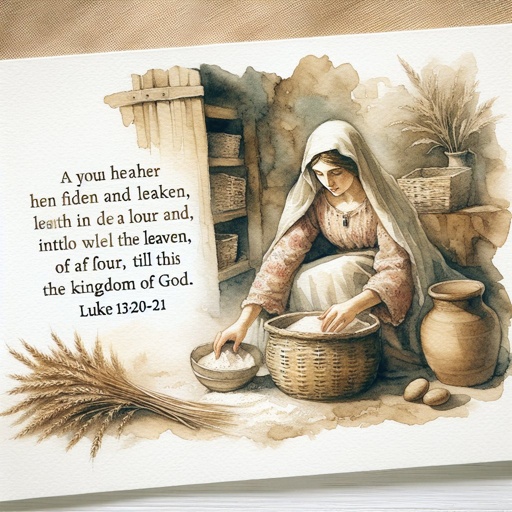
Luke 13:20-21

Luke 10:18-19

Luke 13:18-19

Luke 10:18-19

Luke 10:18-19

Luke 13:18-19

Luke 10:18-19

Luke 10:18-19

Luke 10:18-19
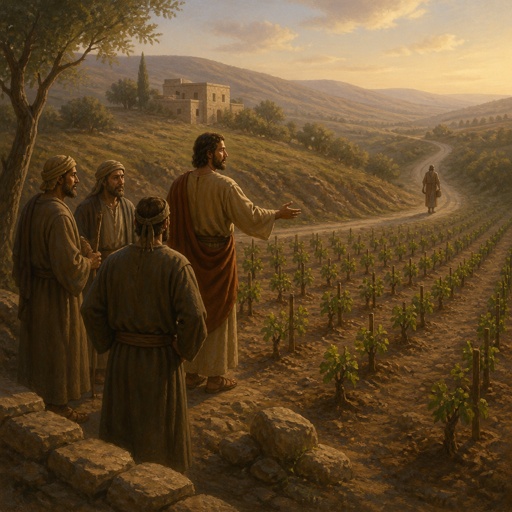
"Then began he to speak to the people this parable; A certain man planted a vineyard, and let it forth to husbandmen, and went into a far country for a long time." - Luke 20:9

Luke 20:28