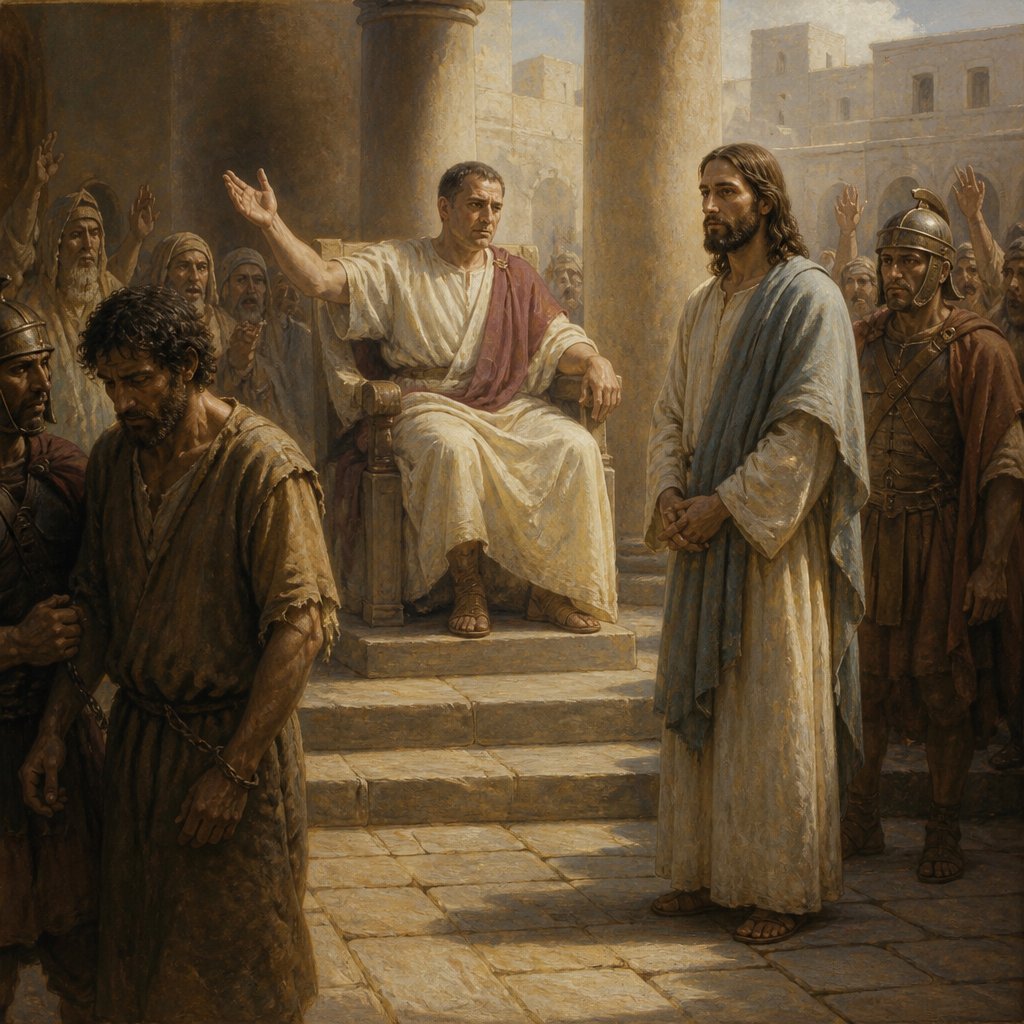
Luke 23:18-25 in the King James Version reads:
18 And they cried out all at once, saying, Away with this man, and release unto us Barabbas:
19 (Who for a certain sedition made in the city, and for murder, was cast into prison.)
20 Pilate therefore, willing to release Jesus, spake again to them.
21 But they cried, saying, Crucify him, crucify him.
22 And he said unto them the third time, Why, what evil hath he done? I have found no cause of death in him: I will therefore chastise him, and let him go.
23 And they were instant with loud voices, requiring that he might be crucified. And the voices of them and of the chief priests prevailed.
24 And Pilate gave sentence that it should be as they required.
25 And he released unto them him that for sedition and murder was cast into prison, whom they had desired; but he delivered Jesus to their will.
This passage from the book of Luke depicts the events leading up to Jesus' crucifixion. It reveals the intense pressure that Pilate, the Roman governor, felt as he sought to release Jesus but ultimately succumbed to the demands of the crowd. The story of Barabbas, a known criminal, being set free while Jesus, an innocent man, is condemned to death, serves as a powerful symbol of the unjust treatment and ultimate sacrifice of Jesus.
One of the key themes in this passage is the manipulation of public opinion and the perversion of justice. The crowd, instigated by the chief priests and religious leaders, fervently cries out for Jesus to be crucified, despite Pilate's own recognition of Jesus' innocence. The contrast between Barabbas, a criminal guilty of sedition and murder, and Jesus, who has committed no crime, highlights the moral and ethical corruption of those in positions of power.
Another theme is the fulfillment of prophecy. The rejection and crucifixion of Jesus were foretold in the Old Testament, and this passage is a significant moment in the fulfillment of God's plan for salvation. Despite the apparent victory of the crowd and the authorities, this event ultimately leads to the redemption of humanity through Jesus' death and resurrection.
The context of this passage is crucial to understanding its significance. At this point in the Gospel of Luke, Jesus has been arrested, tried by the Jewish religious leaders, and then brought before Pilate, the Roman governor. Pilate recognizes Jesus' innocence and attempts to release him, but he is ultimately swayed by the vocal and persistent demands of the crowd. This demonstrates the political and social dynamics at play, as well as the broader religious and cultural context of the time.
The symbolism in this passage is powerful and multifaceted. Jesus' willingness to endure unjust condemnation and suffering represents his sacrificial love for humanity. In contrast, Barabbas, whose name means "son of the father," is released instead of Jesus, foreshadowing the substitutionary atonement that Jesus will fulfill on the cross. This exchange symbolizes the divine exchange of Jesus' righteousness for the guilt of sinners, illustrating the central theme of salvation through Christ's death.
Additionally, the crowd's rejection of Jesus and acceptance of Barabbas reflects the broader rejection of Christ by humanity, as well as the choice between good and evil. Pilate's reluctance to condemn Jesus and his ultimate capitulation to the demands of the crowd symbolize the moral struggle and moral compromise that often occurs in the face of injustice and societal pressure.
In conclusion, Luke 23:18-25 is a pivotal passage in the Gospel narrative, revealing the complex interplay of power, justice, and prophecy in the events leading to Jesus' crucifixion. It highlights the themes of unjust condemnation, the fulfillment of prophecy, and the sacrificial love of Christ, all of which are rich in symbolism and significance. This passage invites readers to reflect on the moral and spiritual implications of Jesus' sacrifice and the enduring message of redemption and hope found in the Gospel.
Get our apps


Artwork for Luke 23:18-25

Luke 23:18-25 - "But they all cried out together, “Away with this man, and release to us Barabbas”— a man who had been thrown into prison for an insurrection started in the city and for murder. Pilate addressed them once more, desiring to release Jesus, but they kept shouting, “Crucify, crucify him!” A third time he said to them, “Why, what evil has he done? I have found in him no guilt deserving death. I will therefore punish and release him.” But they were urgent, demanding with loud cries that he should be crucified. And their voices prevailed. So Pilate decided to grant their demand. He released the man who had been thrown into prison for insurrection and murder, for whom they asked, but he delivered Jesus over to their will."
"But they all cried out together, “Away with this man, and release to us Barabbas”— a man who had been thrown into prison for an insurrection started in the city and for murder. Pilate addressed them once more, desiring to release Jesus, but they kept shouting, “Crucify, crucify him!” A third time he said to them, “Why, what evil has he done? I have found in him no guilt deserving death. I will therefore punish and release him.” But they were urgent, demanding with loud cries that he should be crucified. And their voices prevailed. So Pilate decided to grant their demand. He released the man who had been thrown into prison for insurrection and murder, for whom they asked, but he delivered Jesus over to their will." - Luke 23:18-25
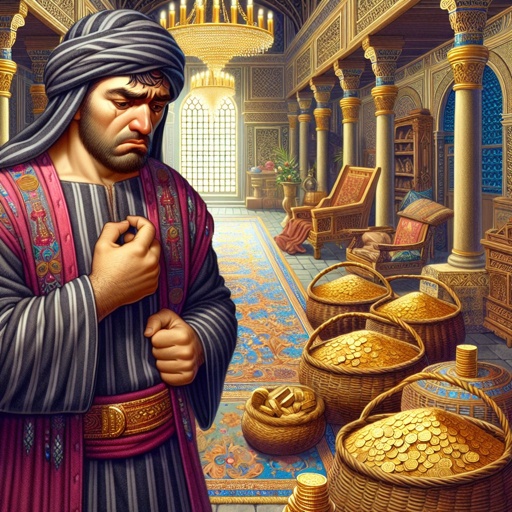
Luke 18:23 - "And when he heard this, he was very sorrowful: for he was very rich."

Luke 18:25 - "For it is easier for a camel to go through a needle's eye, than for a rich man to enter into the kingdom of God."

Luke 23:18 - "And they cried out all at once, saying, Away with this man, and release unto us Barabbas:"

Luke 23:25 - "And he released unto them him that for sedition and murder was cast into prison, whom they had desired; but he delivered Jesus to their will."
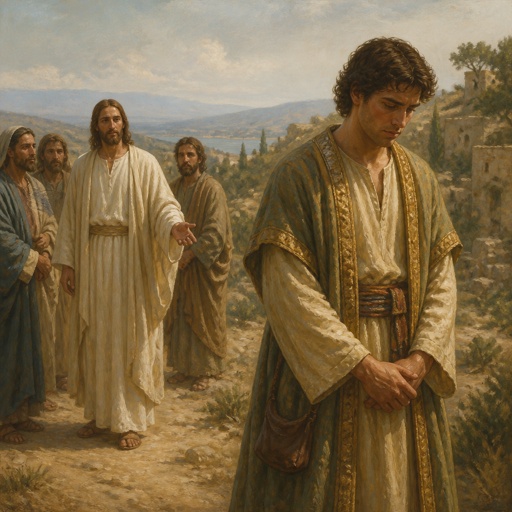
"And when he heard this, he was very sorrowful: for he was very rich." - Luke 18:23
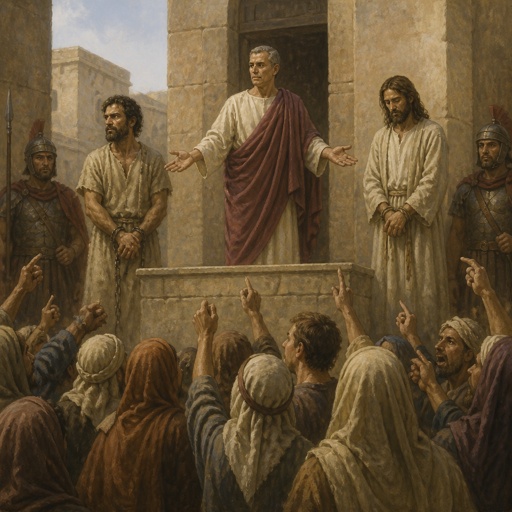
"And they cried out all at once, saying, Away with this man, and release unto us Barabbas:" - Luke 23:18
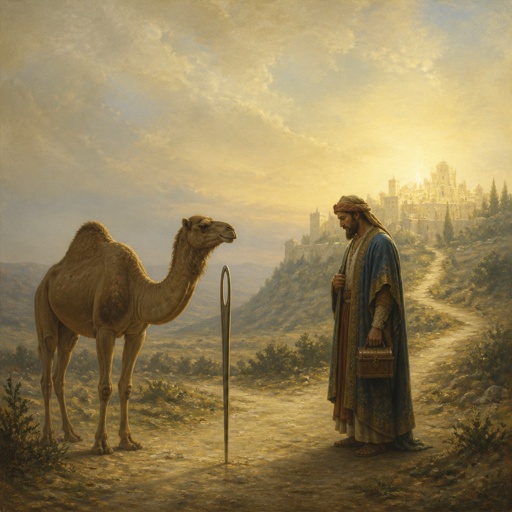
"For it is easier for a camel to go through a needle's eye, than for a rich man to enter into the kingdom of God." - Luke 18:25
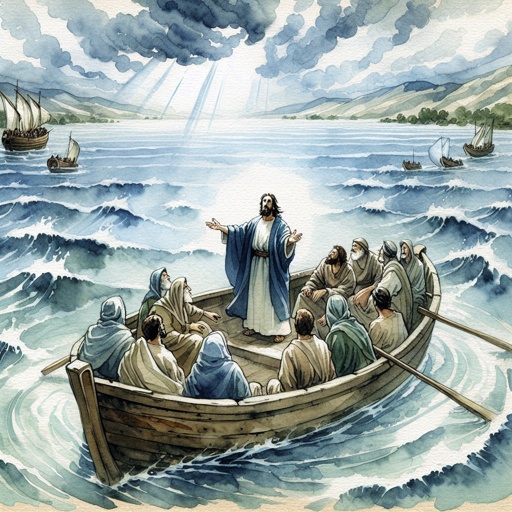
Luke 8:23-25 (KJVA) 23 But as they sailed he fell asleep: and there came down a storm of wind on the lake; and they were filled with water, and were in jeopardy. 24 And they came to him, and awoke him, saying, Master, master, we perish. Then he arose, and rebuked the wind and the raging of the water: and they ceased, and there was a calm. 25 And he said unto them, Where is your faith? And they being afraid wondered, saying one to another, What manner of man is this! for he commandeth even the winds and water, and they obey him.
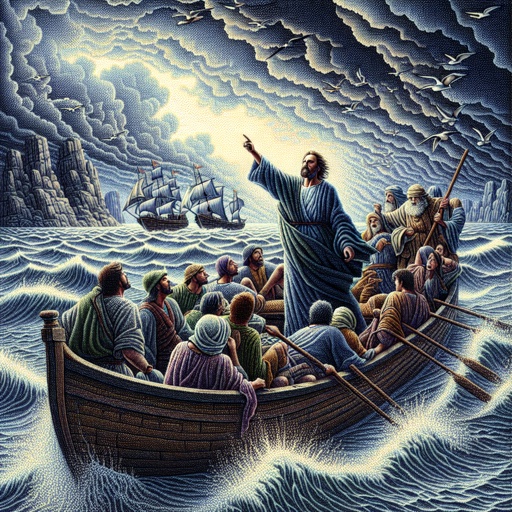
Luke 8:23-25 (KJVA) 23 But as they sailed he fell asleep: and there came down a storm of wind on the lake; and they were filled with water, and were in jeopardy. 24 And they came to him, and awoke him, saying, Master, master, we perish. Then he arose, and rebuked the wind and the raging of the water: and they ceased, and there was a calm. 25 And he said unto them, Where is your faith? And they being afraid wondered, saying one to another, What manner of man is this! for he commandeth even the winds and water, and they obey him.
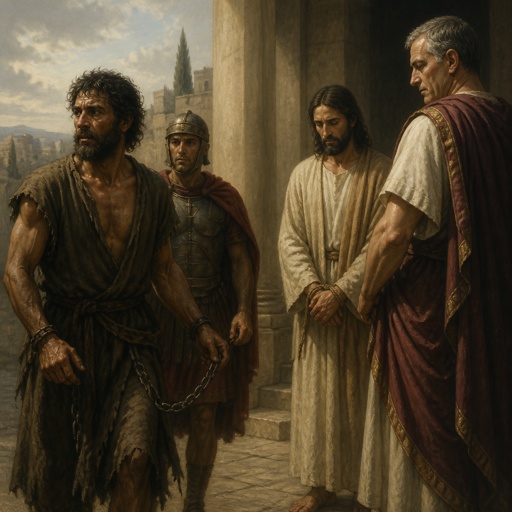
"And he released unto them him that for sedition and murder was cast into prison, whom they had desired; but he delivered Jesus to their will." - Luke 23:25

Matthew 25:23

Luke 1:25

Luke 1:25

Luke 1:25

Luke 12:25

Luke 1:25

Luke 12:25
Luke 1:25

Matthew 25:23

Genesis 25-23

Luke 23:53

Luke 19:23

luke 11:23

Luke 19:23

John 18:25

Genesis 18-25

Genesis 18:25

Luke 12:25-26