What does Luke 23:22 mean?
“And he said unto them the third time, Why, what evil hath he done? I have found no cause of death in him: I will therefore chastise him, and let him go.” — Luke 23:22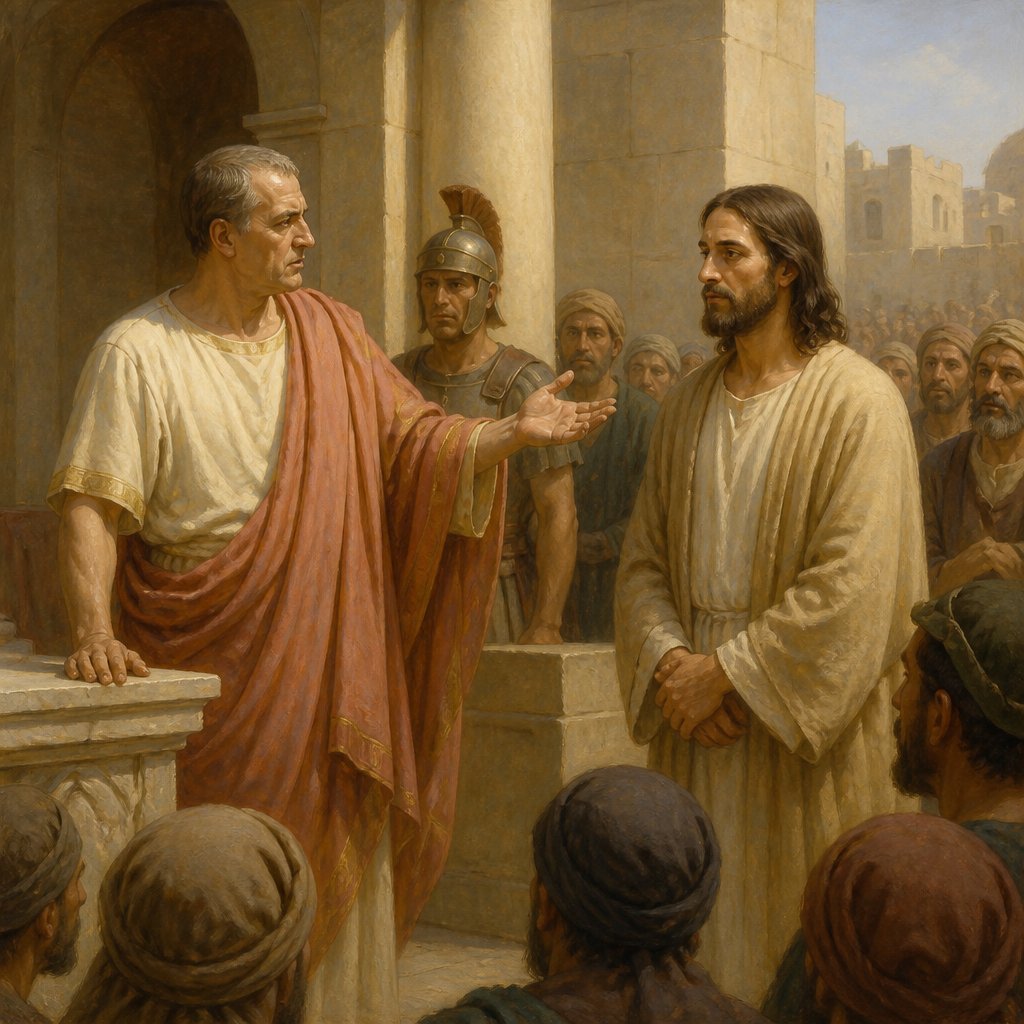
In Luke 23:22 from the King James Version (KJV) of the Bible, the verse reads, "And he said unto them the third time, Why, what evil hath he done? I have found no cause of death in him: I will therefore chastise him, and let him go." This verse is part of the account of Jesus' trial before Pontius Pilate, the Roman governor of Judea.
The verse occurs within the broader context of Jesus' crucifixion, which is a pivotal event in Christian theology and history. It takes place after Jesus is arrested, tried by the Jewish religious authorities, and brought before Pilate on charges of claiming to be the king of the Jews. The Jewish leaders have brought Jesus to Pilate in order to secure his execution, as they did not have the authority to carry out capital punishment under Roman rule.
In this verse, Pilate is expressing his reluctance to sentence Jesus to death. He declares that he has found no justification for putting Jesus to death, as he cannot find any evidence of wrongdoing on Jesus' part. This refusal to convict Jesus highlights Pilate's recognition of Jesus' innocence and his reluctance to execute him. Pilate's decision to "chastise him, and let him go" is an attempt to satisfy the demands of the Jewish religious leaders while sparing Jesus' life.
This account of Pilate's actions raises several significant themes and motifs that resonate throughout the biblical narrative and have broader theological implications. One such theme is the concept of innocence and guilt. Pilate's declaration of Jesus' innocence highlights the unjust nature of Jesus' condemnation and execution, emphasizing that he was put to death unjustly. This reinforces the Christian belief in Jesus as the innocent and blameless sacrificial lamb who was crucified for the sins of humanity.
Another theme in this passage is the conflict between earthly authority and divine will. Pilate's attempt to appease the Jewish leaders by chastising Jesus demonstrates the tension between his political responsibilities and the moral dilemma of condemning an innocent man. This raises questions about the nature of power, justice, and the interplay between human agency and God's sovereign plan. It also underscores the complexities of governance and the ethical challenges faced by those in positions of authority.
Furthermore, the verse underscores the concept of atonement and redemption. The idea that Jesus, the sinless Son of God, willingly undergoes suffering and death as a means of reconciling humanity with God is a central tenet of Christian faith. Pilate's acknowledgment of Jesus' innocence sets the stage for Jesus to offer himself as the ultimate atoning sacrifice, paving the way for the forgiveness of sins and the restoration of the relationship between God and humanity.
Symbolically, this verse also serves as a reminder of the injustice and suffering that Jesus endured on behalf of humanity. It speaks to the paradox of the cross, in which the seemingly shameful and unjust death of Jesus becomes the ultimate demonstration of love and redemption. The willingness of Jesus to endure such unjust treatment underscores his selfless act of sacrifice and serves as a powerful symbol of hope and salvation for believers.
In conclusion, Luke 23:22 from the King James Version of the Bible is a significant passage that captures the moral and theological complexities of Jesus' trial before Pilate. It raises important themes of innocence and guilt, divine sovereignty, atonement, and self-sacrificial love. Through this verse, believers are invited to reflect on the profound implications of Jesus' unjust condemnation and to find assurance in the redemptive power of his sacrificial death.
Get our apps


Artwork for Luke 23:22

Luke 23:22 - "And he said unto them the third time, Why, what evil hath he done? I have found no cause of death in him: I will therefore chastise him, and let him go."
"And he said unto them the third time, Why, what evil hath he done? I have found no cause of death in him: I will therefore chastise him, and let him go." - Luke 23:22

Luke 22:23 - "And they began to enquire among themselves, which of them it was that should do this thing."

Acts 2:2-3

Acts 2:2-3
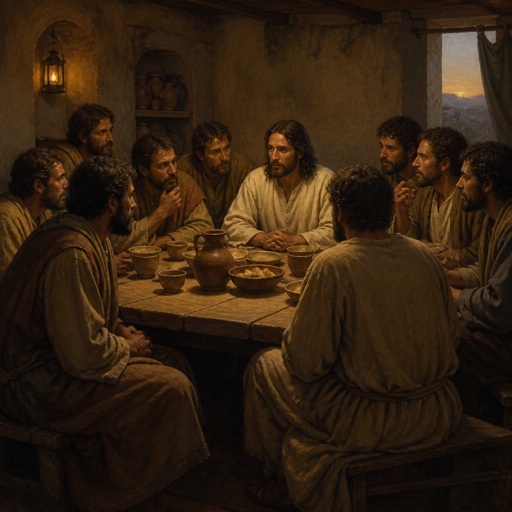
"And they began to enquire among themselves, which of them it was that should do this thing." - Luke 22:23

Luke 12:22-23 - "Then Jesus said to his disciples: “Therefore I tell you, do not worry about your life, what you will eat; or about your body, what you will wear. For life is more than food, and the body more than clothes."

Luke 23:53

Luke 19:23

luke 11:23

Luke 19:23

luke 11:23
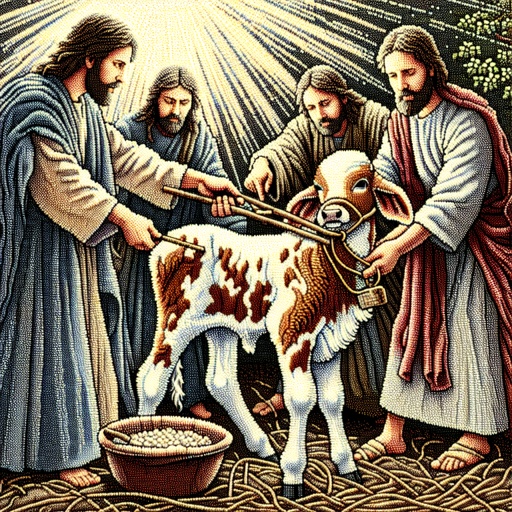
Luke 15:23

luke 11:23

luke 11:23

Galatians5:22-23

luke 22:42

Luke 22:39

Luke 22:61,62

Luke 22:39

luke 22 44
luke 22:42

Luke 22:42

Galatians5:22-23

Genesis 22-23

Luke 23:54 - "And that day was the preparation, and the sabbath drew on."

Leviticus 23:15-22

Leviticus 23:17-22

Galatians 5:22-23

Galatians 5:22-23