What does Luke 24:31 mean?
“And their eyes were opened, and they knew him; and he vanished out of their sight.” — Luke 24:31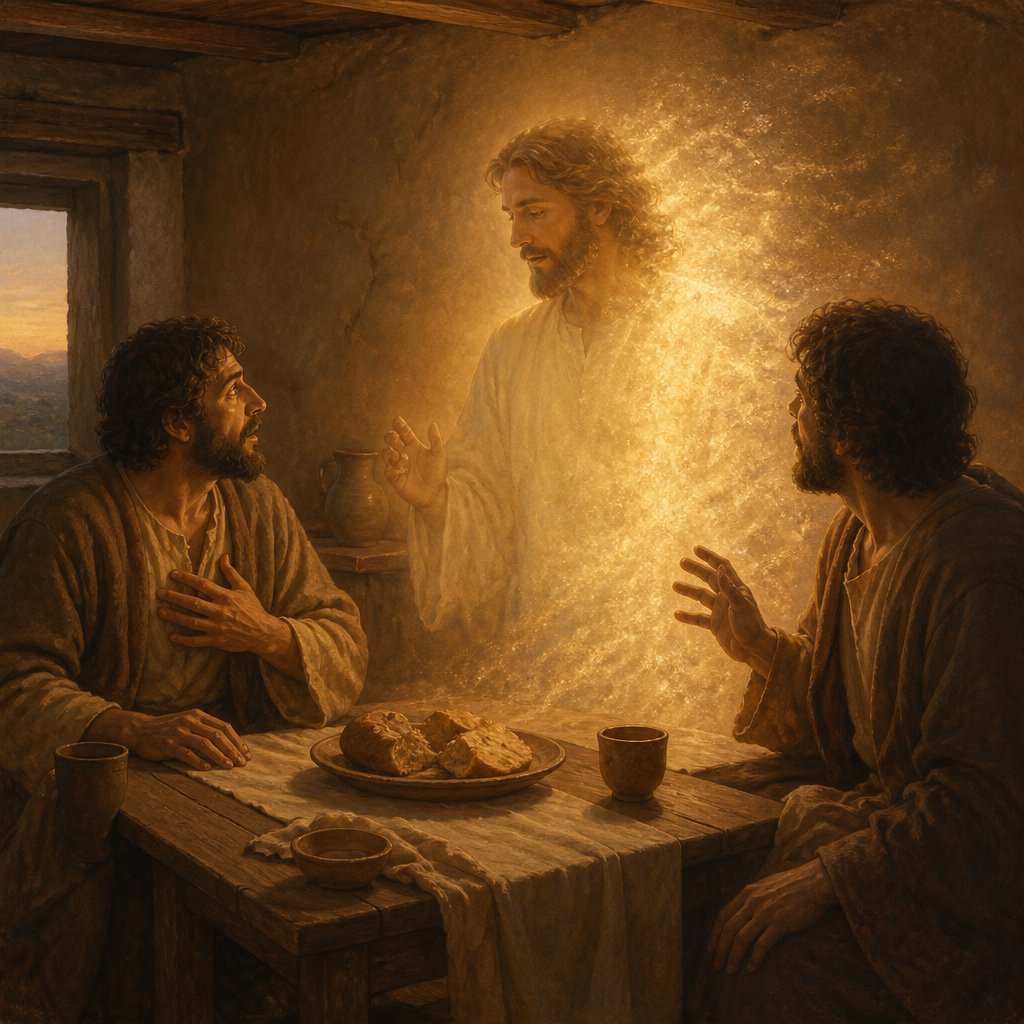
The verse Luke 24:31 from the King James Version (KJV) of the Bible reads, "And their eyes were opened, and they knew him; and he vanished out of their sight." This verse is from the Gospel of Luke, which is the third of the four Gospels in the New Testament. The verse takes place after the resurrection of Jesus Christ and tells the story of two of his disciples who were walking to a village called Emmaus. They were joined by the resurrected Jesus, although they did not recognize him at first. After breaking bread with him, their eyes were opened, and they recognized him. However, just as they recognized him, he vanished out of their sight.
The themes present in this verse are revelation, recognition, and the mysterious nature of Jesus' post-resurrection appearances. The disciples' eyes being opened symbolize the moment of recognition and understanding. Throughout the Gospel of Luke, there is a theme of revelation and recognition, where people come to a deeper understanding of Jesus and his mission. In this particular verse, the disciples' eyes are opened to recognize Jesus as the risen Lord. The revelation of Jesus' resurrection is a central theme in the New Testament, and this verse illustrates the moment when the disciples come to realize the truth of his resurrection.
The context of this verse is important for understanding its significance. The resurrection of Jesus is a central tenet of the Christian faith, and the post-resurrection appearances of Jesus to his disciples are crucial in solidifying their belief in his resurrection. The story of the disciples on the road to Emmaus is a powerful narrative that highlights the importance of recognizing Jesus in the midst of everyday life. The fact that Jesus vanished after being recognized by the disciples adds a mysterious and supernatural element to the story.
The symbolism in this verse is rich and meaningful. The disciples' eyes being opened symbolizes not only physical sight but also spiritual insight. It represents the moment when they come to understand the true nature of Jesus as the risen Lord. The breaking of bread with Jesus also has deep symbolism, as it evokes the Last Supper and the Eucharist. It is through the breaking of bread that the disciples recognize Jesus, pointing to the importance of the sacrament of the Eucharist in Christian faith.
The vanishing of Jesus out of their sight is a mysterious and enigmatic moment. It emphasizes the supernatural nature of Jesus' post-resurrection appearances. His sudden disappearance speaks to the transient and otherworldly nature of the resurrected Christ. It also serves as a reminder that Jesus is not confined to earthly limitations, but rather exists in a spiritual realm beyond human comprehension.
Overall, Luke 24:31 is a verse rich in themes, symbolism, and significance. It captures a powerful moment of revelation and recognition as the disciples' eyes are opened to recognize Jesus as the risen Lord. The verse also highlights the mysterious and supernatural nature of Jesus' post-resurrection appearances, emphasizing the transcendent and divine reality of the resurrected Christ. It serves as a reminder of the central importance of Jesus' resurrection in the Christian faith and the transformative power of recognizing his presence in our lives.
Get our apps


Artwork for Luke 24:31

Luke 24:31 - "And their eyes were opened, and they knew him; and he vanished out of their sight."
"And their eyes were opened, and they knew him; and he vanished out of their sight." - Luke 24:31

"And their eyes were opened, and they knew him; and he vanished out of their sight." - Luke 24:31

Genesis 24-31

Luke 1:31

Matthew 24:30-31

Matthew 24:30-31

Matthew 24:30-31

Matthew 24:30-31

Matthew 24:30-31

Matthew 24:30-31

Matthew 24:30-31

Matthew 24:30-31

Matthew 24:30-31

Matthew 24:30-31

Luke 24:1

Luke 24:35

Luke 22:31-32 - "Luke 22:31-32: And the Lord said, Simon, Simon, behold, Satan hath desired to have you, that he may sift you as wheat: But I have prayed for thee, that thy faith fail not: and when thou art converted, strengthen thy brethren."

Luke 24:42

Luke 21:24

Luke 13:24

luke 24:17

Luke 23:31 - "For if they do these things in a green tree, what shall be done in the dry?"

Luke 2:31 - "Which thou hast prepared before the face of all people;"

Luke 24:8 - "And they remembered his words,"

Proverbs 31:24 - "She maketh fine linen, and selleth it; and delivereth girdles unto the merchant."

Luke 24:13-35

LUKE 24:41-43

Luke 8:31 - "And they besought him that he would not command them to go out into the deep."

Luke 5:31 - "And Jesus answering said unto them, They that are whole need not a physician; but they that are sick."