What does Luke 2:7 mean?
“And she brought forth her firstborn son, and wrapped him in swaddling clothes, and laid him in a manger; because there was no room for them in the inn.” — Luke 2:7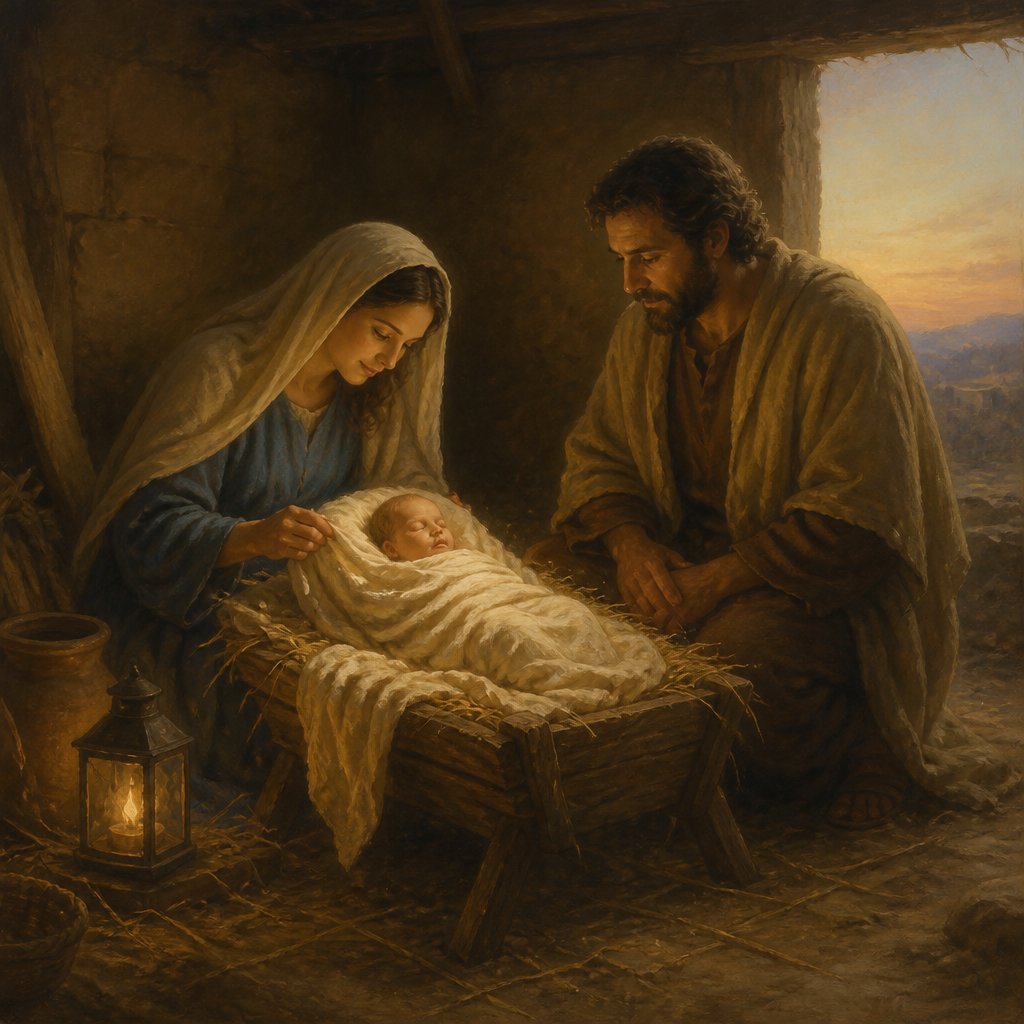
Luke 2:7 from the King James Version states, "And she brought forth her firstborn son, and wrapped him in swaddling clothes, and laid him in a manger; because there was no room for them in the inn."
This verse is part of the larger narrative of the birth of Jesus Christ, which is a central event in the Christian faith. The themes and context surrounding this verse are rich and significant, and the symbolism present in this verse is profound and multi-layered.
The birth of Jesus takes place in the humblest of circumstances, in a stable in Bethlehem. This sets the stage for one of the key themes in the Gospel of Luke, which is the upside-down nature of the kingdom of God. In the kingdom of God, the lowly are lifted up, the humble are exalted, and the marginalized are given central importance. This is reflected in the fact that the King of Kings is born in a manger, a feeding trough for animals, rather than in a palace or grand home.
The fact that there was no room for Mary and Joseph in the inn adds to this theme of humility and marginalization. It serves as a commentary on the state of the world at the time, and perhaps by extension, on the state of the world today. The entrance of the Savior of the world into the world itself is marred by a lack of hospitality, which speaks to the disregard for the marginalized and the poor. This theme is echoed in other parts of Luke's Gospel, where Jesus consistently reaches out to those on the margins of society, such as the poor, the sick, and the outcasts.
The use of swaddling clothes is also significant. Swaddling clothes were used to tightly wrap infants to provide warmth and security. In this context, the use of swaddling clothes suggests the care and tenderness with which Mary and Joseph tended to the infant Jesus. It also foreshadows the sacrificial love that Jesus would later embody, and the care with which he would minister to those in need.
Symbolically, the manger itself carries rich meaning. The manger is a place where animals feed, and in the Christian tradition, it is often seen as a symbol of the Eucharist, the sacrament in which Christians partake of the body and blood of Christ. The fact that Jesus is laid in a manger at the beginning of his life foreshadows the sacrifice he will later make for the salvation of humanity. This imagery is reflected in the Gospel of John, where Jesus describes himself as the bread of life, further strengthening the connection between the manger and the Eucharist.
Overall, Luke 2:7 is a verse rich in meaning and symbolism. It speaks to the humble circumstances of Jesus' birth, the themes of humility and marginalization, and the sacrificial love that Jesus would later embody. It serves as a powerful reminder that God's ways are not the ways of the world, and that the kingdom of God is one in which the marginalized are given central importance, and humility is exalted.
Get our apps


Artwork for Luke 2:7

Luke 2:7 - "And she brought forth her firstborn son, and wrapped him in swaddling clothes, and laid him in a manger; because there was no room for them in the inn."

Luke 2:7 – "She gave birth to her firstborn, a son. She wrapped him in cloths and placed him in a manger, because there was no guest room available for them."
"And she brought forth her firstborn son, and wrapped him in swaddling clothes, and laid him in a manger; because there was no room for them in the inn." - Luke 2:7

Luke 7:2 - "And a certain centurion's servant, who was dear unto him, was sick, and ready to die."
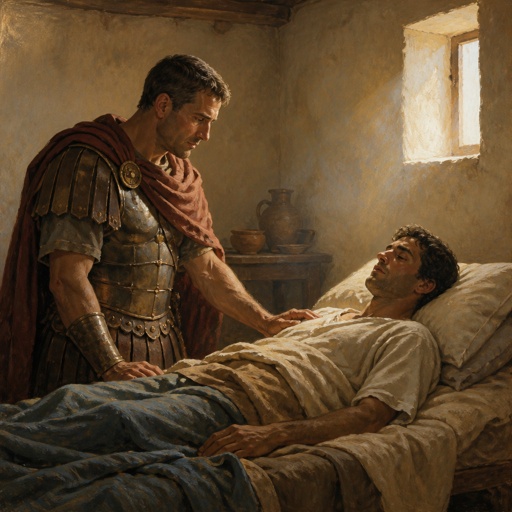
"And a certain centurion's servant, who was dear unto him, was sick, and ready to die." - Luke 7:2

Luke 7:33

Luke 7:50

Luke 7:50

Luke 7:36-50

Luke 7:41-47

Luke 15: 4-7

Luke 7:36–50

Luke 20:7 - "And they answered, that they could not tell whence it was."

Luke 7:35 - "But wisdom is justified of all her children."
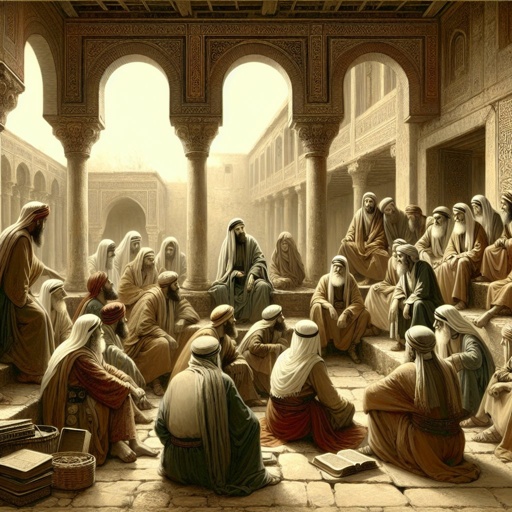
Luke 7:18 - "And the disciples of John shewed him of all these things."

Luke 7:23 - "And blessed is he, whosoever shall not be offended in me."

Luke 2:2

Luke 7:7 - "Wherefore neither thought I myself worthy to come unto thee: but say in a word, and my servant shall be healed."

Luke 7:48 - "And he said unto her, Thy sins are forgiven."

Luke 22:7 - "¶ Then came the day of unleavened bread, when the passover must be killed."

Luke 4:7 - "If thou therefore wilt worship me, all shall be thine."

Luke 8:7 - "And some fell among thorns; and the thorns sprang up with it, and choked it."

Luke 7:5 - "For he loveth our nation, and he hath built us a synagogue."

"And they answered, that they could not tell whence it was." - Luke 20:7

Luke 7:31 - "¶ And the Lord said, Whereunto then shall I liken the men of this generation? and to what are they like?"

Luke 7:10 - "And they that were sent, returning to the house, found the servant whole that had been sick."

Luke 7:30 - "But the Pharisees and lawyers rejected the counsel of God against themselves, being not baptized of him."

Luke 7:50 - "And he said to the woman, Thy faith hath saved thee; go in peace."

Luke 19:7 - "And when they saw it, they all murmured, saying, That he was gone to be guest with a man that is a sinner."

Luke 2:2 - "(And this taxing was first made when Cyrenius was governor of Syria.)"