What does Luke 5:12 mean?
"¶ And it came to pass, when he was in a certain city, behold a man full of leprosy: who seeing Jesus fell on his face, and besought him, saying, Lord, if thou wilt, thou canst make me clean." - Luke 5:12
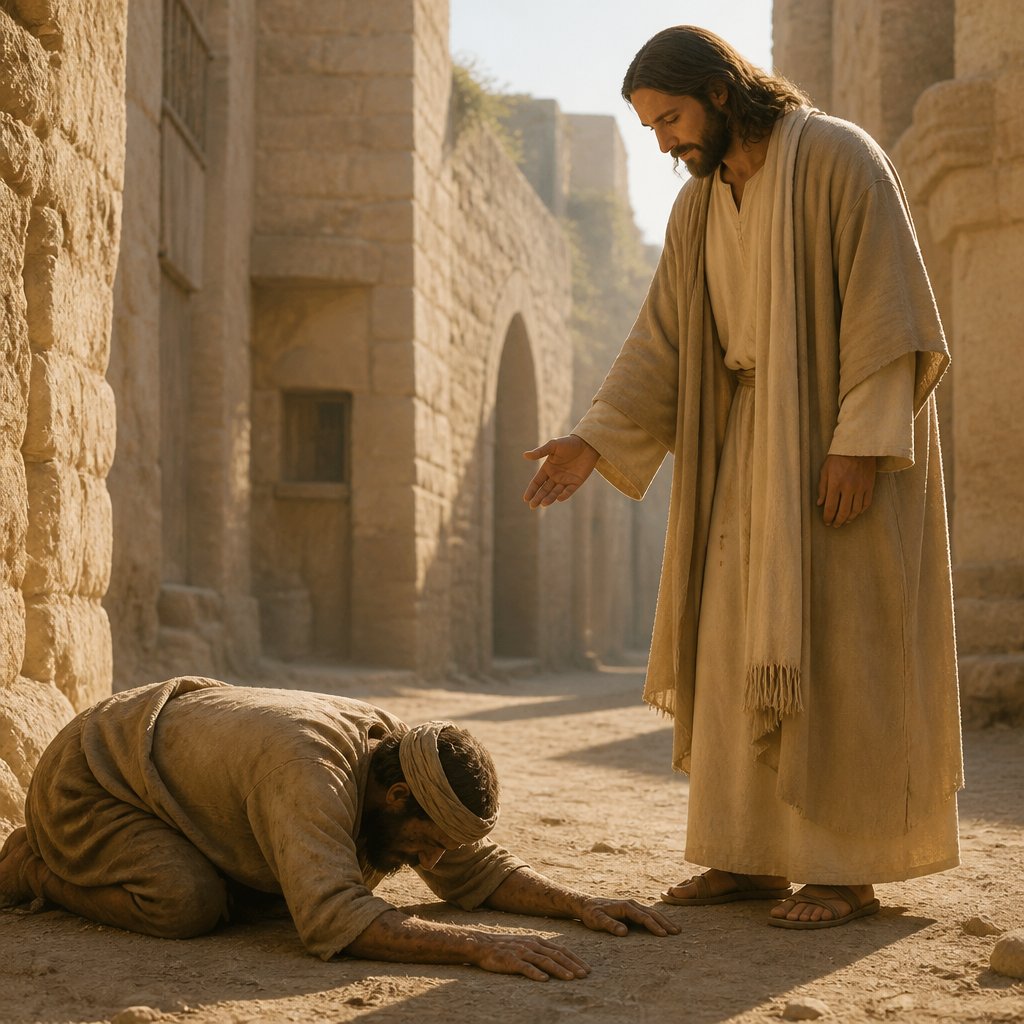
Luke 5:12 in the King James Version reads: "And it came to pass, when he was in a certain city, behold a man full of leprosy: who seeing Jesus fell on his face, and besought him, saying, Lord, if thou wilt, thou canst make me clean."
This verse from the Gospel of Luke is part of the larger narrative of Jesus' ministry and the miracles that he performed. It is a powerful example of the compassion and healing power of Jesus, as well as a demonstration of the faith and humility of those who sought his help.
The verse begins with the setting: Jesus is in a certain city, and a man who is described as being "full of leprosy" approaches him. Leprosy was a dreaded and contagious disease in ancient times, and those who suffered from it were often ostracized and shunned by society. This man's condition would have been a physical and emotional burden, and he would have likely felt isolated and hopeless. However, despite the stigma surrounding his illness, he approaches Jesus with humility and faith, falling on his face before him.
The act of falling on his face before Jesus is a sign of reverence and submission. It shows the man's recognition of Jesus' authority and power, as well as his willingness to humble himself before him. This gesture also demonstrates the man's deep desire for healing and restoration. He has likely heard of Jesus' miracles and is now placing his hope and trust in him to be healed.
The man's plea to Jesus is simple yet profound: "Lord, if thou wilt, thou canst make me clean." In these words, the man acknowledges that Jesus has the ability to heal him, but he also recognizes that it is ultimately up to Jesus' will. This statement reflects the man's faith in Jesus' authority and his trust in his benevolence.
In response to the man's plea, Jesus reaches out and touches him, saying, "I will: be thou clean." In this miraculous moment, the man is instantly healed of his leprosy. Jesus' touch not only eliminates the physical ailment but also restores the man's dignity and social standing. This act of healing is a demonstration of Jesus' compassion and power, as well as his willingness to reach out to those who are suffering and marginalized.
The themes present in this verse are numerous and significant. One of the central themes is the power of faith and belief. The leprous man's faith in Jesus' ability to heal him is what ultimately leads to his restoration. This highlights the importance of trust and belief in God's ability to bring about transformation and healing in our lives.
Another theme is the compassion and love of Jesus. His willingness to reach out to those who are suffering, regardless of societal stigma or prejudice, demonstrates his deep love for all people. This serves as a reminder that no one is beyond the reach of God's love and mercy, and that he has the power to bring about restoration and renewal in even the most dire circumstances.
The symbolism in this verse is also profound. The man's leprosy can be seen as a representation of the brokenness and sin that plagues humanity. In approaching Jesus for healing, the man becomes a symbol of all those who recognize their need for spiritual healing and restoration. Jesus' touch and command to be clean symbolize his ability to bring about spiritual renewal and transformation in our lives.
In conclusion, Luke 5:12 is a powerful and poignant story of healing, faith, and compassion. It serves as a reminder of the transformative power of Jesus' love and the importance of trusting in his ability to bring about restoration in our lives. The verse also carries a message of hope for all those who are suffering, reminding us that through faith and humility, we can find healing and renewal in Jesus.
Have questions about Luke 5:12?
Dive deeper into this scripture with Bible Chat — an AI-powered tool for exploring God's Word through conversation. Ask questions, get context, and grow in your understanding of the Bible.
Get Our Apps


Luke 5:12 Artwork

Luke 5:12 - "¶ And it came to pass, when he was in a certain city, behold a man full of leprosy: who seeing Jesus fell on his face, and besought him, saying, Lord, if thou wilt, thou canst make me clean."
"¶ And it came to pass, when he was in a certain city, behold a man full of leprosy: who seeing Jesus fell on his face, and besought him, saying, Lord, if thou wilt, thou canst make me clean." - Luke 5:12

Luke 12:5 - "But I will forewarn you whom ye shall fear: Fear him, which after he hath killed hath power to cast into hell; yea, I say unto you, Fear him."

luke 5:5

Luke 10:5

Luke 10:5

Luke 10:5

Luke 12:25

Luke 12:25

Luke 12: 49

Luke 12:34

Luke 12:10

Luke 12:50

Luke 5:36

Luke 5:39

Luke 12:12 - "For the Holy Ghost shall teach you in the same hour what ye ought to say."

Luke 1:11-12

Luke 12:25-26

Luke 12:25-26

Luke 12:25-26

Luke 12:25-26

Luke 12:25-26

Luke 12:25-26

Luke 1:11-12

Luke 12:25-26

Luke 1:11-12

Luke 1:11-12

Luke 8:5-8

Luke 5:1-11

Luke 5:17-26