What does Luke 5:16 mean?
“And he withdrew himself into the wilderness, and prayed.” — Luke 5:16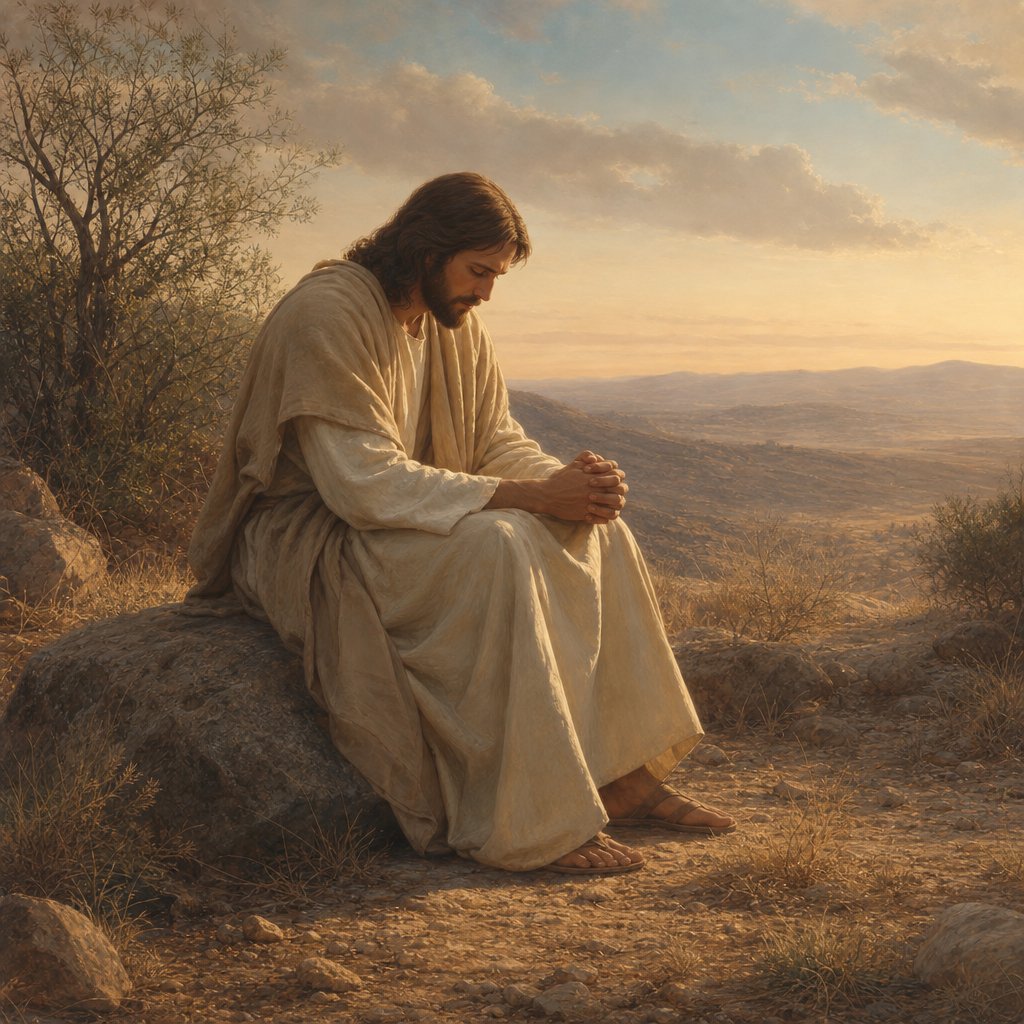
Luke 5:16 in the King James Version reads, “And he withdrew himself into the wilderness, and prayed.” In its plain sense the verse tells you what Jesus did habitually in the midst of growing public attention: He deliberately stepped away from the crowds and went to a solitary place for the purpose of prayer. Yet the significance of the sentence is larger than its brevity suggests, because it sits at a turning point in Luke’s narrative where Christ’s fame is rising, needs are multiplying, and opposition is beginning to form, and Luke pauses to show the inner life that governs the outer ministry.
The immediate context is that Jesus has just healed a man “full of leprosy,” touching him and cleansing him, and then instructing him to shew himself to the priest and offer what Moses commanded. The miracle causes the report of Him to spread “so much the more,” and “great multitudes came together to hear, and to be healed by him of their infirmities.” That is the pressure point: power is being displayed, crowds are gathering, and the demand upon Jesus’ time and strength appears endless. Luke 5:16 answers the unspoken question of how Jesus meets such a moment. He does not merely press on by human momentum. He “withdrew himself” and “prayed.” Luke is showing that the works of mercy and the words of authority are not detached from communion with the Father. The public ministry is sustained by private devotion.
The phrase “withdrew himself” carries the idea of intentional retreat rather than accidental absence. The verse does not portray Jesus as avoiding people out of indifference, but as ordering His life according to a higher priority than popularity or urgency. The crowds are real and their sickness is real, yet Jesus refuses to be driven by the expectations of the multitude. This withdrawal is therefore a quiet assertion of His mission: He is not a wonder-worker at the disposal of public demand, but the Servant of the Lord who acts in obedience and dependence, and prayer is the expression of that dependence. In Luke’s Gospel especially, prayer is repeatedly linked with decisive moments in Jesus’ life and ministry; here Luke signals that even amid constant compassion and miraculous power, the Son maintains deliberate fellowship with God.
The setting “into the wilderness” is full of biblical resonance. In Scripture the wilderness is both a place of testing and a place of meeting. Israel was led into the wilderness and there learned what was in the heart, there received daily provision, and there became a people under God’s rule. Jesus Himself had been “in the wilderness” earlier in Luke, where He faced temptation. Now, after acts of healing and the surge of fame, the wilderness becomes not a stage for temptation but a place of solitude, silence, and re-centering upon God. Symbolically, it is a space away from human noise and acclaim where one stands before God without performance. It hints that Jesus’ strength is not derived from applause, and His identity is not negotiated with the crowd; it is confirmed in communion with the Father.
At the same time, the wilderness can be seen as an enacted contrast to the city and the synagogue, where eyes are watching and controversies will arise. Luke is subtly showing that Jesus does not draw His direction from the shifting atmosphere of public life. He returns again and again to a place where only God sees, emphasizing that what is unseen governs what is seen. This is not escapism; it is preparation, alignment, and worship. By placing the verse right after the note that “great multitudes came together,” Luke highlights the paradox that the more the public demand increases, the more necessary private prayer becomes.
The simplicity of “and prayed” is itself instructive. Luke does not record the content of the prayer here. The focus is on the act and habit of prayer rather than on a particular petition. Jesus’ prayer in this setting can be understood as ongoing fellowship, thanksgiving, seeking of the Father’s will, and the consecration of His work. The verse therefore teaches that prayer is not merely for crisis moments or for those who lack power; even the One who heals with a word withdraws to pray. That detail guards the reader from thinking of prayer as a last resort, and instead presents it as the first necessity of faithful service.
There is also a quiet thematic connection to the leper who had been cleansed. Lepers were driven away into solitary places, cut off from the community. Jesus heals a man who must live outside, and then Jesus Himself goes outside. The difference is crucial: the leper’s isolation was imposed by uncleanness, but Jesus’ solitude is chosen in holiness. Yet Luke’s placement invites reflection: the One who draws near to the unclean is not made unclean, and the One who touches human misery is not consumed by it; He returns to prayer, to the Father, as the continual wellspring of purity, compassion, and strength. The verse therefore quietly reinforces Christ’s sinlessness and spiritual authority even as He engages deeply with the brokenness of others.
In the broader movement of Luke 5, Jesus is calling disciples, cleansing the unclean, preaching, and soon will face questions about forgiveness, fasting, and the interpretation of the law. Luke 5:16 stands like a hinge between power displayed and conflict ahead. The wilderness prayer anticipates that the path will not be shaped by acclaim but by obedience, and it suggests that communion with God is the hidden foundation beneath every visible act of the kingdom. In one short line, Luke teaches the reader to interpret Jesus’ ministry not as mere activity, but as mission sustained by prayer; not as crowds driving the agenda, but the Father directing the Son; not as outward works alone, but as outward works flowing from inward fellowship with God.
Get our apps


Artwork for Luke 5:16

Luke 5:16 - "¶ And he withdrew himself into the wilderness, and prayed."

"¶ And he withdrew himself into the wilderness, and prayed." - Luke 5:16
"¶ And he withdrew himself into the wilderness, and prayed." - Luke 5:16
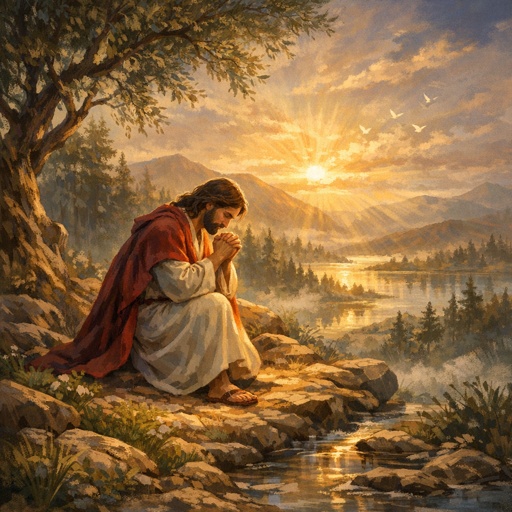
"¶ And he withdrew himself into the wilderness, and prayed." - Luke 5:16

Luke 16:5 - "So he called every one of his lord's debtors unto him, and said unto the first, How much owest thou unto my lord?"

luke 5:5

Luke 8:16

luke 4:16

Luke 10:5

Luke 10:5
Luke 10:5

Luke 16:1-13

Luke 16:1-1313

Luke 16:22-26

Luke 16:1-13

Luke 16:1-13

Luke 2:16 - 21

Luke 5:36

Luke 5:39

Luke 16:16 - "The law and the prophets were until John: since that time the kingdom of God is preached, and every man presseth into it."

Luke 24:16 - "But their eyes were holden that they should not know him."

Luke 23:16 - "I will therefore chastise him, and release him."

Luke 8:5-8

Luke 5:1-11

Luke 5:17-26

Luke 5:1-11

luke 21:5-19

Galatians 5:16-17

Galatians 5:16-17

Luke 11:16 - "And others, tempting him, sought of him a sign from heaven."