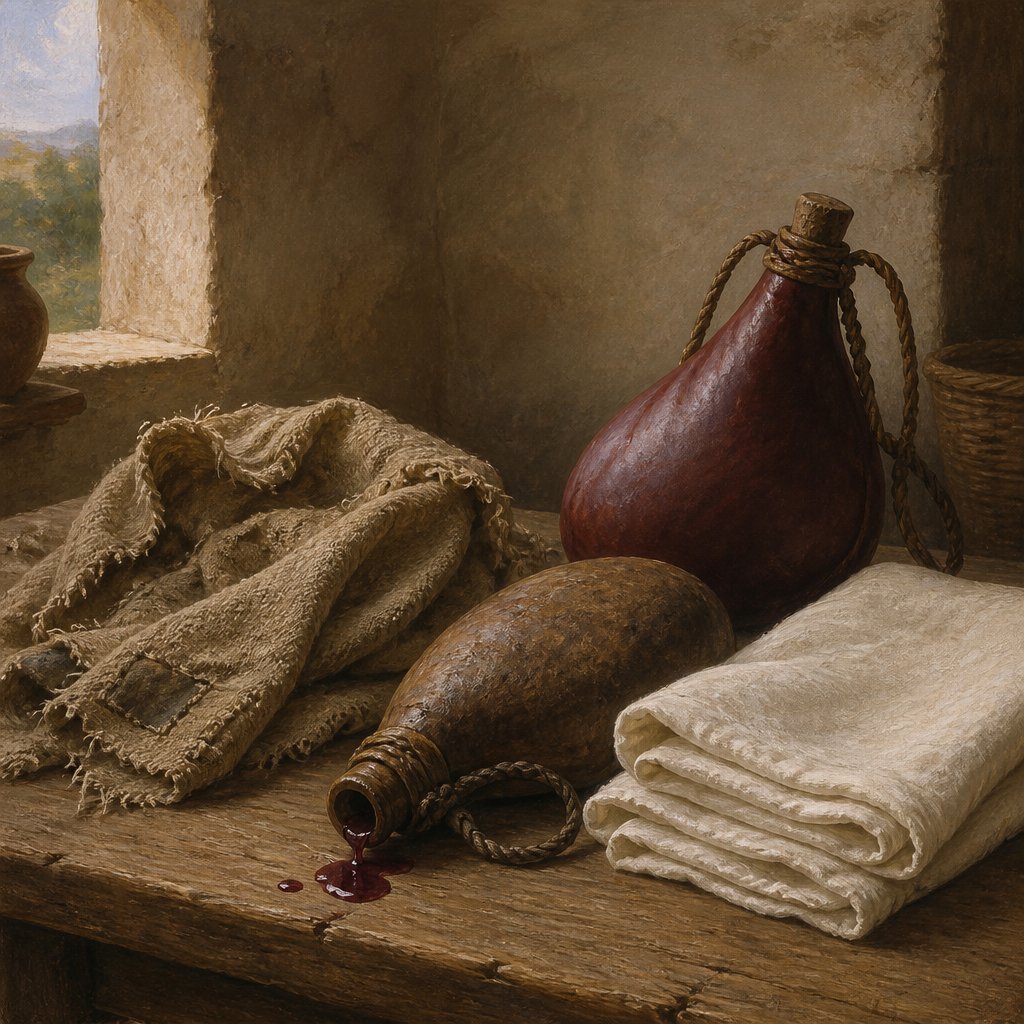
Luke 5:36-38 (KJV) states, "And he spake also a parable unto them; No man putteth a piece of a new garment upon an old; if otherwise, then both the new maketh a rent, and the piece that was taken out of the new agreeth not with the old. And no man putteth new wine into old bottles; else the new wine will burst the bottles, and be spilled, and the bottles shall perish. But new wine must be put into new bottles; and both are preserved. No man also having drunk old wine straightway desireth new: for he saith, The old is better."
The passage from Luke 5:36-38 uses the metaphor of new wine and old wine skins to convey spiritual truth. This parable was delivered by Jesus Christ in response to a question posed by the disciples of John the Baptist and the Pharisees about why His disciples did not fast like others. In this passage, Jesus uses the illustration of a new piece of fabric on an old garment and new wine in old wineskins to demonstrate the incompatibility of the new covenant with the old, and the need for a fresh approach to spiritual matters.
The parable begins with the example of a new piece of fabric being patched onto an old garment. The idea is that the new fabric will not blend with the old fabric, as it is not shrunk or worn like the old garment. Therefore, as the new fabric undergoes the normal process of shrinking, it will pull away from the old fabric, creating a tear that makes the garment worse than before. This metaphor serves to illustrate the incompatibility of patching the new teachings of Jesus onto the old traditions and rituals of the Mosaic Law.
The following example of new wine being poured into old wineskins further emphasizes the principle of incompatibility between the old and the new. In Jesus' time, wineskins were typically made from animal hides, which would stretch as the wine fermented. Old wineskins that had already been stretched to capacity from previous use would burst if new wine, still fermenting and expanding, were poured into them. This would not only result in the loss of the new wine but also ruin the old wineskins. Jesus' point is that the new teachings and spiritual practices He brings are incompatible with the rigid and outdated structures of the old religious system.
The parable concludes by emphasizing the need for receptacles that are suitable for the new teachings. Just as new fabric needs a new garment and new wine needs new wineskins, the new covenant that Jesus brings requires a fresh approach and new vessels to contain it. The old traditions and practices, while valuable in their time, are no longer suitable for the new outpouring of God's grace through Jesus Christ.
In a broader sense, this parable speaks to the transformative power of the gospel and the radical change that comes with embracing the new covenant. It marks a shift from outward observance of religious laws and traditions to an inward transformation of the heart through faith in Christ. The old covenant was based on strict adherence to a set of rules and regulations, but the new covenant is based on grace, love, and spiritual rebirth.
Through this parable, Jesus also warns against resistance to change and clinging to the familiar. The religious leaders of Jesus' time were so entrenched in their traditions and legalism that they were unable to recognize the new work that God was doing through Jesus. They were like old wineskins unable to contain the new wine of the gospel. Jesus' teachings required a paradigm shift and a willingness to let go of old ways in order to embrace the new life He offered.
The overall theme of this passage is the necessity of embracing the newness of Christ's teachings and the transformative power of the gospel to bring about spiritual renewal. It underscores the revolutionary nature of Jesus' ministry and the radical departure from the old ways of relating to God. It also serves as a cautionary tale about the dangers of clinging to old traditions and resisting the work of the Holy Spirit in bringing about new life and vitality to our faith.
In summary, Luke 5:36-38 using the metaphor of new wine and old wineskins, conveys the profound truth of the incompatibility between the old ways of religious practice and the new covenant brought by Jesus Christ. It calls for a fresh approach to spiritual matters, a willingness to embrace the transformative power of the gospel, and a recognition of the need for new vessels to contain the new wine of God's grace. This parable challenges us to examine our own hearts and traditions, and to be open to the work of the Holy Spirit in bringing about renewal and transformation in our lives.
Get our apps


Artwork for Luke 5:36-38

Luke 5:36-38 - "He also told them a parable: “No one tears a piece from a new garment and sews it on an old garment; otherwise the new will be torn, and the piece from the new will not match the old. And no one puts new wine into old wineskins; otherwise the new wine will burst the skins and will be spilled, and the skins will be destroyed. But new wine must be put into fresh wineskins."
"He also told them a parable: “No one tears a piece from a new garment and sews it on an old garment; otherwise the new will be torn, and the piece from the new will not match the old. And no one puts new wine into old wineskins; otherwise the new wine will burst the skins and will be spilled, and the skins will be destroyed. But new wine must be put into fresh wineskins." - Luke 5:36-38

Luke 5:36

Luke 5:38 - "But new wine must be put into new bottles; and both are preserved."

Job 38:36

Job 38:36

Job 38:36

Job 38:36

"But new wine must be put into new bottles; and both are preserved." - Luke 5:38

Genesis 36:38 - "And Saul died, and Baal-hanan the son of Achbor reigned in his stead."

Elijah in the scene 1 Kings 18:36–38

Luke 5:36 - "¶ And he spake also a parable unto them; No man putteth a piece of a new garment upon an old; if otherwise, then both the new maketh a rent, and the piece that was taken out of the new agreeth not with the old."

Job 38:36 - "Who hath put wisdom in the inward parts? or who hath given understanding to the heart?"

Luke 11.33-36

Exodus 36:38 - "And the five pillars of it with their hooks: and he overlaid their chapiters and their fillets with gold: but their five sockets were of brass."

Luke 6:27-38

Luke 6: 27-38

Luke 7:36-50

Luke 7:36–50

Luke 19:36 - "And as he went, they spread their clothes in the way."

Matthew 5:38

Matthew 5:38

Luke 6:38 Give, and it will be given to you

Luke 2:36-38 - "And there was one Anna, a prophetess, the daughter of Phanuel, of the tribe of Asher: she was of a great age, and had lived with a husband seven years from her virginity; And she was a widow of about fourscore and four years, which departed not from the temple, but served God with fastings and prayers night and day. And she coming in that instant gave thanks likewise unto the Lord, and spoke of him to all them that looked for redemption in Jerusalem."

Luke 20:38 - "For he is not a God of the dead, but of the living: for all live unto him."

Luke 6:36 - "Be ye therefore merciful, as your Father also is merciful."

Luke 18:36 - "And hearing the multitude pass by, he asked what it meant."

Ezekiel 36:38 - "As the holy flock, as the flock of Jerusalem in her solemn feasts; so shall the waste cities be filled with flocks of men: and they shall know that I am the LORD."

Luke 21:38 - "And all the people came early in the morning to him in the temple, for to hear him."

Luke 20:27-38. All people of color.