What does Luke 6:29 mean?
“And unto him that smiteth thee on the one cheek offer also the other; and him that taketh away thy cloke forbid not to take thy coat also.” — Luke 6:29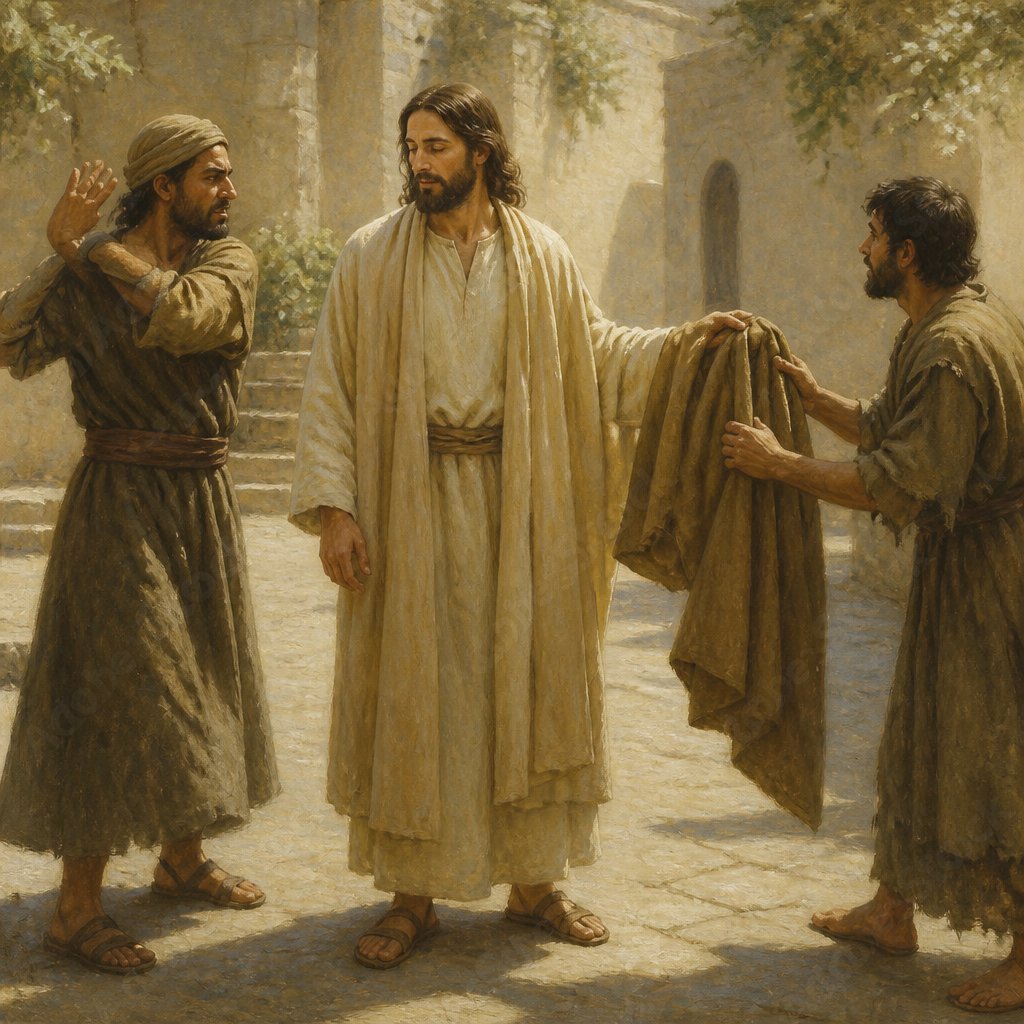
Luke 6:29 in the King James Version (KJV) of the Bible reads, "And unto him that smiteth thee on the one cheek offer also the other; and him that taketh away thy cloke forbid not to take thy coat also." This verse is part of Jesus' famous Sermon on the Plain, in which he delivers a series of teachings to his disciples and the crowd gathered around him.
The context of this verse is Jesus' call to his followers to love their enemies and to demonstrate mercy and forgiveness even in the face of persecution and mistreatment. This teaching of Jesus goes against the human instinct of retaliation and revenge, and challenges his followers to respond to their enemies with love and grace.
The theme of this verse is the practice of non-violence and the importance of turning the other cheek when faced with violence or aggression. Jesus is instructing his followers to respond to violence in a way that is unexpected and counter-cultural. Instead of seeking revenge or returning violence for violence, Jesus calls his followers to respond with love and forgiveness. This teaching echoes the famous words of Jesus in the Sermon on the Mount, where he says, "But I say unto you, That ye resist not evil: but whosoever shall smite thee on thy right cheek, turn to him the other also" (Matthew 5:39).
The symbolism in this verse is powerful and multi-layered. The act of turning the other cheek symbolizes a refusal to engage in the cycle of violence and retaliation. It symbolizes a willingness to endure suffering and persecution for the sake of following Christ. By offering the other cheek, the follower of Jesus demonstrates a commitment to peace and reconciliation, even in the face of hostility.
The mention of offering one's cloak and coat also contains deep symbolic meaning. In the time of Jesus, a person's cloak was a valuable possession, providing warmth and protection from the elements. By offering one's cloak to someone who has taken away their coat, the follower of Jesus demonstrates a radical generosity and a willingness to sacrifice personal comfort for the sake of love and mercy. This act symbolizes a detachment from material possessions and a trust in God to provide for their needs.
The broader implication of this verse is that it challenges the social and cultural norms of the time, which often placed a high value on honor, reputation, and retaliation. Jesus is calling his followers to a different way of living, one that is characterized by love for enemies and a refusal to respond to violence with more violence. This teaching emphasizes the radical nature of the kingdom of God and the transformative power of love and forgiveness.
In conclusion, Luke 6:29 in the King James Version of the Bible presents a powerful and challenging teaching from Jesus about responding to violence with love and forgiveness. The themes of non-violence, love for enemies, and radical generosity are central to this verse, and the symbolism of turning the other cheek and offering one's cloak and coat carries deep spiritual significance. This teaching continues to inspire and challenge Christians to this day, calling them to embody the love and mercy of Christ in the face of hostility and persecution.
Get our apps


Artwork for Luke 6:29

Luke 6:29 - "And unto him that smiteth thee on the one cheek offer also the other; and him that taketh away thy cloke forbid not to take thy coat also."
"And unto him that smiteth thee on the one cheek offer also the other; and him that taketh away thy cloke forbid not to take thy coat also." - Luke 6:29

Luke 4:29

luke 1:29

luke 9:29- 30

Isaiah 29:6

Genesis 29-6

Luke 21:29 - "And he spake to them a parable; Behold the fig tree, and all the trees;"

Luke 9:29 - "And as he prayed, the fashion of his countenance was altered, and his raiment was white and glistering."

Luke 10:29 - "But he, willing to justify himself, said unto Jesus, And who is my neighbour?"

Luke 20:29 - "There were therefore seven brethren: and the first took a wife, and died without children."

Luke 6

Luke 7:29 - "And all the people that heard him, and the publicans, justified God, being baptized with the baptism of John."

Luke 16:29 - "Abraham saith unto him, They have Moses and the prophets; let them hear them."

Luke 2:29 - "Lord, now lettest thou thy servant depart in peace, according to thy word:"

Luke 22:29 - "And I appoint unto you a kingdom, as my Father hath appointed unto me;"

luke 6: 27

luke 6:30

Luke 14:29 - "Lest haply, after he hath laid the foundation, and is not able to finish it, all that behold it begin to mock him,"

Luke 24:29 - "But they constrained him, saying, Abide with us: for it is toward evening, and the day is far spent. And he went in to tarry with them."

Luke 17:29 - "But the same day that Lot went out of Sodom it rained fire and brimstone from heaven, and destroyed them all."

Luke 12:29 - "And seek not ye what ye shall eat, or what ye shall drink, neither be ye of doubtful mind."

Matthew 6:29 expressed as a rose garden

Luke 1:29 - "And when she saw him, she was troubled at his saying, and cast in her mind what manner of salutation this should be."

Luke 13:29 - "And they shall come from the east, and from the west, and from the north, and from the south, and shall sit down in the kingdom of God."

Luke 5:29 - "And Levi made him a great feast in his own house: and there was a great company of publicans and of others that sat down with them."

Proverbs 29:6 - "In the transgression of an evil man there is a snare: but the righteous doth sing and rejoice."

Luke 3:29 - "Which was the son of Jose, which was the son of Eliezer, which was the son of Jorim, which was the son of Matthat, which was the son of Levi,"

Luke 6: 27-38

Luke 6:21-26