What does Luke 6:3 mean?
“And Jesus answering them said, Have ye not read so much as this, what David did, when himself was an hungred, and they which were with him;” — Luke 6:3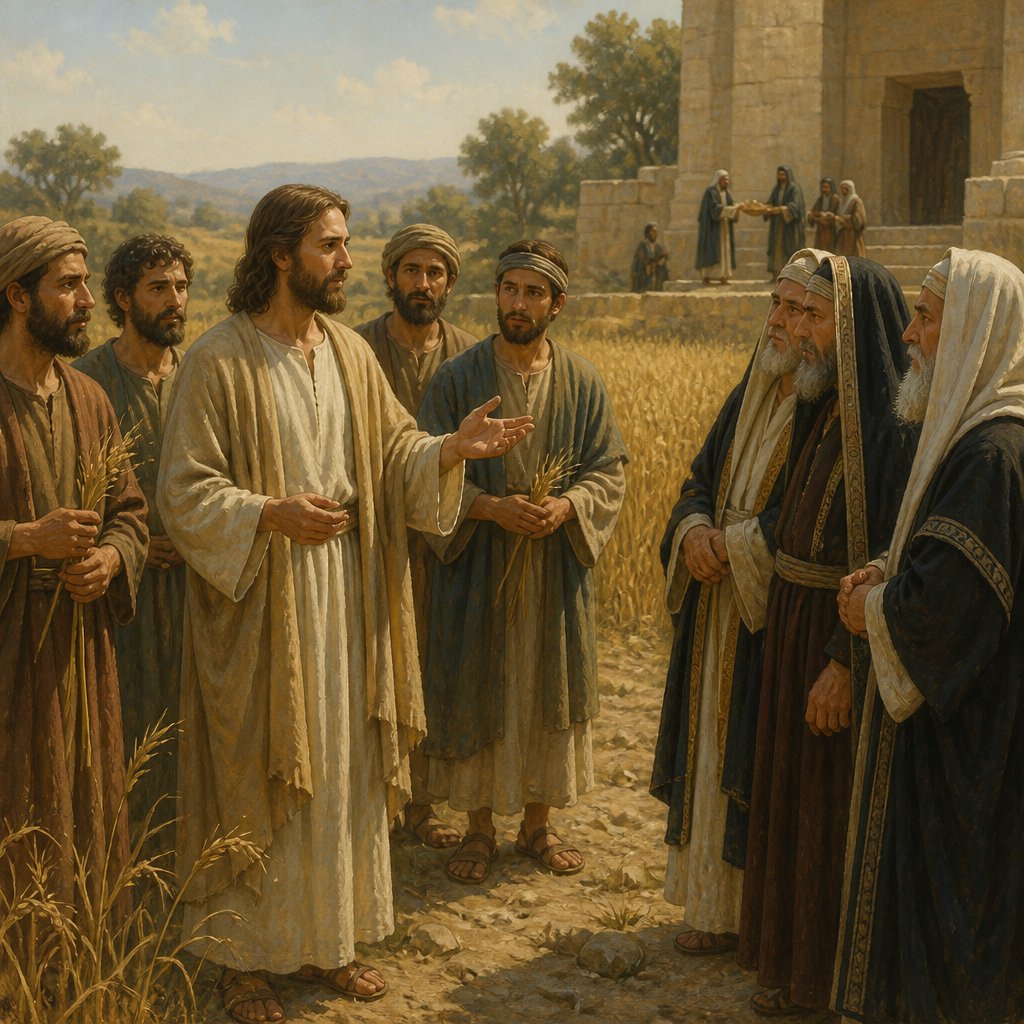
The Bible verse Luke 6:3 from the King James Version (KJV) reads: "And Jesus answering them said, Have ye not read so much as this, what David did, when himself was an hungered, and they which were with him;"
This verse is part of a larger passage in the Gospel of Luke, where Jesus and his disciples are challenged by the religious leaders for picking grain on the Sabbath. In response, Jesus refers to a story from the Old Testament about David and his companions eating consecrated bread from the tabernacle.
The overall theme of this passage is about the relationship between the law and compassion. The religious leaders are upholding the strict interpretation of the Sabbath law, whereas Jesus is emphasizing the greater importance of compassion and mercy. By referencing the story of David, Jesus highlights the principle of situational ethics, where in certain cases, human need overrides ritual law.
The context of this verse is crucial to understanding its significance. During this time, the Jewish people were living under a strict religious and legal framework, with many laws and traditions governing every aspect of their lives. The Sabbath, in particular, was a day of rest and devotion, with specific rules regarding work and activities. The religious leaders of the time were zealous in enforcing these rules, and in this passage, they are quick to criticize Jesus and his disciples for breaking them.
However, Jesus challenges their interpretation of the law by pointing to the example of David, a revered figure in Jewish history. By reminding them of how David and his companions ate the consecrated bread when they were hungry, Jesus is advocating for a more compassionate and merciful approach to the law. He is emphasizing that human need and well-being should take precedence over religious rituals and legalistic interpretations.
This verse also carries significant symbolism. The story of David and the consecrated bread symbolizes the tension between legalistic compliance and human compassion. It symbolizes the conflict between following the letter of the law and understanding the spirit behind it. Jesus uses this story as a reminder that the purpose of the law is to promote justice, mercy, and compassion, rather than to be an instrument of harsh judgment.
Furthermore, Jesus himself represents the fulfillment of the law and the embodiment of God's grace and mercy. By referring to the story of David, Jesus is also foreshadowing his own role as the ultimate source of nourishment and sustenance for his followers. Just as David and his companions found sustenance in the consecrated bread, Jesus offers spiritual nourishment and sustenance to all who come to him.
In conclusion, Luke 6:3 from the King James Version (KJV) is a powerful reminder of the importance of compassion and mercy in interpreting and applying the law. It challenges us to look beyond legalistic interpretations and to prioritize the well-being of others. This verse also serves as a symbol of Jesus' role as the embodiment of God's grace and mercy. As we seek to understand and apply the teachings of Jesus, we should always strive to balance justice with compassion, acting with love and mercy towards others, just as he did.
Get our apps


Artwork for Luke 6:3

Luke 6:3 - "And Jesus answering them said, Have ye not read so much as this, what David did, when himself was an hungred, and they which were with him;"
"And Jesus answering them said, Have ye not read so much as this, what David did, when himself was an hungred, and they which were with him;" - Luke 6:3

Luke 3:1-6

Luke 3:1-6

luke 3:1-6

Luke 3:6 - "And all flesh shall see the salvation of God."

"And all flesh shall see the salvation of God." - Luke 3:6

Luke 6

luke 6: 27

luke 6:30

Luke 6: 27-38

Luke 6:21-26

Luke 13:6-9

Luke 6:27-38

Luke 6:21-26

Luke 14:6 - "And they could not answer him again to these things."

Luke 6:6 - "And it came to pass also on another sabbath, that he entered into the synagogue and taught: and there was a man whose right hand was withered."

Luke 3:3 - "And he came into all the country about Jordan, preaching the baptism of repentance for the remission of sins;"

Luke 6:18 - "And they that were vexed with unclean spirits: and they were healed."

Luke 18:6 - "And the Lord said, Hear what the unjust judge saith."

Luke 6:36 - "Be ye therefore merciful, as your Father also is merciful."

Luke 24:3 - "And they entered in, and found not the body of the Lord Jesus."

Luke 6:38 Give, and it will be given to you

Luke 6:15 - "Matthew and Thomas, James the son of Alphaeus, and Simon called Zelotes,"

Luke 6:16 - "And Judas the brother of James, and Judas Iscariot, which also was the traitor."

Luke 19:6 - "And he made haste, and came down, and received him joyfully."

Luke 15:3 - "¶ And he spake this parable unto them, saying,"
![Luke 2:3 NIV
[3] And everyone went to their own town to register.](https://media.bible.art/624b3d4a-2c40-4bf2-bc2f-1d6418c32a14-thumbnail.jpg)
Luke 2:3 NIV [3] And everyone went to their own town to register.

Luke 9:6 - "And they departed, and went through the towns, preaching the gospel, and healing every where."

Luke 5:6 - "And when they had this done, they inclosed a great multitude of fishes: and their net brake."