What does Luke 6:31 mean?
“And as ye would that men should do to you, do ye also to them likewise.” — Luke 6:31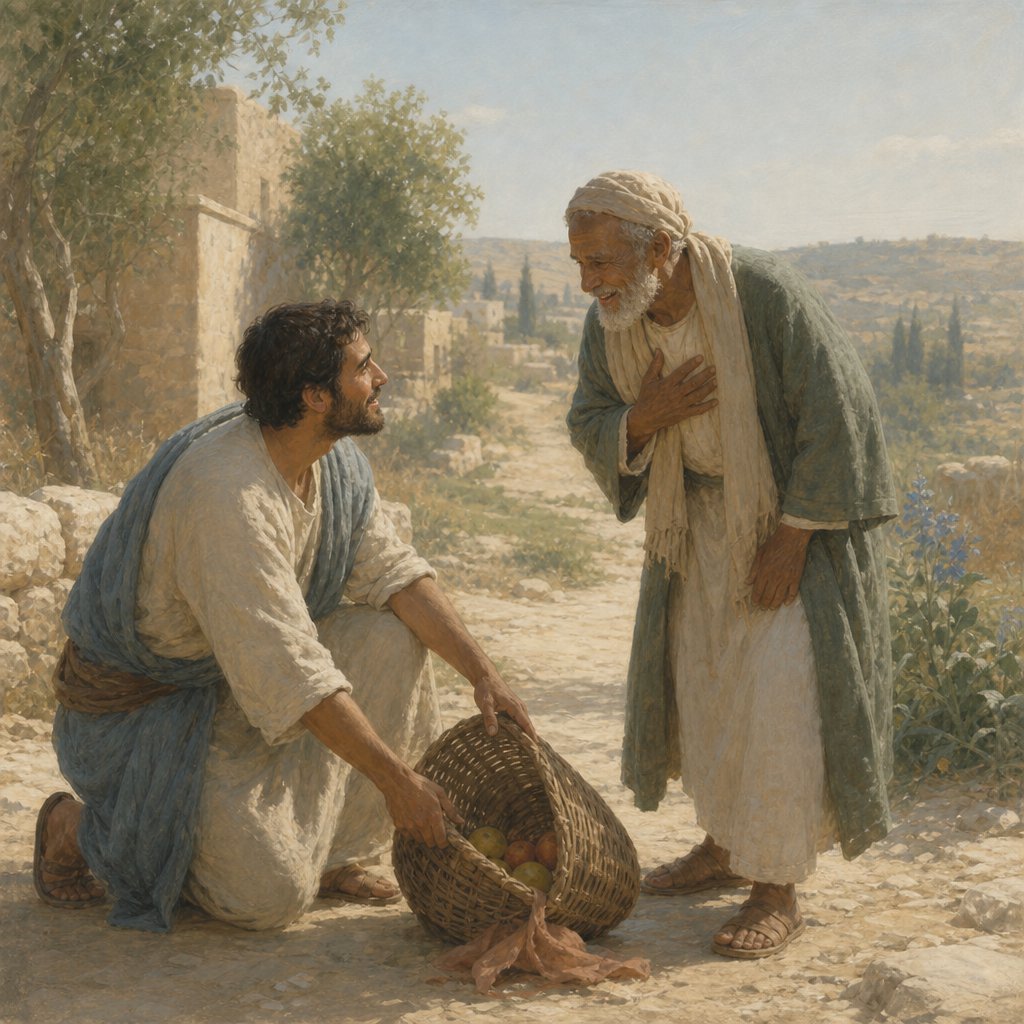
Luke 6:31 in the King James Version reads, “And as ye would that men should do to you, do ye also to them likewise.” In a single sentence Jesus sets before his hearers a rule of life that reaches beyond outward religion and presses into the inner ordering of the heart. The wording is simple, but its force is searching: your own honest desire for how you wish to be treated is made the measure of how you must treat others. The verse does not ask first what others deserve, nor does it wait upon their behavior; it begins with what you “would” for yourself—what you recognize, when you are the one in need, to be right, fair, merciful, patient, truthful, and kind—and then commands that same disposition be turned outward.
The immediate context in Luke shows why this command is so significant. Luke 6 records Jesus speaking to his disciples and to a multitude, and his teaching moves directly into the hard territory of love that contradicts natural instinct. In the verses surrounding Luke 6:31, Jesus speaks of loving enemies, doing good to those who hate, blessing those who curse, praying for those who despitefully use, and responding to injury and loss without retaliation. In that setting, Luke 6:31 functions as a kind of moral hinge or summary: it gathers the preceding calls to non-retaliation and the following calls to active benevolence into one guiding principle. It is not merely a polite social maxim, but the practical shape of the kingdom ethic Jesus is describing—an ethic in which the disciple’s conduct is not controlled by the behavior of others but by the character of God, who is kind even to the unthankful and to the evil, as the same passage later declares.
The themes in the verse are both relational and spiritual. One theme is empathy, not as sentiment but as moral imagination. Jesus assumes that every person has an inward awareness of what they would receive from others when they are vulnerable: fairness when accused, patience when weak, generosity when needy, protection when threatened, truth without malice, correction without contempt. He then turns that awareness into an obligation. The verse therefore condemns hypocrisy—the tendency to excuse oneself while judging others—because it makes a person apply to others the very standard they hope will be applied to them. In Luke’s Gospel, where Jesus often exposes the heart behind actions, this inward test matters: what do you want from people when you are at their mercy? That is what you are commanded to give when they are at yours.
Another theme is the active nature of righteousness. Jesus says, “do ye also to them likewise.” The command is not merely to refrain from harm, but to do good. It is constructive love, not passive harmlessness. In the flow of Luke 6, this “doing” includes generosity without calculating return, mercy without bargaining, and goodness that persists even when it is not reciprocated. It signals that discipleship is not measured simply by what one avoids, but by what one undertakes for the good of another.
There is also a theme of universal neighbor-love. The verse says “men,” not “friends,” “brethren,” or “those that do you good.” In the surrounding context, Jesus explicitly contrasts ordinary human reciprocity—loving those who love you, lending to those from whom you hope to receive—with the higher calling of his disciples. Luke 6:31 therefore reaches beyond the boundaries that people naturally draw. It does not permit love to be limited to the familiar or the deserving. Even those counted as enemies are included, because the rule is not based on their worthiness but on the kind of treatment you yourself recognize as good when you need it.
Symbolically, Luke 6:31 takes what is inward and private—your own “would,” your personal longing for gracious treatment—and makes it outward and public. It is a reversal of self-centeredness. The self, which normally stands at the center as the receiver, is displaced into the position of the giver. The verse is therefore a quiet portrait of what true conversion is meant to produce: a heart turned away from grasping toward a life shaped by consideration, sacrifice, and goodwill. In the wider New Testament witness, this reversal aligns with the pattern of Christ himself, who gives rather than takes, and it harmonizes with Luke’s emphasis on mercy, generosity, and the upside-down values of the kingdom.
The significance of Luke 6:31 also lies in its power to expose and to guide. It exposes because it allows little room for self-justification. One can often find reasons to treat another person harshly—past wrongs, present irritation, social distance, perceived threats—but the verse asks you to consult your own desire for mercy and fairness and then apply it “likewise.” At the same time, it guides because it gives a clear moral compass in complex situations. When motives are mixed and circumstances are tangled, the question, “What would I want done to me here?” becomes a way of discerning a loving course of action, not by indulging the self, but by using the self as a mirror to recognize another’s humanity.
Finally, Luke 6:31 is significant because it sits within teaching that assumes the disciple’s life is shaped by God’s character. In Luke 6, Jesus calls his followers to a kind of love that is not merely natural affection but a reflection of divine mercy. The “likewise” implies consistency: as you would receive, so give; as you hope to be forgiven, forgive; as you desire patience, be patient. In this way the verse is not a standalone proverb but part of a portrait of the people of God—those who, having received mercy, become merciful, and who, living under the reign of God, treat others with the same grace they themselves crave.
Get our apps


Artwork for Luke 6:31

Luke 6:31 - "And as ye would that men should do to you, do ye also to them likewise."

"And as ye would that men should do to you, do ye also to them likewise." - Luke 6:31
"And as ye would that men should do to you, do ye also to them likewise." - Luke 6:31

Luke 1:31

Luke 22:31-32 - "Luke 22:31-32: And the Lord said, Simon, Simon, behold, Satan hath desired to have you, that he may sift you as wheat: But I have prayed for thee, that thy faith fail not: and when thou art converted, strengthen thy brethren."

Luke 23:31 - "For if they do these things in a green tree, what shall be done in the dry?"

Luke 2:31 - "Which thou hast prepared before the face of all people;"

Luke 24:31 - "And their eyes were opened, and they knew him; and he vanished out of their sight."

Luke 8:31 - "And they besought him that he would not command them to go out into the deep."

Luke 5:31 - "And Jesus answering said unto them, They that are whole need not a physician; but they that are sick."

Luke 4:31 - "And came down to Capernaum, a city of Galilee, and taught them on the sabbath days."

Luke 7:31 - "¶ And the Lord said, Whereunto then shall I liken the men of this generation? and to what are they like?"

Luke 20:31 - "And the third took her; and in like manner the seven also: and they left no children, and died."

Luke 9:31 - "Who appeared in glory, and spake of his decease which he should accomplish at Jerusalem."

Luke 12:31 - "¶ But rather seek ye the kingdom of God; and all these things shall be added unto you."

Luke 6

Luke 15:31 - "And he said unto him, Son, thou art ever with me, and all that I have is thine."

Luke 10:31 - "And by chance there came down a certain priest that way: and when he saw him, he passed by on the other side."

Luke 1:31 - "And, behold, thou shalt conceive in thy womb, and bring forth a son, and shalt call his name JESUS."

Luke 16:31 - "And he said unto him, If they hear not Moses and the prophets, neither will they be persuaded, though one rose from the dead."

luke 6: 27

luke 6:30

Luke 21:31 - "So likewise ye, when ye see these things come to pass, know ye that the kingdom of God is nigh at hand."

Luke 22:31 - "¶ And the Lord said, Simon, Simon, behold, Satan hath desired to have you, that he may sift you as wheat:"

Luke 3:31 - "Which was the son of Melea, which was the son of Menan, which was the son of Mattatha, which was the son of Nathan, which was the son of David,"

Luke 13:31 - "¶ The same day there came certain of the Pharisees, saying unto him, Get thee out, and depart hence: for Herod will kill thee."

Luke 5:31-32 - "Jesus answered them, "It is not the healthy who need a doctor, but the sick. I have not come to call the righteous, but sinners to repentance.""

Job 31:6 - "Let me be weighed in an even balance, that God may know mine integrity."

Genesis 31:6 - "And ye know that with all my power I have served your father."

Psalms 31:6 - "I have hated them that regard lying vanities: but I trust in the LORD."