What does Luke 6:33 mean?
“And if ye do good to them which do good to you, what thank have ye? for sinners also do even the same.” — Luke 6:33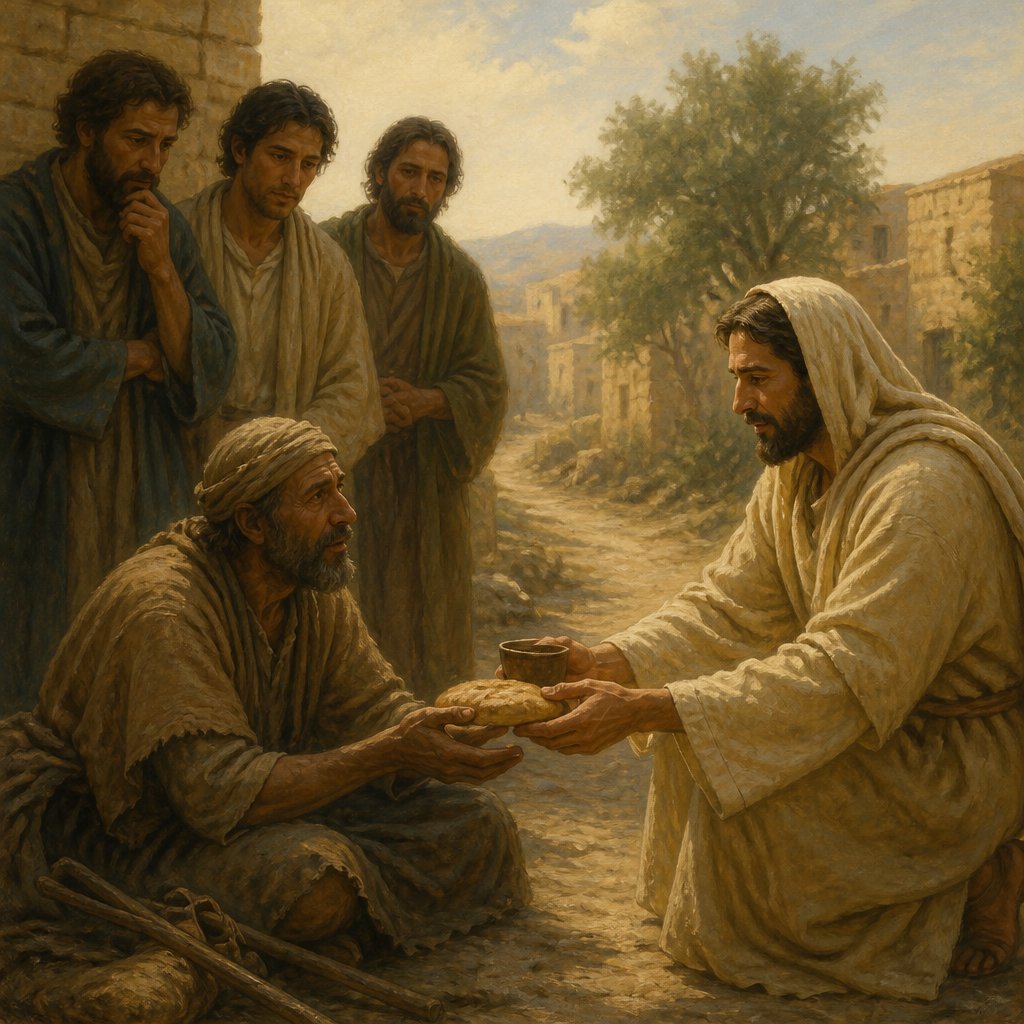
Luke 6:33 (KJV) states, "And if ye do good to them which do good to you, what thank have ye? for sinners also do even the same." This verse is found in the New Testament of the Bible and is spoken by Jesus during his Sermon on the Plain.
In this verse, Jesus addresses the concept of love and kindness, emphasizing the importance of acting in a manner that goes beyond societal norms. He challenges his followers to act in a way that is different from the world around them, showing love and doing good even to those who may not reciprocate it.
The verse begins with the phrase "And if ye do good to them which do good to you," which suggests the idea of reciprocity. It is natural for humans to want to do good to those who treat them well, as it aligns with the principle of cause and effect. However, Jesus points out that this type of behavior does not set his followers apart from anyone else, as even sinners are capable of showing kindness to those who treat them well.
Jesus goes on to ask, "what thank have ye?" This question challenges the motives behind acts of kindness. If a person only does good to those who do good to them in return, there is no genuine selflessness or sacrifice involved. Rather, it becomes an exchange of favors, with the expectation of receiving something in return for one's actions.
The verse concludes with the assertion, "for sinners also do even the same," driving home the point that behaving in this manner does not reflect the love and grace of God. Sinners, or those who are estranged from God, are also capable of reciprocating kindness and love when it is beneficial to them. However, Jesus calls his followers to a higher standard, one that reflects the love and mercy of God.
The context of this verse is important in understanding its significance. Jesus delivered this message during his Sermon on the Plain, a significant teaching found in the Gospel of Luke that parallels the more well-known Sermon on the Mount in the Gospel of Matthew. Throughout this sermon, Jesus imparts wisdom and guidance to his disciples and the crowds that had gathered to hear him speak.
In the broader context of the New Testament, this verse aligns with Jesus' teachings on love and forgiveness. He frequently emphasized the importance of loving one's neighbor, even going so far as to love one's enemies. This radical love stands in stark contrast to the cultural norms of the time, and it continues to challenge and inspire believers today.
The theme of selfless love and kindness is a central focus of this verse. Jesus calls his followers to love and do good without expecting anything in return. This mirrors the sacrificial love of God, who gave his Son for the redemption of humanity without any guarantee of a response of love and faithfulness from mankind.
The symbolism of this verse lies in the contrast between the behavior of sinners and the behavior Jesus calls his followers to exhibit. Sinners, in this context, represent those who are estranged from God and who may not prioritize love, grace, and selflessness in their interactions with others. Jesus, on the other hand, symbolizes the embodiment of love and compassion, and he sets the example for his followers to follow.
In conclusion, Luke 6:33 (KJV) serves as a reminder to believers that they are called to a higher standard of love and kindness. It challenges the natural inclination to only show kindness in response to being treated well and urges followers of Jesus to exhibit a deeper, sacrificial love that reflects the character of God. This verse continues to be a source of inspiration and conviction for Christians as they seek to live out their faith in their daily lives.
Get our apps


Artwork for Luke 6:33

Luke 6:33 - "And if ye do good to them which do good to you, what thank have ye? for sinners also do even the same."
"And if ye do good to them which do good to you, what thank have ye? for sinners also do even the same." - Luke 6:33

Luke 7:33

Luke 14:25 - 33

Mathew 6:33

Isaiah 33:6

Isaiah 33:6

Isaiah 33:6

Luke 21:33 - "Heaven and earth shall pass away: but my words shall not pass away."

Luke 20:33 - "Therefore in the resurrection whose wife of them is she? for seven had her to wife."

Luke 2:33 - "And Joseph and his mother marvelled at those things which were spoken of him."

Luke 4:33 - "¶ And in the synagogue there was a man, which had a spirit of an unclean devil, and cried out with a loud voice,"

Luke 1:33 - "And he shall reign over the house of Jacob for ever; and of his kingdom there shall be no end."

Luke 19:33 - "And as they were loosing the colt, the owners thereof said unto them, Why loose ye the colt?"

Genesis 33:6 - "Then the handmaidens came near, they and their children, and they bowed themselves."

Luke 18:33 - "And they shall scourge him, and put him to death: and the third day he shall rise again."

Luke 14:33 - "So likewise, whosoever he be of you that forsaketh not all that he hath, he cannot be my disciple."

Luke 22:33 - "And he said unto him, Lord, I am ready to go with thee, both into prison, and to death."

Luke 24:33 - "And they rose up the same hour, and returned to Jerusalem, and found the eleven gathered together, and them that were with them,"

Luke 13:33 - "Nevertheless I must walk to day, and to morrow, and the day following: for it cannot be that a prophet perish out of Jerusalem."

Exodus 33:6 - "And the children of Israel stripped themselves of their ornaments by the mount Horeb."

Matthew 6:33. Seeking God's righteousness

Luke 7:33 - "For John the Baptist came neither eating bread nor drinking wine; and ye say, He hath a devil."

Deuteronomy 33:6 - "¶ Let Reuben live, and not die; and let not his men be few."

Luke 8:33 - "Then went the devils out of the man, and entered into the swine: and the herd ran violently down a steep place into the lake, and were choked."

Luke 23:33 - "And when they were come to the place, which is called Calvary, there they crucified him, and the malefactors, one on the right hand, and the other on the left."

Luke 17:33 - "Whosoever shall seek to save his life shall lose it; and whosoever shall lose his life shall preserve it."

Numbers 33:6 - "And they departed from Succoth, and pitched in Etham, which is in the edge of the wilderness."

Luke 6

Luke 3:33 - "Which was the son of Aminadab, which was the son of Aram, which was the son of Esrom, which was the son of Phares, which was the son of Juda,"